Wednesday 26 August 2026 — General audience concludes the Sacrosanctum Concilium cycle · Audience with Lutheran bishops of Norway · Telegram for the 80th anniversary of the Amiata Cross · Greeting to Poles for the 70th anniversary of the Jasna Góra Vows
10:00
St. Peter's Basilica, Vatican City
🎙️ General audience
General audience: the Sacrosanctum Concilium cycle concludes
📍 St. Peter's Basilica, Vatican City
Pope Leo XIV presides over the Wednesday general audience in St. Peter's Basilica, with the concluding catechesis of the cycle on the documents of the Second Vatican Council dedicated to the liturgical constitution "Sacrosanctum Concilium." The Pope explains that the liturgical reform is not a rupture but stands within the Church's living tradition, tracing its historical stages from Pius XI's apostolic constitution "Divini Cultus," through Pius XII's interventions on Holy Week, to the simplifications introduced by John XXIII in 1960. He reiterates that the reform's purpose is to keep the faithful from remaining "like strangers or silent spectators" at Mass, but to have them actively participate in the mystery of faith, and warns against the liturgical abuses of the post-conciliar period, born of a misunderstanding of the reform's principles: liturgical actions belong to the whole Church and remain entrusted to the responsibility of bishops and priests, called to safeguard a liturgy that shines with "noble simplicity." At the end of the catechesis, the Pontiff greets the groups of faithful and pilgrims present, often with appeals for peace in various conflict scenarios. At the end, addressing the Polish faithful, he joins spiritually those gathered in Częstochowa for the 70th anniversary of the renewal of the "Vows of Jasna Góra of the Polish Nation," written by Cardinal Stefan Wyszyński during his imprisonment, hoping that the program of moral renewal they contain continues to inspire commitment to justice and brotherhood.
Event detail →🎥 Videos
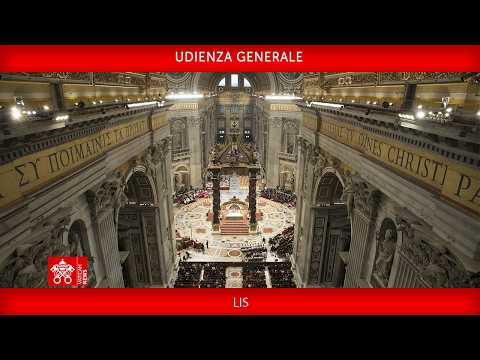
General Audience, 26 August 2026 - Pope Leo XIV (LIS)
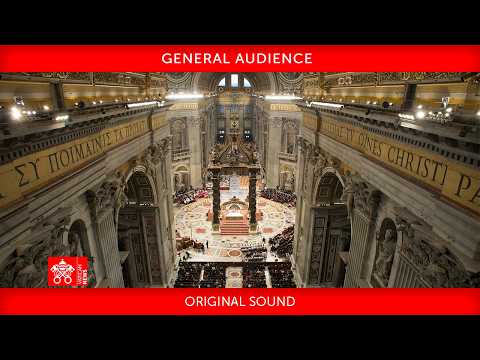
August 26 2026, General Audience - Pope Leo XIV
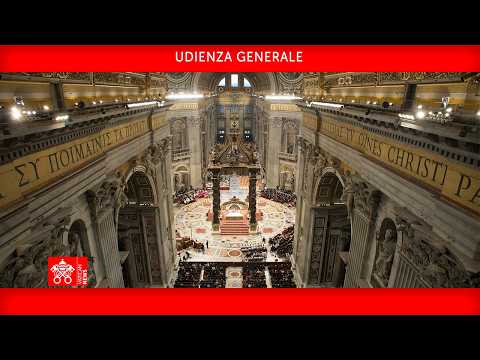
General Audience, 26 August 2026 - Pope Leo XIV (Italian)
📷 Photos

Pope Leo XIV during the general audience in St. Peter's Square
📰 Articles
Vatican.vaOfficial
Audiences 2026 - Leo XIV
Official page of Pope Leo XIV's general audiences with the texts of the catecheses.
AgenSIRArticle
Leo XIV: the liturgy so the faithful are not "mute and passive" at Mass. And the warning on abuses
Summary of the concluding catechesis on Sacrosanctum Concilium, on liturgical reform and the warning on abuses.
Vatican NewsArticle
The Pope to the Poles: may the Jasna Góra Vows inspire justice and fraternity
Pope Leo XIV's greeting to the Polish faithful for the 70th anniversary of the Jasna Góra Vows.
Vatican NewsArticle
The Pope: liturgical reform so as not to be "silent spectators" but a united Church
Vatican News article on the concluding catechesis of the cycle on Sacrosanctum Concilium.
📜 Speech text
General Audience - The motivations of the liturgical reform (Sacrosanctum Concilium, 8)
Dear brothers and sisters,
In this final catechesis on the Constitution Sacrosanctum Concilium, today I would like to look at the reasons why the Council Fathers sought to promote a reform of the liturgy. In this regard, the third Letter from the Council, which Cardinal Giovanni Battista Montini, then archbishop of Milan, sent on 28 October 1962 to the faithful of his Church,…
📋 Daily schedule
11:13
26
Aug
🤝 Audience
Audience with the bishops of the Lutheran Church of Norway
📍 Room adjacent to the Paul VI Audience Hall, Vatican City
Pope Leo XIV receives in audience fourteen bishops of the Lutheran Church of Norway, addressing them in English. The Pope observes that the world is going through "a particularly turbulent period," marked by conflicts, international disputes and growing animosity even in political debate within individual countries; he points to Jesus as showing another way, that of goodness and charity, which have the power to "disarm," noting that even small gestures can inspire the path of reconciliation. He invites those present to root themselves in their common Baptism so as to grow together in the service of peace and justice, recalling the Norwegian saints Olav and Sunniva as models of inspiration.
📷 Photos

Audience with the bishops of the Lutheran Church of Norway

Audience with the bishops of the Lutheran Church of Norway
📰 Articles
Vatican NewsArticle
Leo XIV: small gestures of goodness and charity can disarm great conflicts
Pope Leo XIV's greeting to the bishops of the Lutheran Church of Norway.
Holy See Press Office BulletinOfficial
Resignations and appointments, 26.08.2026 - Audiences
Official Holy See Press Office bulletin on the audience with the Lutheran bishops of Norway.
📜 Speech text
Address to the bishops of the Lutheran Church of Norway (translated)
Dear friends,
I am pleased to welcome you to Rome and here to the Vatican this morning, and I hope that you have had, or will have, time to visit the various holy places associated with the early Christians and martyrs, whose witness of faith in our Lord continues to be a lasting source of inspiration, encouraging us too to give our lives for the…
26
Aug
✉️ Telegram
Telegram for the 80th anniversary of the reconstruction of the Amiata Cross
📍 Monte Amiata, Abbadia San Salvatore
For the ceremony atop Monte Amiata marking the eightieth anniversary of the inauguration of the restored monumental cross — destroyed during the German retreat in 1944 and lit again by Pius XII by radio link on August 24, 1946 — Cardinal Secretary of State Pietro Parolin sends, on behalf of Pope Leo XIV, a telegram to Cardinal Augusto Paolo Lojudice, Archbishop of Siena-Colle di Val d'Elsa-Montalcino and Bishop of Montepulciano-Chiusi-Pienza. The Pope joins the diocesan community in spirit, hoping the occasion renews awareness that this symbol of redemption is a constant invitation to look upward, walking together in the ways of goodness, solidarity and peace; he assures his prayers and sends the apostolic blessing to those present at the solemn ceremony, which closes in the evening with the lighting of the cross.
🗓️ Upcoming events
2026-08-29
⛵ Mass and procession at Castel Gandolfo for the Madonna del Lago
Holy Mass at the Church of Maria Santissima del Lago and procession, for the traditional Marian feast at the end of August.
Go to page →2026-09-01
🌱 Mass for the Care of Creation at Castel Gandolfo
The Pope presides over the Mass for the Care of Creation in the Garden of the Madonnina del Borgo Laudato si', at the opening of the Season of Creation.
Go to page →2026-09-05
🌿 First anniversary of the Borgo Laudato Si'
The first anniversary of the inauguration of the center for the care of creation at Castel Gandolfo, opened by Pope Leo XIV on September 5, 2025.
Go to page →2026-09-07
🕯️ Mass in Genazzano for the eve of the Nativity of Mary
The Pope celebrates Holy Mass at the Shrine of Our Lady of Good Counsel, on the eve of the Nativity of the Blessed Virgin Mary.
Go to page →2026-09-14
📚 Opening of the exhibition "AQVA" at the Vatican Library
The Pope visits the Vatican Apostolic Library and opens "AQVA", the first chapter of the exhibition cycle "Catastrophe and Wonder".
Go to page →2026-09-25
✈️ Departure for the apostolic journey to France
From September 25 to 28 the Pope visits Paris (Élysée, UNESCO, Notre-Dame), Lourdes and Metz.
Go to page →2026-10-07
📖 Encounter on the tenth anniversary of Amoris Laetitia
Encounter in the Vatican (October 7-14) convoked by the Pope with the heads of the Eastern Churches, the presidents of Episcopal Conferences, and a number of families.
Go to page →2026-10-27
🕊️ In Assisi for the 40th anniversary of the Spirit of Assisi
Interreligious meeting promoted by the Community of Sant'Egidio marking forty years since the World Day of Prayer for Peace convoked by John Paul II in 1986.
Go to page →2026-11-06
✈️ Departure for the apostolic journey to Uruguay, Argentina and Peru
From November 6 to 17 the Pope visits Montevideo, Buenos Aires and Lima, with a special stop in Chiclayo, his former diocese.
Go to page →🔗 Official sources