Sunday 30 August 2026 — Sunday Angelus from Piazza della Libertà in Castel Gandolfo, the last of the summer stay · The Pope and the example of Peter: dialogue and docile listening · Appeals for the Kenscoff massacre in Haiti and for the flood in Nepal and Tibet
12:00
Piazza della Libertà, Castel Gandolfo
🙏 Angelus
Angelus from Piazza della Libertà in Castel Gandolfo
📍 Piazza della Libertà, Castel Gandolfo
The day after the Holy Mass and the historic boat procession on Lake Albano for the feast of the Madonna del Lago, Pope Leo XIV remains at Castel Gandolfo and at midday leads the recitation of the Angelus from Piazza della Libertà, in front of the Apostolic Palace of the Pontifical Villas, on the 22nd Sunday in Ordinary Time. Commenting on the Gospel (Mt 16:21-27), the Pope dwells on Peter's reaction as he rebukes Jesus after the first announcement of the Passion — “God forbid it, Lord! This must never happen to you” — in contrast with the profession of faith he had just made. From Peter, Leo XIV notes, we learn two things: never to break off the dialogue with the Lord, confidently telling him even our struggle to understand, and never to judge God's work but to listen humbly in prayer, “even when it does not meet our expectations.” “The greatness of the first of the Apostles is also evident in this.” The Pope finally asks for Peter's sincerity and docility, with the help of Mary, “obedient to God's plans even at the foot of the cross of her Son Jesus.” It is the last Sunday appointment of the summer stay before the full resumption of activity in the Vatican. In the morning the Castel Gandolfo community also celebrates its traditional Mass for motorcyclists, who are then present in the square for their annual gathering. The event was broadcast live by Vatican Media.
Event detail →🎥 Videos
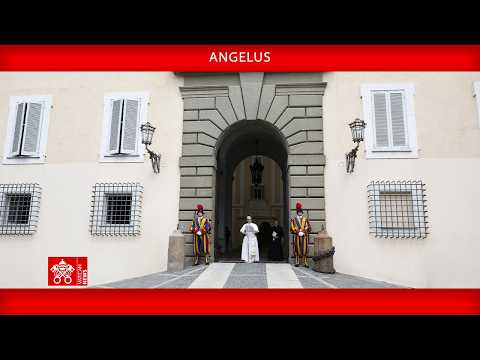
Pope Leo XIV's Angelus from Castel Gandolfo on 30 August 2026 (Vatican News).
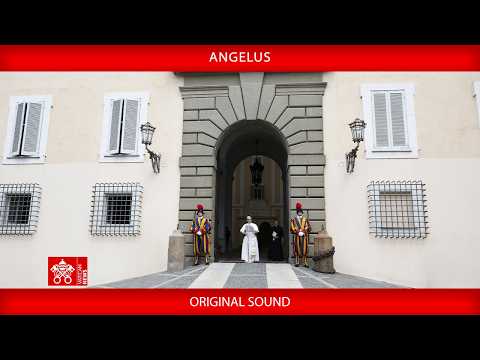
The Angelus prayer of 30 August 2026 with Pope Leo XIV (Vatican News).
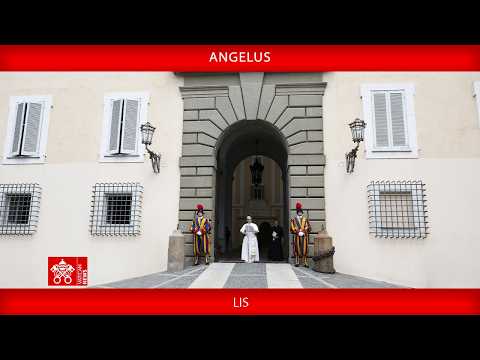
The Angelus of 30 August 2026 with Pope Leo XIV, Sign Language version (Vatican News).
📷 Photos

Pope Leo XIV at the Angelus from Piazza della Libertà in Castel Gandolfo (Vatican Media).

The Pope among the faithful in Piazza della Libertà (Vatican Media).

A view of Piazza della Libertà packed with pilgrims (Vatican Media).
📰 Articles
Vatican NewsOfficial
Leo XIV: accept God's ways even when they do not meet our expectations
The report on the Angelus from Piazza della Libertà: the Pope warns against the temptation to think that the Lord is wrong or indifferent to his people, and points to the example of Peter.
Holy See Press Office BulletinOfficial
The Pope's words at the recitation of the Angelus, 30.08.2026
The full text of the catechesis and of the appeals after the Angelus of 30 August 2026, published by the Holy See Press Office.
📜 Speech text
Angelus - 22nd Sunday in Ordinary Time (Peter and the Mystery of the Passion)
Dear brothers and sisters, good afternoon and happy Sunday!
Today’s Gospel tells us how Jesus reveals to his disciples the Mystery of his impending Passion. The Messiah, he says, must “go to Jerusalem and undergo great suffering at the hands of the elders and chief priests and scribes, and be killed, and on the third day be raised” (Mt 16:21).
Wh
📋 Daily schedule
30
Aug
📣 Appeals
The appeals after the Angelus: Haiti, flood in Nepal and Tibet, Day for Creation
📍 Piazza della Libertà, Castel Gandolfo
After the Marian prayer, Pope Leo XIV makes several appeals. On the Kenscoff massacre in Haiti — more than 40 victims and numerous people taken hostage — he expresses prayerful closeness to the victims and their families, calls for the immediate release of all hostages and urges those responsible to take concrete steps to ensure the safety of the population and to end all violence. He then assures his prayers for those affected by the “terrible flood” in Nepal and Tibet — the dead, the injured, the missing, families and rescue workers. He quotes Saint Augustine, whose feast was recently celebrated, on peace “like the miraculous bread multiplied in the hands of the disciples as they broke it and distributed it” (Sermo 357, 2), and recalls that on Tuesday, 1 September, the World Day of Prayer for the Care of Creation is celebrated, opening the “Season of Creation” on the theme “Living Water.” He finally greets the pilgrims — including participants in the “Run to Rome” charity race, the young people of the itinerant Via Lucis, the devotees of Our Lady of Miracles of Corbetta and the motorcyclists — and thanks the law enforcement agencies and all those who made possible his now-concluded summer stay at Castel Gandolfo.
🎥 Videos
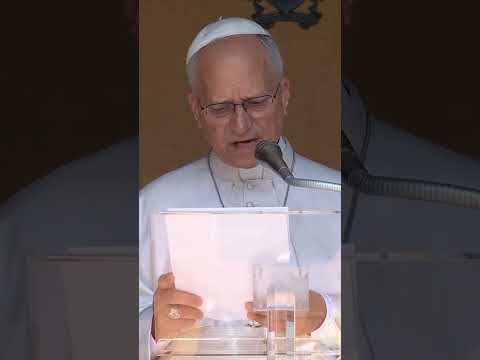
The Pope quotes St Augustine on peace, after the Angelus at Castel Gandolfo (Vatican News).
🗓️ Upcoming events
2026-09-01
🌱 Mass for the Care of Creation at Castel Gandolfo
The Pope presides over the Mass for the Care of Creation in the Garden of the Madonnina del Borgo Laudato si', at the opening of the Season of Creation.
Go to page →2026-09-05
🌿 First anniversary of the Borgo Laudato Si'
The first anniversary of the inauguration of the center for the care of creation at Castel Gandolfo, opened by Pope Leo XIV on September 5, 2025.
Go to page →2026-09-07
🕯️ Mass in Genazzano for the eve of the Nativity of Mary
The Pope celebrates Holy Mass at the Shrine of Our Lady of Good Counsel, on the eve of the Nativity of the Blessed Virgin Mary.
Go to page →2026-09-14
📚 Opening of the exhibition "AQVA" at the Vatican Library
The Pope visits the Vatican Apostolic Library and opens "AQVA", the first chapter of the exhibition cycle "Catastrophe and Wonder".
Go to page →2026-09-25
✈️ Departure for the apostolic journey to France
Fifth international apostolic journey, in France from September 25-28, with stops in Paris, Lourdes and Metz.
Go to page →2026-10-07
📖 Encounter on the tenth anniversary of Amoris Laetitia
Encounter in the Vatican (October 7-14) convoked by the Pope with the heads of the Eastern Churches, the presidents of Episcopal Conferences, and a number of families.
Go to page →2026-10-08
🎓 Mass for the inauguration of the academic year of the Pontifical Universities
At 6:00 pm in St. Peter's Basilica the Pope presides over the Holy Mass opening the academic year of the Roman pontifical universities.
Go to page →2026-10-14
📖 Closing Mass of the meeting on the tenth anniversary of Amoris Laetitia
At 10:00 am in St. Peter's Square the Pope celebrates the Holy Mass concluding the meeting for the tenth anniversary of the exhortation "Amoris laetitia".
Go to page →2026-10-27
🕊️ In Assisi for the 40th anniversary of the Spirit of Assisi
Interreligious meeting promoted by the Community of Sant'Egidio marking forty years since the World Day of Prayer for Peace convoked by John Paul II in 1986.
Go to page →2026-11-06
✈️ Departure for the apostolic journey to Uruguay, Argentina and Peru
From November 6 to 17 the Pope visits Montevideo, Buenos Aires and Lima, with a special stop in Chiclayo, his former diocese.
Go to page →🔗 Official sources