Wednesday 2 September 2026 — The Wednesday General Audience resumes: the new cycle of catechesis on the Pastoral Constitution "Gaudium et spes" begins · The International Theological Commission's document on the care of the Common Home is published
10:00
St Peter's Square, Vatican City
🤝 General Audience
General Audience — the catechesis on "Gaudium et spes" begins
📍 St Peter's Square, Vatican City
Pope Leo XIV returns to meeting the faithful in St Peter's Square, at 10:00 a.m., for the Wednesday General Audience, the first such gathering after the August summer break and after the stay at Castel Gandolfo. With today's catechesis the Pontiff opens a new cycle devoted to the Pastoral Constitution "Gaudium et spes" of the Second Vatican Council, on the relationship of the Church with the contemporary world, after the cycles on "Dei Verbum", "Lumen Gentium" and "Sacrosanctum Concilium". The Pope recalls that the Church feels as her own "the joys and the hopes, the griefs and the anxieties of the men of this age, especially those who are poor", that she has the "permanent duty to scrutinise the signs of the times and to interpret them in the light of the Gospel", and that she is called to come out of all passivity and indifference, taking on the burden of those crushed by injustice, discrimination and violence. At the end come the greetings to pilgrims of the various language groups and a thought for young people, the sick and newlyweds on the eve of the memorial of Saint Gregory the Great.
Event detail →🎥 Videos
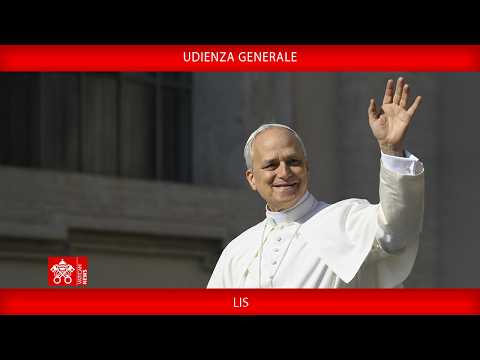
General Audience of 2 September 2026 — live coverage with Italian Sign Language interpretation (Vatican Media)
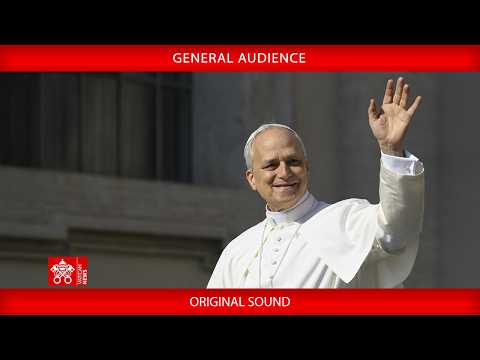
September 2, 2026 General Audience — Pope Leo XIV (Vatican News)
📷 Photos

Pope Leo XIV at the General Audience of 2 September 2026 in St Peter's Square (Vatican Media)

The Pope greets the faithful during the General Audience (Vatican Media)

Pilgrims and groups in St Peter's Square for the General Audience (Vatican Media)
The General Audience of 2 September 2026, live (Vatican Media)
📰 Articles
Vatican NewsOfficial
The Pope: may the Church listen to humanity and scrutinise the signs of the times
The account of the General Audience: Leo XIV begins his reflection on the Pastoral Constitution "Gaudium et spes" and invites the Church to draw close to the women and men of our time, without remaining passive before injustice, discrimination and violence.
Vatican NewsOfficial
At the General Audience: the Athletica Vaticana athletes and Polish and English pilgrims
An account of the groups present in St Peter's Square: the Athletica Vaticana sportspeople back from the Mediterranean Games in Taranto, who gave the Pope a signed padel racket and cycling jersey, the «Bystrzanki» cultural association from the Polish village of Bystra Podhalańska and the English group «Lads at larks», which raises awareness of the fight against cancer.
Holy See Press Office BulletinOfficial
Holy See Press Office Bulletin of 2 September 2026 — The General Audience
The full text of the catechesis, the summary in various languages and the greetings to the language groups published by the Holy See Press Office.
Vatican NewsOfficial
The Pope's celebrations in September and October
An overview of Leo XIV's engagements for September and October 2026, with the resumption of full activity at the Vatican after the stay at Castel Gandolfo.
📜 Speech text
General Audience — "Gaudium et spes" (1). The Church listening to and at the service of the world (tradotto)
Dear brothers and sisters, good morning and welcome! With today's meeting we begin to reflect on the Pastoral Constitution Gaudium et spes, by which the Second Vatican Council sought to explore a fundamental theme, namely the relationship of the Church with the contemporary world. Saint John XXIII, already in his opening address of 11 October 1962, wished to distance himself from the "prophets of doom" who criticized modern times.
📋 Daily schedule
2
Sep
📄 Document
The International Theological Commission's document on the care of the Common Home is published
📍 Vatican City
The Holy See Press Office presents the document of the International Theological Commission "Caring for our Common Home: a responsible and fraternal response to the Triune God", published on Wednesday, 2 September 2026 with the authorisation of Pope Leo XIV. The fruit of work carried out between 2022 and 2025 by the Commission, chaired by Cardinal Víctor Manuel Fernández, Prefect of the Dicastery for the Doctrine of the Faith, the text sets out the theological foundation for the care of creation beyond the environmental emergency: the ecological question is above all a theological one, because the way we care for creation reveals and structures our relationship with God. Divided into three chapters — the first, "The Common Home, work of the Triune God", re-reads the trinitarian imprint of creation through Augustine, Hildegard of Bingen, Bonaventure and Thomas Aquinas — the document warns that humanity is approaching "a point of rupture and irreversible collapse" and identifies greed and violence as the two roots of the technocratic paradigm that harms creation and human relationships.
📰 Articles
Vatican NewsOfficial
International Theological Commission: the care of creation is a theological question
The presentation of the document "Caring for our Common Home", published with the authorisation of Leo XIV: the trinitarian foundation of creation and the call to an integral ecological conversion.
Holy See Press Office BulletinOfficial
Holy See Press Office Bulletin of 2 September 2026 — Document of the International Theological Commission
The official text of the document "Caring for our Common Home: a responsible and fraternal response to the Triune God".
2
Sep
The Holy See Press Office Bulletin publishes the list of audiences granted by Pope Leo XIV and any resignations and appointments, including episcopal ones, made known during the day.
2
Sep
The Holy See Press Office makes known that on the morning of Wednesday, 2 September 2026, Pope Leo XIV had a telephone conversation with the President of the Republic of Colombia, Abelardo de la Espriella. It is the first direct contact between the Pontiff and the Colombian Head of State since the latter took office on 7 August. The conversation focused on the emergency caused by the magnitude 7.4 earthquake that struck the south-central regions of the country on 10 August, causing hundreds of deaths, thousands of injured and hundreds of thousands of displaced people. The Holy Father reiterated his solidarity with all those suffering the harsh consequences of the earthquake, with a particular thought for the families of the victims, the injured, the rescue teams and humanitarian workers. The call also touched on the general situation of the country and of the affected areas; the President renewed his invitation for the Pope to visit Colombia.
📰 Articles
Holy See Press Office BulletinOfficial
Holy See Press Office communiqué: Telephone conversation of the Holy Father with the President of the Republic of Colombia
The Holy See's official note on the telephone call between Leo XIV and Colombian President Abelardo de la Espriella, centred on the emergency caused by the 10 August earthquake.
ACI Prensanews
Pope Leo XIV phones the President of Colombia, renewing his closeness to the country after the earthquake
A report on the first telephone conversation between Leo XIV and Abelardo de la Espriella: solidarity with the victims of the magnitude 7.4 earthquake and the President's invitation for the Pope to travel to Colombia.
🗓️ Upcoming events
2026-09-05
🌿 First anniversary of the Borgo Laudato Si'
The first anniversary of the inauguration of the centre for the care of creation at Castel Gandolfo, opened by Pope Leo XIV on 5 September 2025.
Go to page →2026-09-07
🕯️ Mass at Genazzano for the vigil of the Nativity of Mary
The Pope celebrates Holy Mass at 6:00 p.m. at the Shrine of Our Lady of Good Counsel on the vigil of the Nativity of the Blessed Virgin Mary.
Go to page →2026-09-14
📚 Opening of the "AQVA" exhibition in the Vatican Library
The Pope visits the Vatican Apostolic Library and opens "AQVA", the first chapter of the exhibition cycle "Catastrophe and Wonder".
Go to page →2026-09-25
✈️ Departure for the apostolic journey to France
From 25 to 28 September the Pope visits Paris (Notre-Dame, Saint-Denis, Place de la Concorde, UNESCO), Lourdes and Metz.
Go to page →2026-10-07
📖 Meeting on the tenth anniversary of Amoris Laetitia
A meeting at the Vatican (7-14 October) convened by the Pope with the heads of the Eastern Churches, the presidents of the bishops' conferences and some families.
Go to page →2026-10-27
🕊️ To Assisi for the 40th anniversary of the Spirit of Assisi
Interreligious meeting promoted by the Community of Sant'Egidio for the fortieth anniversary of the World Day of Prayer for Peace called by John Paul II in 1986.
Go to page →2026-11-06
✈️ Departure for the apostolic journey to Uruguay, Argentina and Peru
From 6 to 17 November the Pope visits Montevideo, Buenos Aires and Lima, with a special stop in Chiclayo, his former diocese.
Go to page →🔗 Official sources