Wednesday 9 September 2026 — General Audience · Catechesis on the Constitution 'Gaudium et spes' · Audience with the bishops friends of the Focolare Movement · Telegram to the Conference on Gospel nonviolence
10:00
St Peter's Square, Vatican City
🎙️ General Audience
Wednesday General Audience
📍 St Peter's Square, Vatican City
Pope Leo XIV holds the Wednesday General Audience in St Peter's Square. The Holy Father continues his cycle of catechesis on the documents of the Second Vatican Council, now at the second meditation on the pastoral Constitution 'Gaudium et spes' on the Church in the modern world, after the one on 2 September on 'The Church listening to and at the service of the world' (GS 1-10). After the catechesis in Italian come, as usual, the summaries and greetings in the various languages, the appeals on current situations and the apostolic blessing for the faithful, pilgrims and groups present in the square. In the catechesis, devoted to the dignity of the human person as a gift and a responsibility (Gaudium et spes 12-22), the Pope recalls that dignity «does not depend on a person's abilities, wealth or position in life», but «is a gift that precedes and transcends each person», and points to three fundamental expressions of it: intelligence, conscience and freedom. Among the greetings, he greets the faithful of Lebanon in Arabic and, addressing Polish pilgrims, remembers farmers on the occasion of the harvest festival.
Event detail →🎥 Videos
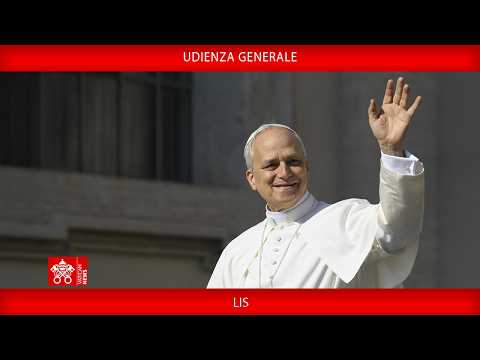
Pope Leo XIV's General Audience, 9 September 2026 (Vatican News)
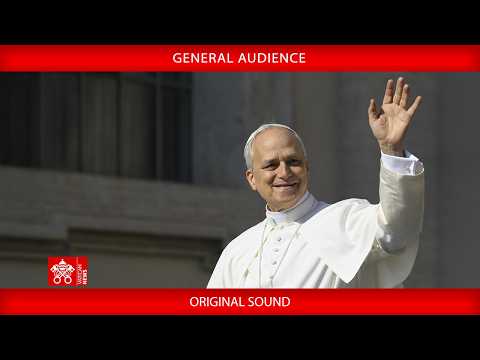
September 9, 2026 General Audience — Pope Leo XIV (Vatican News)
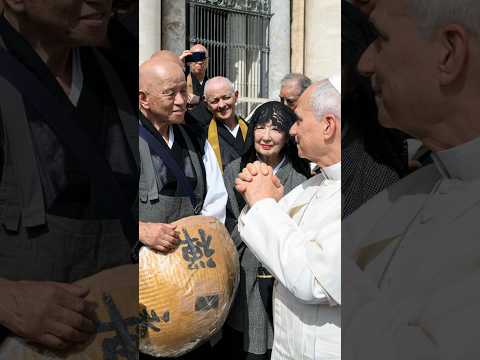
«Human dignity must always be defended as God's gift»: the report on the General Audience of 9 September 2026 (Vatican News)
📷 Photos
Pope Leo XIV's General Audience in St Peter's Square, 9 September 2026 (Vatican News)
📰 Articles
Vatican.vaOfficial
General Audiences of the Holy Father Leo XIV — 2026
The archive of the texts of Pope Leo XIV's General Audience catecheses in 2026.
Vatican.vaOfficial
Full text of the catechesis — General Audience of 9 September 2026
The official text of Pope Leo XIV's catechesis on human dignity as a gift and a responsibility (Gaudium et spes 12-22), published on vatican.va.
Vatican NewsOfficial
Pope at Audience: Church is called to serve humanity, unmask society's contradictions
The report of the 2 September General Audience, which opened the cycle of catechesis on the conciliar Constitution 'Gaudium et spes'.
Vatican NewsOfficial
Pope Leo XIV's page on Vatican News
The latest news and full coverage of Pope Leo XIV's General Audiences and the catechesis cycle on 'Gaudium et spes'.
📜 Speech text
General Audience — The Documents of the Second Vatican Council. IV. Pastoral Constitution ‘Gaudium et spes’ (GS 12-22). 2. Human dignity: a gift and a responsibility
Brothers and sisters, good morning and welcome! The Conciliar Constitution Gaudium et Spes (GS), by dedicating the first chapter to the dignity of the human person, emphasizes that it is the foundation and condition for “those values which are most highly prized today”, but these must not lose sight of their “divine source”, in order to avoid possible…
📋 Daily schedule
9
Sep
Pope Leo XIV receives in audience a group of about one hundred bishops from around the world, friends of the Focolare Movement, gathered in Rome for their congress on the theme 'Bearing witness to unity'. In his address, delivered in English, the Pope says that the theme of the congress and the spiritual heritage of Chiara Lubich are 'especially close to my heart' in 'an age sadly marked by growing polarization': 'If that was Chiara's task forty years ago, it is all the more ours today,' in the face of 'prejudice, racism, religious intolerance and even violence'. He observes that the West is 'now too marked by the effects of individualism, where once-stable networks of family, friendship and community are giving way to greater fragmentation', and that 'despite all the emphasis on individual freedom, today people often feel less free to be truly themselves' for fear of others' judgement. He recalls that the Church is a 'mystery of communion, a sign and leaven of unity for our world' and urges the bishops to nurture the interior life through prayer, the attentive celebration of Mass and the contemplation of the Trinity.
📰 Articles
Vatican NewsOfficial
Il Papa ai vescovi amici dei Focolari: testimoniate l'unità in un mondo frammentato
The report (in Italian) of the audience with the roughly one hundred bishops friends of the Focolare Movement gathered in Rome for the congress 'Bearing witness to unity'.
AgenSIRnews
Leo XIV: 'bearing witness to unity' is the antidote to prejudice, racism, religious intolerance, violence
The Pope's words to the bishops friends of the Focolare on unity as a response to the divisions of the contemporary world.
📜 Speech text
Address to a group of bishops friends of the Focolare Movement — «Bearing witness to unity» (tradotto)
In the name of the Father, and of the Son, and of the Holy Spirit. Peace be with you! Good morning to everyone, and welcome! I greet you warmly, friends of the Focolare Movement, gathered for your spiritual meeting. I am grateful for your visit today, which expresses your collegial affection, and I thank you for your constant prayers. It gladdens…
9
Sep
🕊️ Interreligious dialogue
Greeting to representatives of the Arab world and to young Ukrainian Greek-Catholics
📍 St Peter's Square, Vatican City
On the sidelines of the General Audience, Pope Leo XIV greets the members of the «Interreligious Platform for Dialogue and Cooperation in the Arab World», in Rome for a meeting with KAICIID – the King Abdullah bin Abdulaziz International Centre for Interreligious and Intercultural Dialogue. KAICIID's secretary general, António de Almeida-Ribeiro, present in the square, assures the Pope of «our absolute dedication to dialogue among religions, as an indispensable path to achieving concord not only in the Middle East, but everywhere». Among the groups greeted are also priests and lay members of the Ukrainian Greek-Catholic Church, gathered in Rome from 8 to 10 September for a forum on youth ministry, and Croatian pilgrims.
🎥 Videos
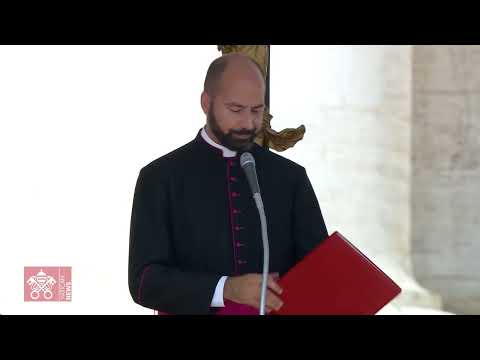
Pope Leo XIV's greeting to Croatian pilgrims at the General Audience, 9 September 2026 (Vatican News)
9
Sep
✉️ Message
Telegram to the inaugural Conference of the Catholic Institute for Nonviolence
📍 Pontifical Faculty of Theology San Bonaventura – Seraphicum, Rome
In a telegram signed by Cardinal Secretary of State Pietro Parolin and read at the opening session, Pope Leo XIV greeted the participants in the inaugural Conference of the Catholic Institute for Nonviolence, promoted by Pax Christi International at the Seraphicum in Rome from 9 to 11 September 2026 on the theme 'Unarmed and Disarming Peace: The Church's Emerging Paradigm Shift to Gospel Nonviolence'. The Pope encouraged them to 'continue the mission of promoting in the world a culture of peace, justice and reconciliation, rooted in the Gospel and witnessed in life' and invited them to 'become builders of “houses of peace”, where one learns to defuse hostility through dialogue, where justice is practised and forgiveness is preserved', entrusting the days of reflection to the Virgin Mary, Queen of Peace. The Pope's greetings and blessing were conveyed to the assembly by Msgr Giovanni Ricchiuti, president of Pax Christi Italy; among the speakers was Cardinal Charles Maung Bo, Archbishop of Yangon, who said that 'nonviolent strategies are not a lack of defence; they are a more effective form of defence'.
📰 Articles
Vatican NewsOfficial
Cardinal Bo: 'We need a new paradigm' for peace
Coverage of the inaugural Conference of the Catholic Institute for Nonviolence (Pax Christi International, Rome, 9-11 September 2026) and of Pope Leo XIV's telegram to the participants.
Vatican NewsOfficial
Il Papa: costruire “case di pace”, dove l'ostilità si disinnesca col dialogo
Il resoconto del telegramma di Papa Leone XIV, firmato dal Cardinale Parolin, alla Conferenza inaugurale del Catholic Institute for Nonviolence al Seraphicum di Roma (9-11 settembre 2026).
🗓️ Upcoming events
2026-09-12
🤝 Audience with participants in the 4th «Fratelli tutti» Synodal Meeting
In the morning, at the Apostolic Palace, the Pope receives representatives of trade union confederations, employer organizations, multilateral bodies and Church networks from across the Americas, at the close of the «Fratelli tutti» meeting (Rome, 10-12 September).
Go to page →2026-09-13
📖 Sunday Angelus in St. Peter's Square
At noon the Pope leads the recitation of the Angelus from the window of the Apostolic Palace, with a reflection on the Sunday Gospel and greetings to pilgrims.
Go to page →2026-09-14
📚 Opening of the "AQVA" exhibition in the Vatican Library
On his 71st birthday, at 11:00, the Pope visits the Vatican Apostolic Library and opens "AQVA", the first chapter of the exhibition cycle "Catastrophe and Wonder", featuring works by JR, Bill Moran and Fulvio Pierangelini (open to the public from 25 September 2026 to 14 May 2027).
Go to page →2026-09-16
🕊️ Audience with participants in the conference on the new martyrs
At 8:30 the Pope receives the speakers and participants in the conference 'The 21st century: a new age of martyrs?', at the end of the proceedings at the Augustinianum.
Go to page →2026-09-18
⛪ Assembly of the Diocese of Rome at St John Lateran
At 5:30 p.m. Pope Leo XIV presides over the Assembly of the Diocese of Rome in the Lateran Basilica, officially opening the new pastoral year.
Go to page →2026-09-25
✈️ Departure for the apostolic journey to France
From 25 to 28 September the Pope visits Paris (Élysée, UNESCO, Notre-Dame), Lourdes and Metz, including a meeting with some victims of abuse.
Go to page →2026-10-07
📖 Meeting for the tenth anniversary of Amoris Laetitia
A gathering in the Vatican (7-14 October) convened by the Pope with the heads of the Eastern Churches, the presidents of the Bishops' Conferences and some families.
Go to page →2026-10-08
🎓 Mass for the opening of the academic year of the Pontifical Universities
At 17:30, in St Peter's Basilica, the Pope presides at Holy Mass for the opening of the academic year of the Roman pontifical universities and institutions.
Go to page →2026-10-14
📖 Closing Mass of the meeting for the tenth anniversary of Amoris Laetitia
The Pope presides at the Holy Mass concluding the meeting held for the tenth anniversary of the Apostolic Exhortation Amoris Laetitia.
Go to page →2026-10-27
🕊️ In Assisi for the 40th anniversary of the Spirit of Assisi
Interreligious meeting promoted by the Community of Sant'Egidio for the fortieth anniversary of the World Day of Prayer for Peace called by John Paul II in 1986.
Go to page →2026-11-06
✈️ Departure for the apostolic journey to Uruguay, Argentina and Peru
From 6 to 17 November the Pope visits Montevideo, Buenos Aires and Lima, with a special stop in Chiclayo, his former diocese.
Go to page →🔗 Official sources