Wednesday 30 September 2026 — General Audience: journey to France and appeal for Tigray · Audience with the Dominican Contemplative Nuns
10:00
St Peter's Square, Vatican City
🎙️ General Audience
General Audience: the journey to France and the appeal for Tigray
📍 St Peter's Square, Vatican City
At 10:00 am, in St Peter's Square, Pope Leo XIV holds the Wednesday General Audience, devoted to recounting the Apostolic Journey to France and the visit to UNESCO (25-28 September), read through the symbol of Notre-Dame Cathedral: from the 2019 fire to today's rebirth as an image of the "Church of living stones." The Pope revisits the Vespers at Notre-Dame, the vigil with 80,000 young people at the Stade de France ("you are the saints of France!"), the visit to the Maison Bakhita, the Paris synodal assembly, the Mass in Place de la Concorde, the pilgrimage to Lourdes — where he reaffirms the inviolable dignity of every human life and recalls his meeting with some abuse victims — and the stop in Metz, where he recalls Robert Schuman and the Appeal signed by religious leaders for dialogue and peace. Among those present is young American Patrick Murphy, who over the past 14 months has travelled over 7,000 km by bicycle in France and on foot in Italy along the Via Francigena, carrying with him a Bible stamped at every place that hosted him. In his final greetings, the Pope makes a heartfelt appeal for Tigray and the neighbouring Ethiopian regions of Afar and Amhara, where hostilities have resumed: he calls on all parties to choose dialogue, recalling that "armed conflict never solves problems but only worsens them," and hopes for a timely contribution from the international community for humanitarian aid. He also recalls the beatification, the previous Sunday in Bologna, of the three martyr priests Ubaldo Marchioni, Elia Comini and Martino Capelli, killed in 1944, and invites everyone to pray the Rosary during October for an end to wars and for peace among peoples.
Event detail →🎥 Videos
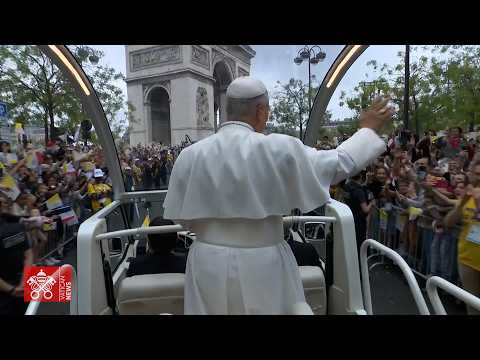
The Pope speaks about his Apostolic Journey to France, General Audience 30 September 2026 (Vatican News)
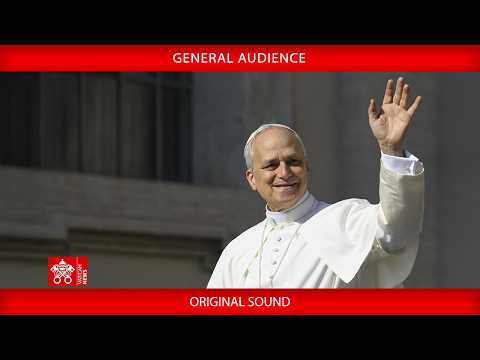
General Audience, 30 September 2026 (Vatican News)
General Audience of 30 September 2026 in Italian Sign Language (Vatican News)
📷 Photos

Pope Leo XIV at the General Audience of 30 September 2026, St Peter's Square (© Vatican Media)

The Pope on the popemobile among the faithful in St Peter's Square (© Vatican Media)

Patrick Murphy tells the Pope about his 7,000 km pilgrimage along the Via Francigena (© Vatican Media)

A moment from the Wednesday General Audience, 30 September 2026 (© Vatican Media)
📰 Articles
Vatican NewsOfficial
Rebirth of faith in France, a sign of hope for the whole Church
Report on the catechesis in which the Pope recounts the Apostolic Journey to France (25-28 September), from Notre-Dame to the youth vigil, from Lourdes to Metz.
Vatican NewsOfficial
The pilgrim who crossed 7,000 km with a Bible in hand
The testimony of Patrick Murphy, a young American who in 14 months travelled 7,000 km by bicycle and on foot along the Via Francigena.
Vatican NewsOfficial
Pope: in Tigray choose dialogue, conflict only worsens problems
The Pope's appeal over the renewed hostilities in Tigray and the Ethiopian regions of Afar and Amhara: dialogue instead of weapons and humanitarian aid for those in need.
Vatican.vaOfficial
The 2026 Audiences
The official archive of Pope Leo XIV's General Audiences in 2026.
📜 Speech text
General Audience - The Apostolic Journey in France and visit to UNESCO
Dear brothers and sisters, good morning!
Today I would like to talk to you about the Apostolic Journey I made to France in recent days . It was a great gift for me and for the people of God in that country, and I give thanks to the Lord for it. I wish to express once again my gratitude to all those who welcomed me, the civil authorities and the Pa
📋 Daily schedule
30
Sep
🙏 Audience
Audience with the International Commission of Contemplative Dominican Nuns
📍 Apostolic Palace, Vatican
In the morning Pope Leo XIV receives in audience the International Commission of Contemplative Dominican Nuns, just days after the recognition of the heroic virtues of the Servant of God Sister Maria Petra Giordano, a professed nun of the Order of Preachers. Recalling the tradition of Saint Dominic and Saint Thomas Aquinas, according to whom "every word of proclamation, in order to be true, must originate from silence," the Pontiff urges the religious not to ask "how to maintain structures that are emptying out," but rather to "listen to what the Spirit is asking, today, of Dominican contemplative life," safeguarding "a fire that burns and cannot be allowed to die," as Saint Catherine of Siena used to say. He lists the difficulties of religious life today — aging communities, declining vocations, economic problems, the burden of managing large properties, the challenges of shared formation and interculturality — warning against the "temptation of a survival spirit" that leads to isolation and a reduction of commitments. He invites the communities to be "oases of true and profound peace," where "the chaotic anxiety" tied to external things falls silent, and concludes by wishing the nuns to be "united without becoming uniform, faithful to tradition and open to what is new, contemplative because capable of bringing the world before God."
📷 Photos

The Pope with members of the International Commission of Contemplative Dominican Nuns, 30 September 2026 (© Vatican Media)

The Pope greets the religious sisters (© Vatican Media)

The Pope meets a religious sister (© Vatican Media)

A photo at the end of the audience (© Vatican Media)
30
Sep
🕊️ Interreligious meeting
The interreligious meeting "Religions and Diplomacy" concludes
📍 Vatican City
The international meeting "Religions and Diplomacy" (28-30 September) concludes at the Palazzo San Calisto, bringing together ambassadors accredited to the Holy See and religious representatives around the theme of interreligious dialogue as a resource for diplomacy. In the closing session, a paper on "Dialogue between cultures and religions" and remarks by Cardinal George Jacob Koovakad and Fr Alfonso Vincenzo Amarante.
30
Sep
🎾 Audience
Audience with the Tennis & Friends – Health and Sport delegation
📍 St. Peter's Basilica, Vatican City
In St. Peter's Basilica, on the eve of the 16th edition of Tennis & Friends – Salute e Sport (Foro Italico, October 2-4), Pope Leo XIV receives in audience the project's delegation, led by its president and founder Giorgio Meneschincheri. With him are Daniele Franco (president of the Agostino Gemelli University Hospital Foundation), Paolo Lorenzi, director of the Internazionali BNL d'Italia, Rossana Berardi, newly elected president of AIOM, the initiative's godmother Veronica Maya, a patient saved thanks to the project, and representatives of the worlds of sport, healthcare, the Armed Forces and volunteering. Prof. Meneschincheri presents the Pope with a painting by artist Mattia Mastrillo depicting a tennis racket and a stethoscope, along with a personalized tennis outfit, reiterating that health "is a good that concerns the whole community".
📰 Articles
Corriere dello Sportmedia
Tennis&Friends in udienza da Papa Leone XIV
Report on the audience with the Tennis & Friends delegation, on the eve of the 16th edition of the event at the Foro Italico (Italian).
LaPressemedia
Tennis & Friends da Papa Leone XIV alla vigilia della nuova edizione della manifestazione al Foro Italico
Details of the painting by Mattia Mastrillo given to the Pope and the delegation received (Italian).
🗓️ Upcoming events
2026-10-01
📿 Rosary with children for peace
At 17:00, in the Vatican Gardens near the Grotto of Lourdes, the Pope recites the Rosary with hundreds of children (between 700 and 1,000) from schools and parishes in Rome, opening the world week of prayer "One Million Children Praying the Rosary," promoted by the pontifical foundation Aid to the Church in Need.
Go to page →2026-10-02
📰 Press conference on the tenth anniversary of Amoris Laetitia
At 11:30, in the Holy See Press Office (Via della Conciliazione, 54), the meeting "Ten years from Amoris laetitia: Proclaiming the Gospel with Families Today," convoked by Pope Leo XIV in the Vatican from October 7 to 14, is presented. Speakers include Prof. Gabriella Gambino, Prof. Orietta Rachele Grazioli and Fr. Giacomo Costa S.I.
Go to page →2026-10-07
📖 Encounter on the tenth anniversary of Amoris Laetitia
Encounter in the Vatican (October 7-14) convoked by the Pope with the heads of the Eastern Churches, the presidents of Episcopal Conferences, and a number of families.
Go to page →2026-10-08
⛪ Mass for the inauguration of the academic year of the Pontifical Universities
At 18:00, in St. Peter's Basilica, Pope Leo XIV presides over the Mass for the inauguration of the academic year of the Pontifical Universities.
Go to page →2026-10-27
🕊️ Assisi for the 40th anniversary of the Spirit of Assisi
Interreligious meeting in Assisi marking the 40th anniversary of the World Day of Prayer for Peace called by John Paul II.
Go to page →2026-11-06
✈️ Departure for the apostolic journey to Uruguay, Argentina and Peru
From November 6 to 17 the Pope visits Montevideo, Buenos Aires and Lima, with a special stop in Chiclayo, his former diocese.
Go to page →🔗 Official sources