Thursday 1 October 2026 — Rosary with hundreds of children for peace · Audience with the President of the Central African Republic and the Lutheran World Federation
17:00
Grotto of Lourdes, Vatican Gardens
📿 Rosary
Rosary with hundreds of children for peace
📍 Grotto of Lourdes, Vatican Gardens
At 5:00 pm, at the Grotto of Lourdes in the Vatican Gardens, Pope Leo XIV recites the Rosary together with between 700 and 1,000 children from Rome's schools and parishes, for peace in the world. The event opens the international week of prayer of the "One Million Children Praying the Rosary" initiative, promoted by the pontifical foundation Aid to the Church in Need (ACN). This year the campaign runs from October 1 to 7, allowing dioceses, parishes and communities on several continents to take part, culminating on October 7 with the liturgical feast of Our Lady of the Rosary. The initiative, launched in 2005, this year involves children from Sudan, Bolivia, Zimbabwe, Paraguay and numerous other nations. This year's campaign draws inspiration from the message of Fatima — "In the end, my Immaculate Heart will triumph" — and is supported for the first time by the Fatima Shrine, the Pope's Worldwide Prayer Network and the World Apostolate of Fatima, together with the new "World Rosary Day". Cardinal Kurt Koch, ACN's international president and Prefect of the Dicastery for Promoting Christian Unity, notes that the Immaculate Heart of Mary "represents a life wholly open to the Holy Spirit" and presents Mary as a model of faith, love and prayer.
Event detail →🎥 Videos
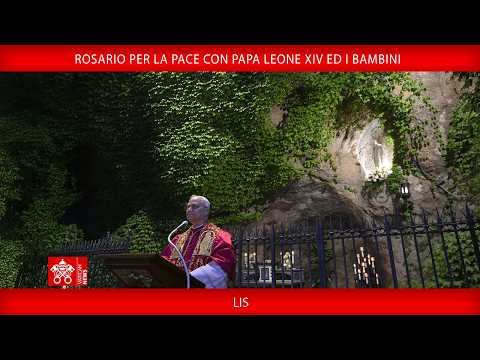
Rosary for Peace with Children, 1 October 2026 - Pope Leo XIV, in Italian Sign Language (Vatican News)
📋 Daily schedule
1
Oct
In the morning, in the Vatican Apostolic Palace, Pope Leo XIV receives in audience the President of the Central African Republic, Faustin-Archange Touadéra. Talks continue afterward in the Secretariat of State with Cardinal Pietro Parolin, Secretary of State, accompanied by Archbishop Paul Richard Gallagher, Secretary for Relations with States and International Organizations. The communiqué from the Holy See Press Office expresses satisfaction for the good relations existing between the Holy See and the Central African Republic, and notes discussion of the valuable contribution the Church offers to Central African society, as well as various issues relating to the country's social, political and humanitarian situation, with particular reference to the peace process.
📷 Photos

Pope Leo XIV receives the President of the Central African Republic, Faustin-Archange Touadéra, 1 October 2026 (© Vatican Media)

The Pope and President Touadéra in the Apostolic Palace (© Vatican Media)

Talks in the Secretariat of State with Cardinal Pietro Parolin (© Vatican Media)
1
Oct
In the Clementine Hall of the Apostolic Palace, Pope Leo XIV receives in audience a delegation of the Hera Group, the company that since December 2025 has managed environmental services in the Vatican — waste collection, transport, recovery and disposal — including with low-impact vehicles, among them a 100% electric vehicle introduced in April 2026 for St. Peter's Square. Recalling the opening pages of the Bible and Pope Francis's encyclical Laudato si', the Pope notes that the safeguarding of creation is an original «commandment» addressed to humanity, and urges moving beyond «the consumerist model» in the face of uncontrolled consumption of resources and the increasingly problematic disposal of waste. To the «culture of waste», he says, «the culture of care can be profitably opposed», extending from objects to human labour and to persons, and he calls on the Church to be «the first to practise what she herself proclaims».
📷 Photos

Pope Leo XIV receives the delegation of the Hera Group in the Clementine Hall, 1 October 2026 (© Vatican Media)
📜 Speech text
Audience with the Delegation of the "Hera Group" (translated)
In the name of the Father, and of the Son, and of the Holy Spirit. Peace be with you.
Good morning to all, and welcome!
I am pleased to welcome you, as a delegation of the Hera Group, for this moment of greeting, which gives us the opportunity to underline once again the importance of our responsibility for the care of creation. From the very fir
1
Oct
✝️ Ecumenical Audience
Audience with the Delegation of the Lutheran World Federation
📍 Private Library of the Apostolic Palace
In the private library of the Vatican Apostolic Palace, Pope Leo XIV receives in audience a delegation of the Lutheran World Federation, led by Bishop Henrik Stubkjær, President of the Federation, and the Reverend Anne Burghardt, General Secretary, together with Cardinal Kurt Koch, Prefect of the Dicastery for Promoting Christian Unity. The Pope recalls that the international Lutheran-Catholic dialogue, now in its sixth phase, has produced milestones such as the Joint Declaration on the Doctrine of Justification, and looks to 2030 — the 500th anniversary of the Augsburg Confession, read out in Augsburg on 25 June 1530 — as an occasion to jointly reaffirm «the pre-confessional ecumenical potential» of the document, originally conceived as an attempt at reconciliation and only later understood as a text of confessional division. He cites his predecessor Pope Francis, for whom ecumenism «is not an exercise of ecclesial diplomacy but a journey of grace», and urges all believers, especially theologians, to return «to our common roots, to the faith of the early Church», because Christ «must not become a foreign word in our world». The meeting closes with the shared recitation of the Lord's Prayer. The Pope receives as a gift a ceramic bowl decorated with a pomegranate and an olive branch, symbols of dialogue and peace, made through a vocational training initiative of the Lutheran World Federation in Jerusalem.
📷 Photos

Pope Leo XIV receives the delegation of the Lutheran World Federation, 1 October 2026 (© Vatican Media)

The Pope greets Bishop Henrik Stubkjær, President of the Lutheran World Federation (© Vatican Media)

The ceramic bowl given to the Pope by the Lutheran delegation (© Vatican Media)
📜 Speech text
Audience with the Delegation of the Lutheran World Federation
The grace of our Lord Jesus Christ, the love of God, and the communion of the Holy Spirit be with you (2 Cor 13:13).
My dear brothers and sisters in Christ,
I warmly welcome you, representatives of the Lutheran World Federation. I extend a special greeting to the President of the Lutheran World Federation. Thank you for your kind words and for th
1
Oct
Through the Pope's Worldwide Prayer Network, the video message is released with the prayer intention for the month of October, dedicated to mental health. Pope Leo XIV invokes mercy for «people facing mental health challenges» and asks forgiveness for the times the Church «has looked away», fueling stigma and discrimination. Citing data from the World Health Organization's Mental Health Atlas 2024 — according to which more than a billion people worldwide suffer from mental disorders, while barely 2% of national health budgets are devoted to this emergency — the Pope urges the Church to become «an open house, a safe space» that accompanies without excluding and listens without judging, acknowledging the daily work of professionals, families and volunteers who act «with patience and love».
🎥 Videos
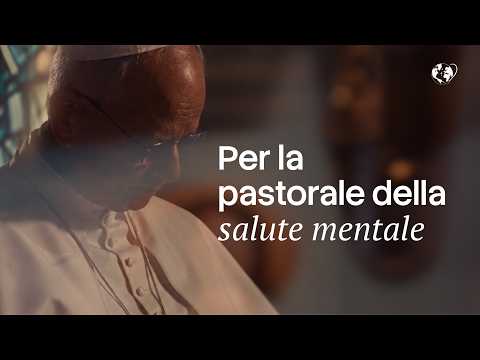
The Pope's video message for the October 2026 prayer intention: mental health (Vatican News)
🗓️ Upcoming events
2026-10-07
📖 Meeting for the 10th anniversary of Amoris Laetitia
A meeting in the Vatican (October 7-14) convened by the Pope with the heads of the Eastern Churches, the presidents of Episcopal Conferences and some families.
Go to page →2026-10-08
🎓 Mass for the inauguration of the academic year of the Pontifical Universities
At 5:30 pm, in St. Peter's Basilica, the Pope presides over Holy Mass for the opening of the academic year of Rome's Pontifical Universities and Institutions.
Go to page →2026-10-13
🌱 Presentation of the "Pope Leo XIV Sustainability Medal" to Card. Czerny
At the Borgo Laudato si' in Castel Gandolfo, the Pope presents Cardinal Michael Czerny with the first sustainability medal named after him, established by Villanova University.
Go to page →2026-10-14
📖 Closing Mass of the meeting on the 10th anniversary of Amoris Laetitia
The Pope presides over the Holy Mass closing the meeting held on the occasion of the tenth anniversary of the Apostolic Exhortation Amoris Laetitia.
Go to page →2026-10-27
🕊️ To Assisi for the 40th anniversary of the Spirit of Assisi
Interreligious meeting promoted by the Community of Sant'Egidio for the fortieth anniversary of the World Day of Prayer for Peace initiated by John Paul II in 1986.
Go to page →2026-11-06
✈️ Departure for the apostolic journey to Uruguay, Argentina and Peru
From November 6 to 17 the Pope visits Montevideo, Buenos Aires and Lima, with a special stop in Chiclayo, his former diocese.
Go to page →🔗 Official sources