Wednesday 14 October 2026 — Mass in St. Peter's Square for the tenth anniversary of Amoris laetitia, presided over by Card. Tagle; the Pope continues his convalescence at Gemelli
10:00
St. Peter's Square, Vatican City
📖 Holy Mass
Closing Mass of the meeting on the tenth anniversary of Amoris laetitia, presided over by Card. Tagle
📍 St. Peter's Square, Vatican City
At 10:00 am, in St. Peter's Square, Cardinal Luis Antonio Tagle, dean of the College of Cardinals, presided over the Holy Mass for the tenth anniversary of the apostolic exhortation "Amoris laetitia," concluding the meeting convened in the Vatican from October 7 to 14 with the heads of the Eastern Catholic Churches and the presidents of the Episcopal Conferences. Since Pope Leo XIV has been hospitalized since October 13 at the Gemelli Polyclinic for the removal of the lower lobe of his right lung (found to be a lung adenocarcinoma), Cardinal Tagle read the homily prepared by the Pontiff, introducing it with the words "I will now read the homily prepared by the Holy Father, Pope Leo XIV." In the text, Leo XIV reflects on married and family charity starting from the First Reading (Saint Paul's hymn to charity) and from "Amoris laetitia," recalling that "however wounded a family may be, it can always grow, beginning with love," and urging the rediscovery of common prayer within the family. Cardinal Tagle also presided over the celebration with a special mandate from the Pope to publicly manifest the ecclesiastical communion granted by Leo XIV to His Beatitude Polis III Nona, Patriarch of Baghdad of the Chaldeans, present at the Eucharist. The celebration also became a choral moment of prayer for the Pontiff's health by the faithful gathered in the square.
Event detail →🎥 Videos
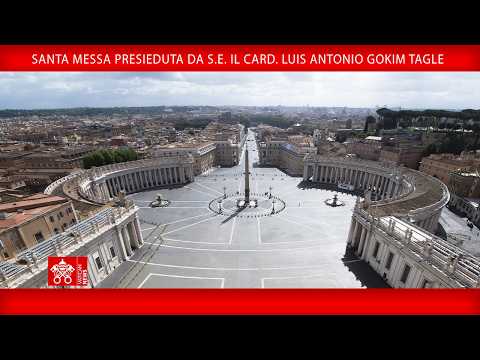
Santa Messa, 14 ottobre 2026 (Vatican News Italiano)
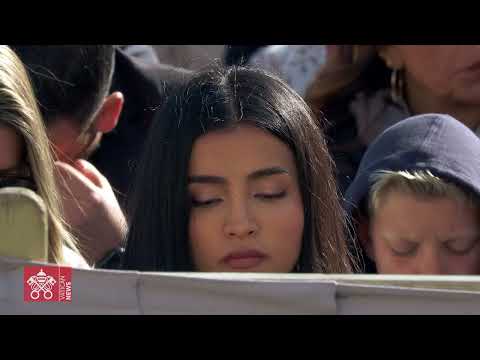
Highlights - Holy Mass, October 14, 2026 (Vatican News)
📷 Photos

Cardinal Tagle presides over the closing Mass of the meeting on Amoris laetitia (Vatican Media)

The Holy Mass in St. Peter's Square, attended by bishops and families (Vatican Media)

A moment of the Eucharistic celebration of October 14 (Vatican Media)
📰 Articles
Holy See Press OfficeOfficial
Holy Mass for the tenth anniversary of the Apostolic Exhortation Amoris laetitia
Full text of the homily prepared by Pope Leo XIV and read by Cardinal Tagle.
Vatican NewsOfficial
The Pope: however wounded a family may be, it can always grow, beginning with love (translated)
Report on the closing Mass presided over by Card. Tagle, with a summary of the Pope's homily.
Vatican NewsOfficial
The faithful's prayers for Leo XIV from St. Peter's Square: "Come back to us soon!" (translated)
Testimonies of pilgrims present at the Mass, who also came to pray for the Pontiff's health.
Holy See Press OfficeOfficial
Calendar of the liturgical celebrations presided over by the Holy Father Leo XIV (September - October 2026)
The official calendar of the papal celebrations, with the October 14 Mass concluding the Amoris laetitia meeting.
📜 Speech text
Homily for the Mass on the tenth anniversary of Amoris laetitia (read by Card. Tagle) (translated)
I will now read the homily prepared by the Holy Father, Pope Leo XIV.
"The joy of love experienced by families is also the joy of the Church" (Francis, Apostolic Exhortation Amoris laetitia, 19 March 2016, 1). With these words, ten years ago, Pope Francis began the apostolic exhortation Amoris laetitia (AL).
Today we celebrate the Eucharist, presen
📋 Daily schedule
08:40
14
Oct
⚕️ Medical bulletin
"A peaceful night" for the Pope at Gemelli Polyclinic
📍 Agostino Gemelli University Polyclinic, Rome
The Holy See Press Office issued a brief update in the morning on Pope Leo XIV's condition, the day after the removal of the lower lobe of his right lung: "The night passed peacefully for the Pope. Further information later in the day." The operation, which concluded positively without complications, had confirmed a lung adenocarcinoma; post-operative hospitalization remains estimated at about a week.
15:38
14
Oct
⚕️ Medical bulletin
Regular post-operative course: the Pope has resumed walking and eating
📍 Agostino Gemelli University Polyclinic, Rome
In the afternoon the Holy See Press Office issued a second medical bulletin: "This morning the Holy Father underwent the blood tests and chest X-ray scheduled after the surgery. The results confirm a regular post-operative course: the values are normal for this type of operation." The Pope carried out respiratory physiotherapy, began walking in his room and resumed a regular diet with breakfast and lunch; the statement describes his mood as "good" and notes that "the course is proceeding as expected."
📷 Photos

The Agostino Gemelli University Polyclinic (AFP)
14
Oct
🙏 Prayers for the Pope
The world prays for Leo XIV's health
📍 Rome and several dioceses around the world
As the Pope continues his convalescence at Gemelli, prayer initiatives for his health are growing around the world. In Rome, faithful of various nationalities gathered in St. Peter's Square during the Mass for Amoris laetitia: Fr. Roland Elsner (Germany) recounted that "what was supposed to be an audience with the Pope turned into a moment of prayer"; Robin Weeks (United States) came "to take part in the Mass" and pray for the Pontiff; José Zozaya (Mexico) expressed hope of "seeing him again very soon here, in St. Peter's Square"; Fr. Michael Antony (India) invited everyone to pray that the Pope "may soon return to his holy see." Prayer initiatives were also reported in Gaza, at the Holy Family parish (Masses and Eucharistic adoration), and in Fatima, where about one hundred thousand pilgrims prayed for the Pope during the anniversary pilgrimage. Solidarity also came from the US Conference of Catholic Bishops, the Archbishop of Westminster, and dioceses, monasteries and religious communities in Poland, Spain, Malta and Portugal, as well as from Buddhist communities. The International Union of Superiors General (UISG) wished the Pontiff "serenity, strength and hope to face this time of trial."
📷 Photos

Faithful praying in St. Peter's Square for the Pope's health (Vatican Media)

Religious sisters praying for the Pope (ANSA)
📰 Articles
Vatican NewsOfficial
The world over, people are praying for Leo XIV's health (translated)
A roundup of prayer initiatives for the Pope in Rome, Gaza, Fatima and various dioceses around the world.
Vatican NewsOfficial
The faithful's prayers for Leo XIV from St. Peter's Square: "Come back to us soon!" (translated)
Testimonies of pilgrims present in St. Peter's Square.
🗓️ Upcoming events
2026-10-15
📿 Rosary to Our Lady Undoer of Knots presided over by Card. Comastri for the Pope's health
At 8:00 pm in the Vatican, Cardinal Angelo Comastri presides over the recitation of the Rosary to invoke the health of Pope Leo XIV, convalescing at Gemelli Polyclinic.
Go to page →2026-10-16
🙏 Opening of the fertility congress "The splendor of the human" (Pope's audience cancelled)
The Pope's audience for the opening of the congress is cancelled due to post-operative convalescence at Gemelli.
Go to page →2026-10-27
🕊️ To Assisi for the 40th anniversary of the Spirit of Assisi
Interreligious gathering promoted by the Community of Sant'Egidio for the fortieth anniversary of the World Day of Prayer for Peace desired by John Paul II in 1986. The Community of Sant'Egidio confirmed in a press conference the Pope's participation; he will preside over the Christian prayer in the lower Basilica together with Ecumenical Patriarch Bartholomew I.
Go to page →2026-11-06
✈️ Departure for the apostolic journey to Uruguay, Argentina and Peru
From November 6 to 17 the Pope visits Montevideo, Buenos Aires and Lima, with a special stop in Chiclayo, his former diocese.
Go to page →🔗 Official sources