Wednesday 4 November 2026 — General Audience: faith and social, political and economic life (Gaudium et Spes) · Audiences with the President of Chile and L'Œuvre d'Orient · Audience with Bob Dylan
10:00
St Peter's Square, Vatican City
🙏 General Audience
General Audience: "Faith and social, political and economic life"
📍 St Peter's Square, Vatican City
At 10:00, after riding through the crowd in the popemobile, Leo XIV continued his catechesis cycle on "The Documents of the Second Vatican Council" with the eighth stage on Gaudium et Spes: "Faith and social, political and economic life" (GS 63-76; reading 1 Pt 2:12-13.17). Economic development, he recalled, must always serve people and remain under human control; work is "the heart of the economy", and unemployment, exploitation and working conditions that endanger health and life itself are unacceptable. The political community exists for the common good, and politics that tends the wounds of peoples and of those who suffer injustice offers reasons for hope for humanity's future. The Pope encouraged young people to engage in these fields and called for renewed formation in the Church's social doctrine. In his greetings he asked for prayers for the Apostolic Journey to Uruguay, Argentina and Peru beginning on Friday, recalled the 7 November beatifications in Antigua Guatemala (Augusto Rafael Ramírez Monasterio) and Santander (Francisco González de Córdova and 79 companions) and, in Polish, the 70th anniversary of the release of Cardinals Wyszyński and Mindszenty.
Event detail →🎥 Videos
November 4th, 2026 General Audience - Pope Leo XIV (Vatican News)
November 4th, 2026 General Audience, Pope Leo XIV + ASL (Vatican News English)
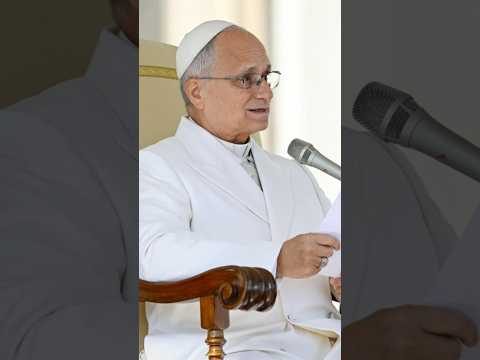
Pope at Audience: Politics that tends wounds and fights injustice gives hope (Vatican News English)
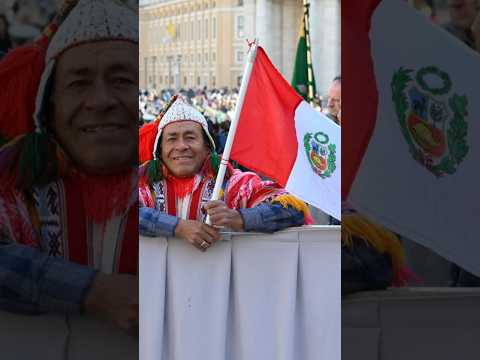
Pope Leo XIV invites the faithful to pray for Apostolic Journey to Latin America (Vatican News English)
📷 Photos

The Pope among the faithful (© Vatican Media)

Leo XIV blessing a little girl (© Vatican Media)

The Pope delivering the catechesis (© Vatican Media)

A moment of the General Audience (© Vatican Media)

Diocesan vocation directors from the United Kingdom meet the Pope (© Vatican Media)

A group of Vietnamese priests from the diocese of Cân Tho meets Leo XIV (© Vatican Media)
📰 Articles
Vatican NewsOfficial
Pope at Audience: Politics that tends wounds and fights injustice gives hope
How Christians can engage in economic and political life in order to build peace.
Vatican NewsOfficial
Pope Leo XIV invites the faithful to pray for Apostolic Journey to Latin America
The Pope asks for prayers for the journey and recalls the 7 November beatifications.
Vatican NewsOfficial
La preghiera di quattro piloti argentini per il viaggio di Leone in America Latina
Vatican News report (in Italian) on the voices of the faithful in St Peter's Square.
Holy See Press OfficeOfficial
Holy See Press Office Bulletin, 4 November 2026 — The General Audience
Official report and text of the catechesis (in Italian).
📜 Speech text
General Audience - Gaudium et Spes: faith and social, political and economic life
Catechesis. The Documents of the Second Vatican Council. IV. Constitution Gaudium et Spes. 8. Faith and social, political, and economic life (GS, 63–76)
Dear brothers and sisters, good morning and welcome!
The social dimension is an integral part not only of human nature, but also of our faith in Christ Jesus, as the precious legacy we receive fr…
📋 Daily schedule
4
Nov
🤝 Audience
Audience with the President of the Republic of Chile, José Antonio Kast Rist
📍 Apostolic Palace, Vatican City
In the morning the Pope received the President of Chile, José Antonio Kast Rist, who then met Archbishop Paul Richard Gallagher, Secretary for Relations with States and International Organizations. During the cordial talks at the Secretariat of State, the Press Office reported, the good relations between the Holy See and Chile and the contribution of the Catholic Church to the country's social and spiritual life were highlighted; regional and international issues were then discussed, with particular reference to migration and demographic decline.
📷 Photos

The Pope in conversation with Chilean President José Antonio Kast Rist (© Vatican Media)

The exchange of gifts between the Pope and Chilean President José Antonio Kast Rist (© Vatican Media)
📰 Articles
Vatican NewsOfficial
Pope Leo receives President of Chile at the Vatican
The talks at the Secretariat of State: migration and demographic decline.
Holy See Press OfficeOfficial
Press Office communiqué: Audience with the President of the Republic of Chile
Official communiqué of 4 November 2026 (in Italian and Spanish).
4
Nov
🤝 Audience
Audience with the delegations of L'Œuvre d'Orient and the Institut Chrétiens d'Orient
📍 Consistory Hall, Apostolic Palace, Vatican City
The Pope received the two delegations ahead of the conference "Peace tested by the world: Eastern Christians, conflicts and peacebuilding" (Rome, Pontifical Oriental Institute, 5-6 November). In his greeting in French he entrusted the victims of armed conflicts to divine mercy and encouraged the search for the conditions of a just and lasting peace, particularly in the Middle East, through dialogue between faith and reason, culture and history, and through a new international network of academics who make peace an object of research.
📷 Photos

The Pope addresses the delegations in the Consistory Hall (© Vatican Media)
📰 Articles
📜 Speech text
Greeting to the delegation of L'Œuvre d'Orient and the Institut Chrétiens d'Orient (tradotto)
Your Excellency, Mr President, Dear brothers and sisters,
two days ago the Latin liturgy invited us to remember all the faithful departed, an occasion to entrust to divine mercy the many victims of the armed conflicts that still bloody the world. The month of November thus invites us to hope. This virtue is undoubtedly the one that will illuminate…
4
Nov
In the afternoon the Pope received in the Apostolic Palace the American singer-songwriter and poet Bob Dylan (Robert Allen Zimmerman), 85, a Nobel laureate in Literature, who is in Rome for his 5 November concert at the Palazzo dello Sport as part of the Rough and Rowdy Ways Tour. Vatican News describes a brief meeting, with greetings and a few lighthearted exchanges. The Pope gave him a rosary and Dylan reciprocated with his autobiography, Chronicles: Volume One. Leo XIV had already quoted him in July 2026, in the preface to the Vatican Publishing House book Disarmed and Disarming: Peace Is a Gift, using the words of Go Away You Bomb (1963): “I hate you cause yer man-made and man-owned, an' man-handled”. This is not Dylan's first meeting with a Pope: in 1997 he performed before John Paul II at the National Eucharistic Congress in Bologna.
📷 Photos

The handshake between Pope Leo XIV and Bob Dylan (© Vatican Media)

Pope Leo XIV and Nobel laureate Bob Dylan (© Vatican Media)

Bob Dylan meets Pope Leo at the Vatican (© Vatican Media)
4
Nov
📋 Resignations and appointments
Bishop appointments: Limeira (Brazil) and Auxiliaries of Guadalajara (Mexico) (translated)
📍 Vatican City
The Holy Father appointed Bishop Carlos José de Oliveira as Bishop of Limeira (Brazil), transferring him from the See of Apucarana, and appointed Rev. Ramón Duarte Miranda (titular See of Sereddeli) and Rev. Héctor Michel Figueroa (titular See of Taparura), both of the clergy of Guadalajara, as Auxiliary Bishops of Guadalajara (Mexico).
🗓️ Upcoming events
2026-11-05
⛪ Mass for deceased Cardinals and Bishops
At 9:00 at the Altar of the Chair in St Peter's Basilica
Go to page →2026-11-06
✈️ Departure for Uruguay, Argentina and Peru
Start of the Apostolic Journey to South America (6-17 November)
Go to page →2026-11-18
⛪ 400th anniversary of the Dedication of St Peter's
Holy Mass at 17:00 in St Peter's Basilica
Go to page →2026-11-22
🌍 World Youth Day in the dioceses
Solemnity of Christ the King: 41st WYD celebrated in the particular Churches
Go to page →🔗 Official sources