Sunday 8 November 2026 — Saint Thérèse parish, Mass in Florida, farewell to Uruguay and arrival in Argentina
10:15
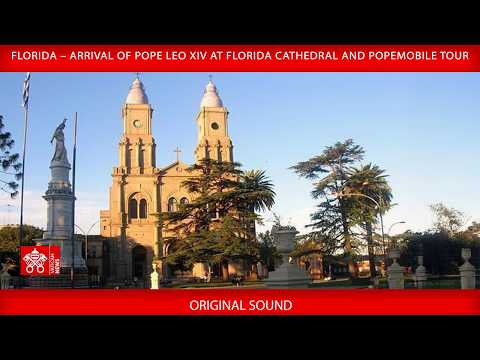
Square in front of the Cathedral Basilica of Florida, National Shrine of the Virgen de los Treinta y Tres, Uruguay
⛪ Holy Mass
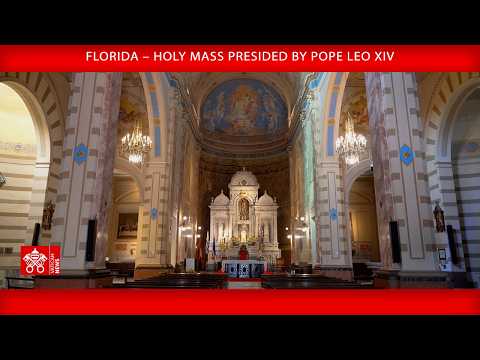
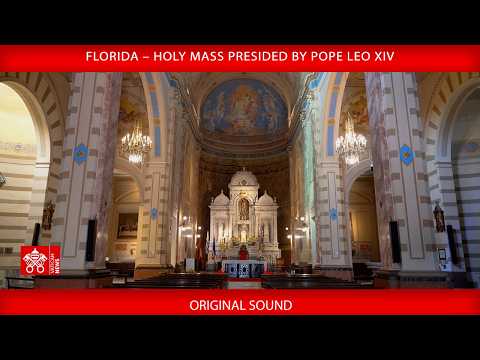
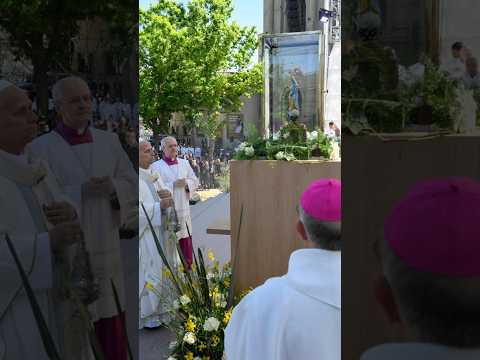
Holy Mass in Florida, in front of the Shrine of Our Lady of the Thirty-Three
📍 Square in front of the Cathedral Basilica of Florida, National Shrine of the Virgen de los Treinta y Tres, Uruguay
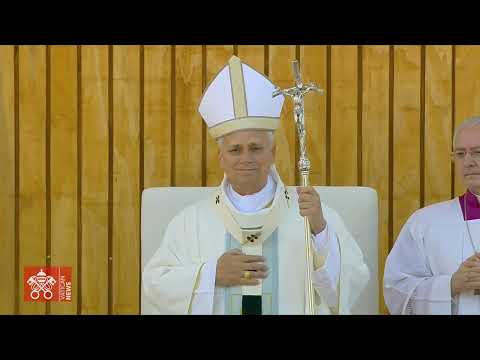
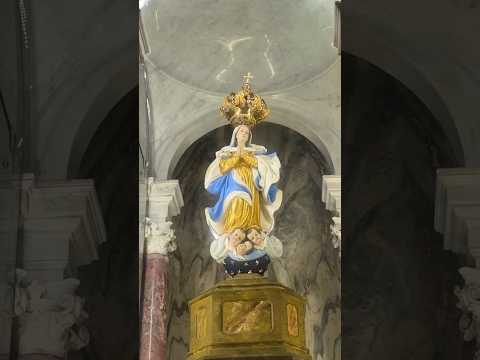
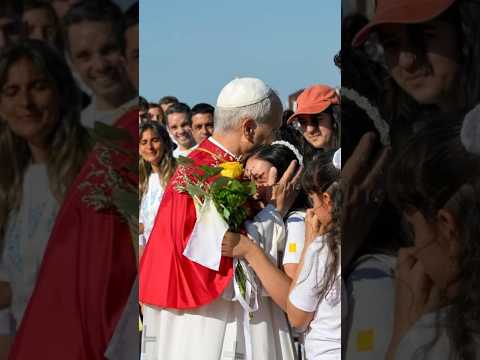
On the feast of Our Lady of the Thirty-Three, patroness of Uruguay, Leo XIV presided at Mass at 10:15 in the square outside the Cathedral Basilica of Florida, after a popemobile tour among the faithful: according to the Holy See Press Office bulletin, about 50,000 people filled the square and nearby streets. In his homily the Pope thanked the mothers, grandmothers and women who have passed on the faith, and urged: "Uruguay, we must set out!", to go out to those who have drifted away from God. He placed the Golden Rose before the image of Our Lady and re-consecrated the country to Mary. After words of thanks from the Bishop of Florida, Bishop Alfonso Bauer, the Pope thanked all those who made the visit possible ("Thank you very much, Uruguay!") and prayed the Angelus. He then went to the Jesús Buen Pastor guest house for lunch with the bishops.
Homily at Holy Mass in Florida, Shrine of Our Lady of the Thirty-Three
Dear brothers and sisters of this land of Uruguay,
With great enthusiasm, I am here with you today next to Our Lady of the Thirty-Three. I come as a pilgrim to share in the faith and the tenderness with which the Uruguayan people have looked at the Mother of God for generations. I say to those who have come from different places, to those who have
Dear brothers and sisters of this land of Uruguay,
With great enthusiasm, I am here with you today next to Our Lady of the Thirty-Three. I come as a pilgrim to share in the faith and the tenderness with which the Uruguayan people have looked at the Mother of God for generations. I say to those who have come from different places, to those who have been making the pilgrimage here for years, and to those who are visiting for the first time today: I embrace all of you with affection and entrust you to Mary’s protection.
Today, the word of God presents us with two women who lived in very different times and upon whom almost the same blessing is bestowed. To Judith, after the liberation of her people, it was said: “O daughter, you are blessed by the Most High God above all other women on earth” (Jud 13:18). Many centuries later, Elizabeth welcomes Mary into her home and exclaims: “Blessed are you among women” (Lk 1:42).
This connection was recognized very early on by Christian tradition. In Judith, it saw a woman who did not allow herself to be overcome by fear at a difficult time for her people. Through prayer and fasting, she made a decision that led her to risk her own life (cf. Jud 8-10). When victory came, Judith did not take credit for it, for she knew full well who had saved Israel, and said: “Begin a song to my God with tambourines, sing to my Lord with cymbals” (Jud 16:1). That is why the words with which her people welcomed her are so majestic: “You are the glory of Jerusalem, you are the great boast of Israel, you are the great pride of our nation!” (Jud 15:9). The people celebrated what God had done for them through Judith.
Hearing these words today before the Patroness of this country has a special resonance. This small image is linked to a decisive moment in Uruguay’s history. In 1825, those who were fighting for the freedom of this land also turned to Mary, to place the beginning of their efforts under her protection. That gesture reminds us that the history of peoples, too, cannot be fully understood without reference to God. Thus, from the earliest days of the nation’s founding, Uruguay has been intimately linked to a Mother. Since that time, generations have come and gone, circumstances have changed, including the relationship of many Uruguayans to the faith. Yet she has remained here. While Mary accompanied the history of this people, at the same time in so many homes other women preserved the faith and passed it on to their children.
I think of the mothers who placed the first words of prayer on their children’s lips, who took them to be baptized, who prepared them to receive the sacraments, and who taught them to live out Christian charity. I think of the grandmothers who kept an altar at home, who prayed for the living and the deceased and who made God present in the ordinary events of life. Even in the early days of the Church we find something similar. Timothy’s faith was rooted in two women, with the Apostle fondly recalling Timothy’s grandmother Lois and his mother Eunice. In them, “sincere faith” had first taken root, which Paul also recognized in Timothy (cf. 2 Tim 1:5). Scripture tells us little about those two women. We know, however, that Timothy, who would become a close collaborator of Saint Paul, was formed by that faith learned at home (cf. Acts 16:1-3).
This land also has women’s names inscribed in its history of faith. Among them is Saint María Francisca Rubatto, who chose to remain among you and serve those most in need here. There are also the Blessed Martyrs Dolores and Consuelo Aguiar-Mella, two sisters born in Montevideo. Their lives were very different, but in all three we find supreme examples of faithfulness.
Yet most of this history of faith in the country was never written down in books. It was quietly passed down from generation to generation within families. When we wonder and ask where our faith comes from, the name of a specific woman often comes to mind: a mother, a grandmother, a godmother, a religious sister or a catechist. We may not remember every word they said to us, but we do remember how they prayed, how they spoke of the Lord and with what conviction they lived out what they taught us.
Today I would like to thank all of those women. Thank you for having believed and for having kept open a path to God in so many families. Some were able to do so supported by a long-standing family tradition; others had to sustain that faith with greater effort, perhaps without always finding understanding or support within their own homes. I know that many of you carry a very specific sorrow. You taught your children to pray, and today they no longer do so. You used to attend Mass together, and it has been years since they entered a church. You spoke to your grandchildren about God, and now you do not know if those words left a mark. Sometimes you wonder if you did something wrong or if it was all futile. Allow me to recall Saint Monica here, who knew that pain well. She prayed for years for a son who seemed to be drifting further and further from God, but she never stopped trusting in his grace. Therefore, do not consider what you have sown to be lost. The Lord himself taught us that the seed can grow without the sower knowing how (cf. Mk 4:27).
Mothers and grandmothers: never tire of passing on the faith! Preach with your lives as well as with your words. Insist on prayer, love, and hope; insist on them in season and out of season (cf. 2 Tim 4:2). Do so with patience, without harshness or discouragement. Even if your loved ones seem far from God, continue to place them before him. Do not stop blessing them, accompanying them, and simply reminding them of what they once received. There are doors that you cannot open, but God can.
I would also like to address the men — fathers and grandfathers. Your children and grandchildren need to see that the faith occupies a genuine place in the lives of the men in your family. Imitate Saint Joseph, who took on the task of raising Jesus, bringing him to the temple, teaching him to work honestly and showing him that God must come first in a person’s life. Dear fathers and grandfathers, young people need to see that you pray, receive the sacraments, treat your wives with respect, ask for forgiveness and live with integrity, even when doing so requires sacrifice. Children learn a great deal by seeing that their father can kneel before God without feeling that he is any less of a man for doing it.
Scripture called on God’s people to keep the words they have received from him in their hearts and to teach them to their children, to speak of them “when you are at home and when you are away, when you lie down and when you rise” (Deut 6:7). God was central to conversation, decision making and daily family life. In this way, children learned that the faith they received from their parents was also what their parents lived by. Likewise today, bishops, priests and consecrated persons are also called to support families in this task, generously exercising their spiritual fatherhood and motherhood, accompanying those who falter and helping many to rediscover the path to God.
Passing on the faith means bringing others to Christ, whom we ourselves have encountered. Mary shows us precisely how to do this. In the Gospel, Elizabeth welcomes her exclaiming: “Blessed are you among women, and blessed is the fruit of your womb” (Lk 1:42). Mary does not keep that praise to herself. When Elizabeth proclaims her blessed, Mary responds by singing of the Lord’s greatness (cf. Lk 1:46-55). At Cana, when others turn to her, she directs them to her Son: “Do whatever he tells you” (Jn 2:5).
In the second reading, Saint Paul explicitly states a truth that Mary’s entire life proclaims: “There is one God; there is also one mediator between God and humankind, Christ Jesus, himself human” (1 Tim 2:5). All of Mary’s greatness is based on her relationship with Christ: she welcomes him, lives by him, and leads others to him. An encounter with the Master is the goal of all evangelization and of all authentic Marian devotion. The Son of God has given himself up for all; thus, no one can be excluded from the Church’s prayer. That is why Saint Paul asks us to pray “for kings and all who are in high positions” (1 Tim 2:2), and for all people, because God “desires everyone to be saved” (1 Tim 2:4).
On this feast of the Patroness of Uruguay, let us bring this entire people before the Lord. Let us pray for those who bear the responsibility of governing it, that they may seek with integrity the good of all; for families, for young people, for those who suffer, for those who feel far from God and for those who need to return to him and change their lives.
Saint Luke shows us how that mission begins. After conceiving the Son of God, Mary “set out and went with haste” (1:39). She does not wait for Elizabeth to come looking for her, but rather goes out to meet her and enters her home, carrying the Lord with her. There, the child leaps for joy, and Elizabeth is filled with the Holy Spirit (cf. Lk 1:41-44). Mary’s action also points out the way for us. We cannot always wait for those who have strayed to return on their own. People of Uruguay: you must set out on the journey! You must enter people’s homes once more, draw near to them, listen to their questions and bring them to Christ! Each of you knows a person toward whom you need to take that step: perhaps a child, a friend, a neighbor, someone who stopped believing long ago or who has never had anyone close to them to speak to them about God.
May the Queen of Heaven sustain those who continue to sow the faith. May she teach us to recognize Christ in the poor, the sick and those who are alone, and teach us to bring him to places where he is not yet known.
Soon I will place the Golden Rose before this image. With this gesture, I wish to honor the one who is indeed “the great pride of our nation” (Jud 15:9) and to make visible the fulfillment of the words she herself spoke: “All generations will call me blessed” (Lk 1:48).
To Mary, commander and guide of this people, I wish to consecrate this nation anew, to entrust this land and all who live in it to her protection and to implore God that, through her powerful intercession, he may thwart the works of the evil one and preserve beloved Uruguay from whatever might lead it away from Christ. May this Golden Rose, offered as a sign of veneration and filial love, also remind her children that they are called to imitate her by loving Christ as she loved him, and bringing him to others as she brought him. Amen.
Words of thanks at the conclusion of Holy Mass in Florida
At the conclusion of this Eucharistic celebration, and before saying farewell to this beloved country, I wish to thank all the people who made my visit possible. I thank the civil and religious authorities, the groups that organized each event, the volunteers, the families and communities who came together and worked to make it possible for us to s
At the conclusion of this Eucharistic celebration, and before saying farewell to this beloved country, I wish to thank all the people who made my visit possible. I thank the civil and religious authorities, the groups that organized each event, the volunteers, the families and communities who came together and worked to make it possible for us to share these days together, as well as the people who have accompanied us through the various means of communication. I had been told that, although Uruguay is a relatively small country, its people have generous hearts and are capable of great things. That has become evident over these past few days. You have prepared everything so well, and I express my heartfelt gratitude to all of you.
We have gladly shared the joy of faith in Christ, and we have witnessed how this joy has grown with each passing day. May what we have experienced in Montevideo, in Paysandú and here in Florida spread to the rest of the country and the world. Such is the mathematics of faith: what we have received and freely offer, with God’s grace, multiplies, opens new horizons and enriches our lives, giving them new meaning. Dear brothers and sisters of Uruguay, help faith, hope and charity to continue growing. Keep living and proclaiming the joy that springs from our encounter with our Lord Jesus Christ and you will have, as a result, a full and fruitful life.
Through the intercession of Our Lady of the Thirty-Three, I ask God to bless the Uruguayan people and to guide them along paths of unity and peace. I carry you in my heart and I ask that you continue to accompany me with your prayers. Thank you very much, Uruguay!
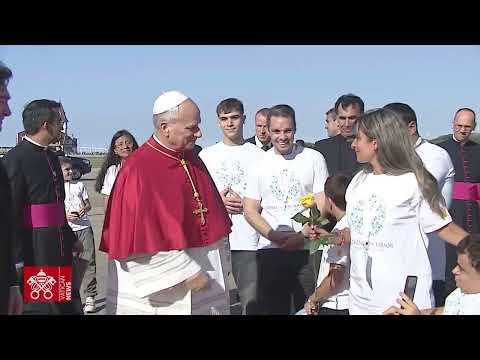
After leaving the Apostolic Nunciature in Montevideo at 8:00, on the way to Florida the Pope stopped, as planned, at the parish of Santa Teresita in Juanicó, the first in Uruguay dedicated to the saint after her canonization. He entered the church for a brief moment of prayer, then greeted the roughly 2,000 people gathered outside, recalling his family's, and especially his father's, devotion to Saint Thérèse. He urged them "not to be afraid to say: 'I am a Christian, I am a Catholic, I believe in Jesus Christ'" and imparted his blessing.
🎥 Videos
▶
Stop at the parish of Saint Thérèse in Juanicó: prayer and greeting
📷 Photos
Leo XIV at the parish of Saint Thérèse in Juanicó (Vatican Media)
The Pope in prayer in the parish of Saint Thérèse in Juanicó (Vatican Media)
The crowd outside the parish of Saint Thérèse in Juanicó (Vatican Media)
Off-the-cuff greeting at the parish of Saint Thérèse in Juanicó (tradotto)
Good morning and happy Sunday! You don't know it, but I am truly very happy about this brief moment in the parish of Saint Thérèse. The first parish in Uruguay dedicated [to her] after her canonization. My family, especially my father, had a great devotion to Saint Thérèse. And so, being able to stop here on this feast day — you know that we are on
Good morning and happy Sunday! You don't know it, but I am truly very happy about this brief moment in the parish of Saint Thérèse. The first parish in Uruguay dedicated [to her] after her canonization. My family, especially my father, had a great devotion to Saint Thérèse. And so, being able to stop here on this feast day — you know that we are on our way to Florida to celebrate the feast of Our Lady of the Thirty-Three — is a moment of devotion, of gratitude, a moment to recognize that God's grace, God's love, is always with us; and that God accompanies us at every moment, both in happy times and when we suffer, perhaps because of illness, pain and many difficulties.
Let us ask the Lord's blessing upon each of you and upon your families; we have here with us rosaries and devotional objects, which we bless at this moment. And let us ask the Lord to help all of us to grow in faith, to live our faith with courage, not to be afraid to say: "I am a Christian, I am a Catholic, I believe in Jesus Christ". Jesus gave us life and teaches us to live in the same way: serving others, walking together, seeking the presence of God and sharing with everyone the joy of being Christians.
The Lord be with you. [...]
Blessed be the name of the Lord. [...]
Our help is in the name of the Lord. [...]
May the blessing of almighty God, the Father, the Son and the Holy Spirit, come down upon you.
📍 "General Cesáreo L. Berisso" Air Base, Montevideo, Uruguay
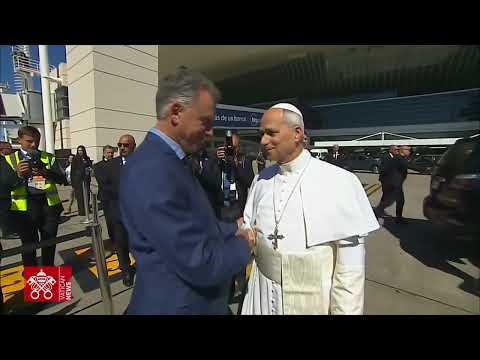
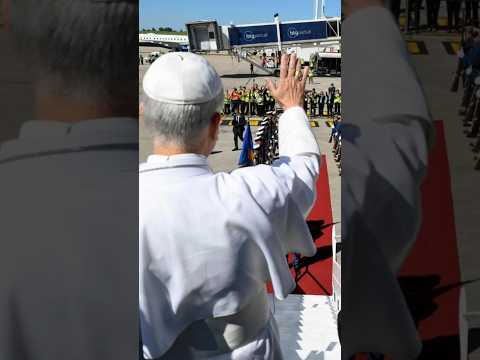
After leaving the Jesús Buen Pastor guest house in Florida, the Pope travelled by car to the General Cesáreo L. Berisso Air Base, where the farewell ceremony took place at about 3:10 pm (7:10 pm Rome time). He was welcomed by President Yamandú Orsi; after greeting the Uruguayan delegation, the Pope took leave of the Head of State in the commercial area of Montevideo-Carrasco Airport. As he left the country, he sent President Orsi a telegram of thanks "for the warm reception and gracious hospitality".
🎥 Videos
▶
Highlights of the farewell ceremony in Montevideo
▶
Pope Leo XIV bids farewell to Uruguay
▶
Farewell ceremony (full, original audio)
📷 Photos
The farewell ceremony from Uruguay (Vatican Media)
The Pope took off from Montevideo-Carrasco Airport at 3:52 pm aboard an Aerolíneas Argentinas Boeing 737 MAX. In his telegram to President Orsi he renewed his gratitude to the authorities and people of Uruguay, assuring them of his prayers for the wellbeing of all.
📍 "Aeroparque Jorge Newbery" International Airport, Buenos Aires, Argentina
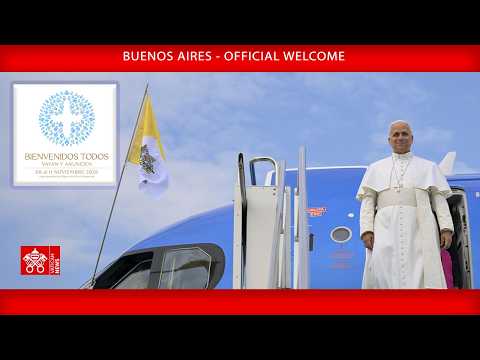
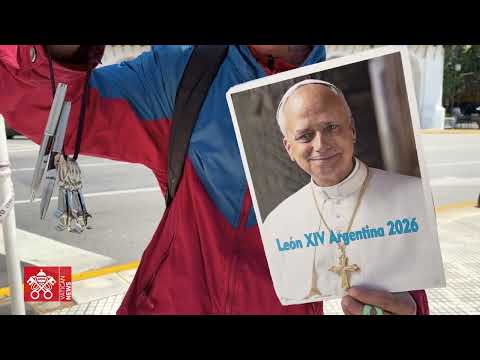
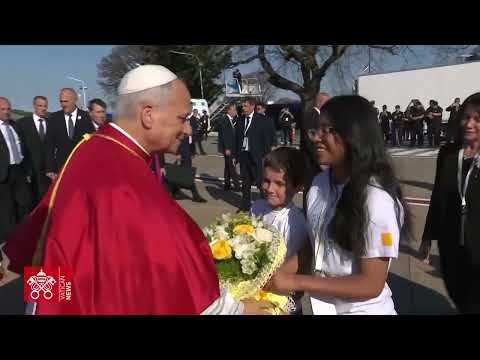
The Pope landed at Aeroparque Jorge Newbery at 4:33 pm. At the foot of the aircraft he was welcomed by the Apostolic Nuncio, Archbishop Michael Wallace Banach, and by President Javier Milei. After military honours, the anthems, a floral offering by two children and the presentation of the delegations, he had a brief private meeting with the President in the military pavilion. It is the first papal visit to the country in 39 years; the motto chosen by the local Church is "Bienvenidos todos. Vayan y anuncien".
🎥 Videos
▶
Highlights of the official welcome in Buenos Aires
▶
Highlights of Pope Leo XIV's arrival in Argentina
▶
Official welcome in Buenos Aires (full, original audio)
▶
Awaiting Pope Leo XIV in Argentina (Vatican News)
▶
Highlights of the Pope's third day: from Florida to Buenos Aires
📷 Photos
The Pope welcomed by President Milei at Aeroparque (Vatican Media)
A moment of the welcome ceremony at Aeroparque Jorge Newbery (Vatican Media)
The Argentine bishops' press conference on 5 November (Vatican News)
The Pope welcomed by President Milei at Aeroparque (Vatican Media)
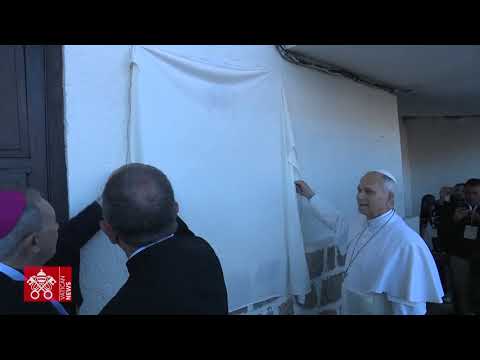
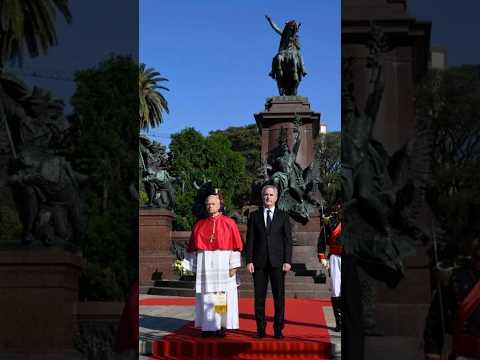
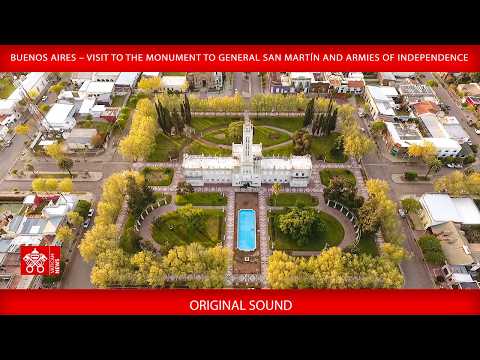
At 5:00 pm the Pope, welcomed by the Foreign Minister, paid homage at the "Monument to General San Martín and the Armies of Independence" in Plaza San Martín: national anthems, a wreath laid by a soldier and a brief moment of silent prayer before the monument. He then travelled to the Presidential Palace with a mounted escort.
🎥 Videos
▶
Highlights of the visit to the San Martín Monument
▶
Highlights of Pope Leo XIV's visit to San Martín Monument in Buenos Aires
▶
Visit to the San Martín Monument (full, original audio)
📷 Photos
The visit to the San Martín Monument (Vatican Media)
The Pope welcomed by the Foreign Minister at the start of the homage to San Martín (Vatican Media)
A moment of the ceremony at the equestrian monument in the Retiro neighbourhood (Vatican Media)
The Pope at the Monument to General San Martín and the Armies of Independence (Vatican Media)
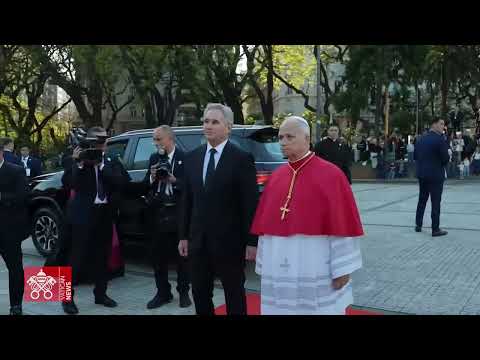
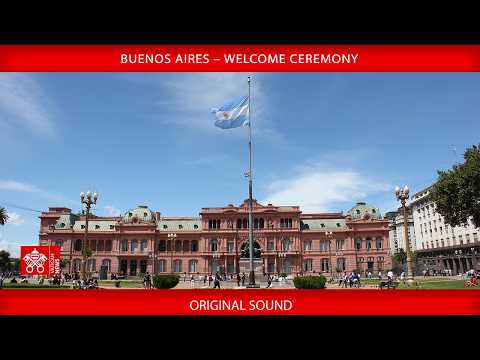
The Pope arrived at the Casa Rosada at 5:39 pm (9:39 pm Rome time). Welcomed by President Javier Milei, he attended military honours and the honours to the flag, then went up with the President to the first floor by the grand staircase (Escalera Francia).
🎥 Videos
▶
Highlights: welcome ceremony and meeting with authorities
▶
Welcome ceremony at the Casa Rosada (full, original audio)
📷 Photos
The meeting between Leo XIV and Javier Milei (Vatican Media)
The welcome ceremony at the Casa Rosada (ANSA)
The meeting between Leo XIV and Javier Milei (Vatican Media)
After the official photo and the exchange of gifts in the Salón Blanco, the Pope and President Milei held a private meeting in the Presidential Office, followed by the presentation of the delegations in the Salón Vitreaux. The President then bade the Pope farewell at the main entrance.
📍 Palacio Libertad, Domingo Faustino Sarmiento Cultural Centre, Buenos Aires, Argentina
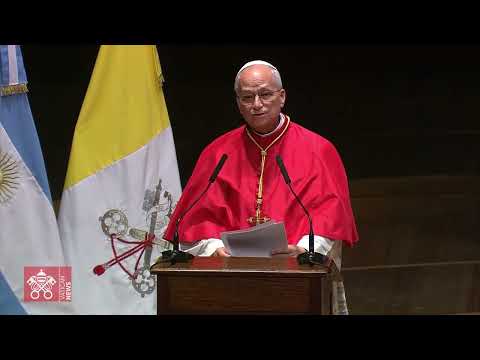
At 6:33 pm, in the square in front of the Presidential Palace, the Head of Government of the City of Buenos Aires, Jorge Macri, presented the Pope with the keys to the city. At 6:40 pm at the Palacio Libertad, after a musical welcome and President Milei's speech, Leo XIV gave his first address in Argentina: he recalled the twelve years of Pope Francis' pontificate ("in a certain sense, I am travelling the reverse path"), asked that democracy be safeguarded and authority exercised as service, and spoke about the family, work ("the economy must serve the person"), young people forced to emigrate, the defence of life, care for creation and artificial intelligence, entrusting the country to Our Lady of Luján.
🎥 Videos
▶
Highlights: welcome ceremony and meeting with authorities
▶
Meeting with authorities (full, original audio)
▶
Meeting with authorities (full, Vatican News English)
📷 Photos
Leo XIV during his address (Vatican Media)
Pope Leo and President Milei at Palacio Libertad (Vatican Media)
Pope Leo XIV addresses authorities in Buenos Aires (Vatican Media)
President Milei's speech (Vatican Media)
Leo XIV during his address (Vatican Media)
A moment of the meeting at the Domingo Faustino Sarmiento Cultural Centre (Vatican Media)
Address to authorities, civil society and the diplomatic corps (Buenos Aires)
Mr President of the Republic, Distinguished Authorities and Members of the Diplomatic Corps, Ladies and Gentlemen,
I am very pleased to be here today in this beloved land of Argentina. Mr President, I thank you for your cordial words of greeting and for the welcome that, through you, your fellow citizens have extended to me. My greetings also go t
Mr President of the Republic, Distinguished Authorities and Members of the Diplomatic Corps, Ladies and Gentlemen,
I am very pleased to be here today in this beloved land of Argentina. Mr President, I thank you for your cordial words of greeting and for the welcome that, through you, your fellow citizens have extended to me. My greetings also go to the members of the Diplomatic Corps and the other Authorities present, and I extend my affectionate greetings to all the Argentinian people.
I have come as the Successor of the Apostle Peter and, therefore, as a Pastor. I wish to meet with the pilgrim Church in this land and to address the entire nation, together with those who have the task of serving it. The Church accompanies the lives of all peoples by virtue of the mission entrusted to her. Consequently, she also wishes to propose to those who hold public office a message inspired by the Gospel and aimed at safeguarding the dignity of every person, civic concord, and the common good.
My arrival in this land is personally meaningful. For years, the universal Church listened to the voice of an Argentinian Pope, who treasured, in his memories and in his heart, the places, the people and the faith that he received here. Today, as his Successor in the Petrine ministry, I am in some sense retracing his steps in this country where the personal history of Pope Francis would later be joined to that of the entire Church. To come to the land in which he was raised is also to draw near to a much greater history, made up of generations of men and women who, before and after him, have inherited this homeland and left it a part of themselves.
Some of them were born here; others came from afar and here found a home; others still belong to the indigenous peoples whose presence predates the birth of the nation. From that encounter between diverse backgrounds and experiences, a people gradually took shape over time — a people who have learned to open their doors, to make room for the newly arrived and to preserve, even amid times of difficulty, a remarkable ability to rebound and move forward. All of them have contributed to the Argentina that I now have the joy of visiting. No generation builds its homeland from scratch. It inherits it.
It inherits it through a language and bonds that predate it, through institutions that others founded and through assets that have grown thanks to the work of many others. That history combines both reasons for gratitude and painful memories. It is up to each generation to discern what deserves to be preserved, to confront past injustices and to add to its shared material and spiritual patrimony. The nation that is yours today will be inherited by others tomorrow.
Argentina’s culture offers some of the most characteristic expressions of that heritage. Your country has made itself heard with a voice recognizable far beyond its borders: in José Hernández’s Martín Fierro; in the pages of Jorge Luis Borges and all those other writers who have enriched the Spanish language with Rio Plata accents; in the tango, born from the encounter of different neighborhoods, ports and backgrounds. But also in the music and traditions of the interior, in theater and in everyday gestures as simple as that of sharing a drink of mate, which turns a moment of relaxation into an opportunity for conversation and closeness. These are various expressions of a collective memory passed down from previous generations and entrusted to the creativity of those yet to come.
The Christian faith is deeply rooted in this heritage. It has left its mark on the nation’s memory and lives on in the countless Argentinians who have found in the Gospel a source of meaning, hope and fraternity.
Sharing a common heritage entails learning to live together, even amid differences of opinion. History teaches us how much a people can grow when their disagreements become an opportunity for dialogue and encounter. Democracy, then, is also a part of Argentina’s heritage that needs to be safeguarded. The freedom to elect one’s own leaders through the ballot box, to participate in public life, freely to express one’s convictions, to have confidence in the law, and to view institutions as serving the interests of all parties: these are values that are consolidated over time and that each generation is called to care for and strengthen (cf. Saint John Paul II, Centesimus Annus, 46).
Democracy is also strengthened by the daily conduct of public life: through willingness to listen, through careful use of words, through the patient search for agreement, and through the ability to see those who think differently as fellow citizens with whom we share a common future. In this way, a spirit of trust is created, one that enables a society to deal with its differences without losing sight of the things that keep it united.
Those entrusted with public office are charged with a particularly demanding task. Authority is most authentic when it is exercised as service, when it looks beyond the immediate, and when it uses its power to promote the welfare of all. Those who exercise authority have a duty to act with prudence, to acknowledge the limits of the power entrusted to them, and to direct their decisions toward the good of the entire community (cf. Saint John XXIII, Pacem in Terris, 53–60).
The common good that authority is called to serve must also be discerned concretely in the circumstances of everyday life. Here, the family, the basic unit of society, plays an essential role. Within the family, each individual learns to discover that his or her life is linked to that of others and is responsible for them. At home, we learn to care for the weak, to forgive, to share and to remain close to those in need; in the family too, many men and women receive the first seeds of faith.
A fundamental element of the common good is the capacity to earn a living through one’s own work. This land knows well and esteems the efforts of all those who work for a living, in the countryside and in the cities, in shops and factories, in schools and in hospitals, as well as those who start businesses and those who work to support their families, day after day. Work enables men and women to provide for their loved ones, to develop their abilities and to feel that they are participating in the building up of their homeland (cf. Dilexi Te, 115). For this reason, efforts should be made to promote whatever creates opportunities, stimulates private initiative and ensures that economic growth also benefits those who are disadvantaged. Here I think of families facing an uncertain future, the unemployed, the elderly who for years contributed to society, and all those who, despite hard work, nonetheless struggle to meet their household’s needs.
Argentina possesses an abundance of human resources. To make this wealth bear fruit for the benefit of all, particular attention should be given to the young. The opportunities they encounter today will largely determine whether they will be able to realize their hopes in life here. A nation must seriously ask itself where it has failed when its young people have to leave their homeland in order to make their dreams come true.
Specifically, creating the conditions for the young freely to plan their future in Argentina means bolstering education, vocational training, universities and research. Throughout its history, this nation has sought to extend education to ever broader sectors of society. Thanks to that effort, generations of Argentinians have been able to cultivate their abilities and contribute to the country’s development through a wide range of trades and professions. Preserving and strengthening this commitment to education requires providing young people with an education that allows them to discover their talents, to develop them and to put them at the service of others (cf. Saint Paul VI, Populorum Progressio, 14–15). This commitment also involves trusting young people, recognizing their capacity for initiative, and making room for them to contribute their own ideas and take on responsibilities. The nation needs to rely on their intelligence, creativity, and participation, starting now.
With these considerations, another question arises: What place do children not yet born occupy in our decision-making? Before asking ourselves what kind of world we will leave our children, we must first recognize their dignity. Our responsibility toward future generations begins with welcoming life from its very first moments and safeguarding it until its natural end (cf. Saint John Paul II, Evangelium Vitae, 101). That same dignity requires that particular concern be shown for those affected by illness, dependency and disability. Here too, we have a duty to care for others, to alleviate suffering, to accompany them, and to ensure that every person feels that his or her life always retains a value that no circumstance can diminish.
This responsibility toward our fellow men and women also extends to the care of the earth. Argentina has been blessed by God with extraordinary natural wealth. Its fields, water reserves, energy sources, minerals, and the diversity of its ecosystems offer vast possibilities for development. A truly human ecology will combine care for creation with care for people, and ensure that the use of those resources contributes to the wellbeing of communities and preserves the conditions that make life and work possible in their territories (cf. Benedict XVI, Caritas in Veritate, 51).
Rapid technological advances, in turn, are opening up possibilities that were barely imaginable just a few years ago. They are also raising far-reaching questions, especially with regard to artificial intelligence. Medicine, education, production and research now have tools capable of profoundly transforming human life. These advances call for a careful consideration of the consequences of their application and the responsibilities of those who decide how to use them. Technological development requires an ethical consciousness that is equal to its challenges (cf. Francis, Laudate Deum, 21–24).
Many of these responsibilities extend beyond the boundaries of any single State. Great rivers unite territories; ecosystems stretch from one country to another; energy, food, knowledge and human mobility create bonds that transcend borders. Thinking about Argentina’s future thus also makes us look toward the peoples with which it shares this continent. South America possesses great human and natural wealth, and its peoples share historical ties and cultural traditions that offer a broad scope for cooperation. Argentina can contribute to such cooperation by virtue of its experience and capabilities. Increasing opportunities for encounter and collaboration is one way of jointly assuming responsibilities that no country can face alone.
Cooperation of this sort is likewise necessary in the face of serious threats. Organized crime, human trafficking networks, arms and drug trafficking together with corruption all undermine social cohesion, fuel violence and divert resources necessary for the common good. In the face of these realities, coordinated action among States and the strengthening of institutions are indispensable. The latter process depends on the personal integrity of those entrusted with the responsibility of governing, for corruption undermines the confidence of citizens in their institutions (cf. Saint John Paul II, Ecclesia in America, 23 and 60).
This common cause finds one of its highest expressions in the service of peace. The legitimate interests of each nation must be defended by means of dialogue, respect for the law, and a constant effort to reach agreement. South America has been able, at troubled times in its history, to find processes of negotiation and understanding in order to surmount grave tensions. Argentina is called to preserve this readiness to engage in dialogue and to help ensure that it continues to bear fruit.
The Church, for her part, wishes to contribute to this shared spirit of responsibility. Her presence in Argentina is part of a history that spans the entire American continent. For centuries, the Church has walked alongside the peoples of the continent, proclaiming the Gospel and celebrating the faith, educating, caring for the sick, standing with the poor, supporting families, and promoting peace and reconciliation.
That mission is rooted in the love of Christ, who shed his blood for all. It continues today in parishes and communities that are called to keep their doors always open, so that every person may find there a warm welcome and a sense of closeness. “Welcome everyone” (cf. Mt 22:9-10) expresses, in a few words, the universal invitation of the Gospel, which reaches every person and calls them to an encounter with Christ and to conversion. This welcome also gives rise to the Church’s mission: “Go into all the world and proclaim the good news” (cf. Mk 16:15). Obedience to that command continues to bear fruit in schools and universities, in social initiatives, and in the daily witness of all those men and women who place their faith at the service of others.
There are goods that a society requires and that no public policy can produce on its own. Trust, forgiveness, readiness to serve, and the recognition that one’s life has a meaning that transcends success or utility: these goods are cultivated in the conscience of individuals and in the lives of families and communities. Faith nourishes and sustains these values. For this reason, the Church wishes to remain close to Argentina, to share in its burdens and joys, and to offer it the hope that springs from the Gospel.
In looking back on the path this nation has traveled, there is one image that keeps returning to mind, namely that each generation inherits a homeland that it has received from the hands of others. For a certain time, that generation is called to live on the land, to guard and preserve it, and to help it grow. Then, it must pass it on to others in turn (cf. Francis, Laudato Si’, 159). Indeed, as Gardel sang, life is but a breath, yet the good that each generation preserves, and passes on, endures. Faith invites us to lift our gaze even higher, toward the eternal happiness to which God calls us.
Dear Argentinian friends, much of that responsibility rests in your hands today. The extraordinary heritage you possess allows you to look to the future with confidence. It is now up to you to bring to fruition all that you have inherited and to keep alive that commitment to “establish national unity,” proclaimed in the Preamble of your Constitution. May those who come after you inherit a united homeland, worthy of its history and the possibilities it holds.
Finally, my thoughts turn to Our Lady of Luján, the silent guardian of your memory. Generation after generation, mothers and fathers, workers, young people, and the elderly from every corner of the country have come before her image, bringing with them the concerns and hopes of their time. To those prayers I now wish to add my own. I want to do so with the words that Pope Francis spoke with you in mind: “May the Lord help you grow as a people” (cf. Video Message to the Argentinian People, 30 September 2016). I make this heartfelt prayer to the Lord, through the intercession of Our Lady of Luján. May she continue to watch over this land, care for each of its children, and keep them always close to Jesus.
May God bless Argentina and all its people. Thank you very much.
At the end of the day, after moving to the Apostolic Nunciature, at 7:50 pm the Pope met privately with members of the Order of Saint Augustine, the Order to which he belongs.
In a telegram signed by Cardinal Secretary of State Pietro Parolin and sent to the Archbishop of Kraków, Cardinal Grzegorz Ryś, the Pope expresses his spiritual closeness to the victims of the shooting in Kraków on Saturday 7 November and to their families. According to Vatican News, six people were killed and fifteen injured in the Main Market Square.
Telegram of condolence for the victims of the attack in Kraków (tradotto)
From the Vatican, 8 November 2026
To His Eminence
Cardinal Grzegorz Ryś
Metropolitan Archbishop of Kraków
His Holiness Leo XIV, deeply saddened to learn of the dead and wounded caused by the shooting in Kraków, expresses his spiritual closeness in the Risen Christ to all those affected by this tragedy.
Invoking the intercession of the Blessed Vi
From the Vatican, 8 November 2026
To His Eminence
Cardinal Grzegorz Ryś
Metropolitan Archbishop of Kraków
His Holiness Leo XIV, deeply saddened to learn of the dead and wounded caused by the shooting in Kraków, expresses his spiritual closeness in the Risen Christ to all those affected by this tragedy.
Invoking the intercession of the Blessed Virgin Mary, Queen of Poland, the Holy Father implores the gift of Christian hope for the grieving families and joins all those living through these days of mourning.
Assuring them of his prayer, the Supreme Pontiff imparts the Apostolic Blessing and urges tireless perseverance in the pursuit of peace and harmony.