Thursday 12 November 2026 — Lima: meeting with the Peruvian bishops and on the country's challenges
11:30
Plaza de Armas (Plaza Mayor), Lima, Peru
🇵🇪 Peruvian people
Meeting on the challenges of the Peruvian people
📍 Plaza de Armas (Plaza Mayor), Lima, Peru
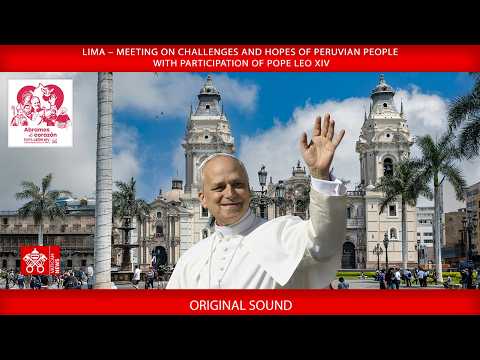
At 11:24 (17:24 Rome time) the Pope arrived in Plaza de Armas (Plaza Mayor), accompanied by Cardinal Carlos Gustavo Castillo Mattasoglio, Archbishop of Lima. According to local authorities, as cited by the Holy See Press Office bulletin, some 40,000 people were present. After a song and the Archbishop's welcome, four testimonies in the form of questions, interspersed with an artistic and cultural performance, addressed the family, cultural diversity, the condition of women, and work and business threatened by extortion and violence. In his address the Pope said these challenges "cannot be addressed in isolation" and placed the dignity of the person at the center. He called the family "the first natural society" and quoted a Creole waltz ("this is my Peru!"). He asked people to disarm both language and attitudes, denounced the persistence of a mentality marked by the absence of fathers, abuse and violence against women, and appealed: "let us value women! Let us protect and respect girls!" He concluded that "hearts that are honest" are also needed to overcome corruption, violence and individualism. After the Our Father and the blessing, at 12:23 he returned by car to the Nunciature.
Address at the meeting on the challenges and hopes for the future of the Peruvian people
Dear brothers and sisters, my beloved Peruvian people, good morning!
Thank you for being here and welcoming me with open hearts, as your brother and companion on the journey. You make me feel at home. Thank you. During these days, I wish to walk among you as John the Baptist did, bearing witness to the Light that enlightens everyone: Jesus Christ,
Dear brothers and sisters, my beloved Peruvian people, good morning!
Thank you for being here and welcoming me with open hearts, as your brother and companion on the journey. You make me feel at home. Thank you. During these days, I wish to walk among you as John the Baptist did, bearing witness to the Light that enlightens everyone: Jesus Christ, the Son of God (cf. Jn 1:6-9). Let us listen to the Teacher, who is venerated in a special way in this land under the title of the Lord of Miracles, and welcome what he wishes to say to Peru in these days.
The challenges you have mentioned cannot be addressed in isolation, because the family, cultural diversity, the world of work and the condition of women are all part of the same human reality and are deeply interdependent. The Church’s social doctrine offers us elements for understanding this reality: at the center of every social, economic and political organization must be the human person, created in the image and likeness of God, endowed with infinite dignity and called to live in relationship with others. On this basis, the personal, familial and social good come together as one reality.
The centrality of human dignity is the foundation for other essential principles that should guide personal, family, business and institutional decisions, such as the common good, solidarity and subsidiarity.
Human life does not begin in a vacuum. It is born of the love between a man and a woman who, giving themselves to one another, open themselves to the gift of a new life. A child is the fruit of this communion, not a product, and from the very beginning bears within the mark of the relationship of origin. This most fragile beginning is nurtured in the mother’s womb, the first place of welcome, where the initial bond becomes closeness and protection. According to the Creator’s plan, the human person is conceived and grows within this web of relationships. Thus, the dignity of nascent life finds its proper place in the family.
Enlightened by the Gospel and in harmony with the human sciences, the Church’s Tradition affirms that the family is the first natural society, with rights of its own. This means that the family precedes every written law. The law’s role is simply to recognize and protect it, while public institutions must support the family, not replace it (cf. Compendium of the Social Doctrine of the Church, 214).
Certainly, as you have said, cultural changes have altered the traditional roles of men and women, who seek to develop new attitudes and ways of life in the family and in society, sometimes by mistaken paths (cf. Aparecida Document, 49). This situation calls us to assert with even greater conviction that God created the human person male and female (cf. Gen 1:27). It is in this union alone that reciprocity and complementarity are expressed, giving rise to fatherhood and motherhood, filiation and fraternity, and everyone’s commitment to a better society.
Nevertheless, living the truth of our identities as male and female does not justify an unequal sharing of domestic responsibilities or the subordination of one spouse to the other. We must continue working to harmonize the roles of men and women in families and affirm that both share the responsibility for building the future of society.
Our faith offers us an understanding of the human person that helps us overcome the tensions that arise when we examine new cultural trends. Christian love teaches us that to love is to serve God and neighbor. This perspective brings out the deeper meaning of being fathers and mothers, sons and daughters, grandchildren or grandparents, fostering dialogue, patience, kindness, forgiveness and mutual service (cf. 1 Cor 13). Deepening our understanding of this is a rich source of spirituality in the home.
Each member of the family is called to contribute, in an original and creative way, the gifts and talents he or she has received. No one is exempt from caring for others, showing gestures of closeness and affection, working responsibly, listening patiently and teaching by example. In this regard, I would like to draw attention to the many mothers who often suffer and feel alone, having to face numerous difficulties in raising their children so that they grow up healthy and become good men and women. I want to offer special thanks to these women — mothers, aunts and grandmothers — who pass on faith and sure hope to future generations with great courage through the example of their lives.
We also know that many families are wounded and divided due to economic problems or emigration. Others are harmed by the intrusion of addictions, such as gambling and betting, alcoholism and drug addiction, abuse or domestic violence. God loves all families, especially those going through crises. To them I want to say: do not give in to difficulties. Look to the example of the Holy Family. It was not easy for them to build a home either. Like many of our families, they too had to maintain their faith and trust in God amid uncertainty and hardship; they had to move to another city and work to support themselves; they had to face loneliness, pain and incomprehension. Yet they also teach us that when God is present in our family, we can grow, keep going, face problems, and stand beside the Cross sharing the joy of faith together.
Another very timely challenge you have mentioned is the impact of digital technology on the family. Recently, in the Encyclical Magnifica Humanitas, I expressed how today’s technology risks replacing real human interaction, exposing family members to distractions and sometimes harmful content. In this regard, an alliance among political leaders, educational institutions and families is essential if we are to solve the problems that arise from this (cf. No. 142).
The sons and daughters of our homes are at the same time the citizens of Peru, the business owners and workers of our cities and countryside. This leads us to the world of business, which is called to be a true protagonist in building up the common good. A business is a society of persons in which capital, management and labor must be ordered toward integral human development (cf. Compendium of the Social Doctrine of the Church, 338). It is therefore necessary for legitimate authority to help business owners and workers by establishing a just legal framework and ensuring a reasonable balance among work, rest and family life. Fostering stability through sound human and economic relationships within families is a shared responsibility.
When we become aware of this vital interdependence, we discover that the common good is the joint achievement of a greater good (cf. Magnifica Humanitas, 62), so that the wealth and resources of society are not directed exclusively toward the benefit of a few, but contribute to the development of all (cf. ibid., 65).
Within this interdependence, education is a practical instrument for putting principles into practice. Educating our children today in a way that is consistent with their dignity guarantees an honest society tomorrow. In this regard, a State strengthens the foundations of a just and peaceful society when it promotes a social policy centered on the equal dignity of persons, supports families, guarantees an educational policy for the human and intellectual formation of students and pursues a labor policy that protects both the dignity of work and private initiative (cf. ibid., 168).
The centrality of human dignity also sheds light on how we understand cultural diversity. Peru is a beautiful country precisely because of its cultural, linguistic, historical and regional plurality. As we sing in a Creole waltz: “Rich mountains, beautiful lands; smiling beaches, fertile fields; snow-capped peaks, rivers and ravines — this is my Peru!” Differences foster encounter and mutual enrichment. It is precisely because we are different that we create “common-unity” — community.
Nevertheless, as in all human coexistence, historical wounds and mistrust sometimes make it difficult to understand one another. We cannot accept expressions or behaviors that classify, offend or judge people on the basis of their appearance, origin or social condition, under the pretext of certain jokes or popular slang. Along with disarming our language by giving up hurtful words (cf. Message for Lent, 5 February 2026), we must also disarm our attitudes.
Aggressive attitudes are disarmed through meekness. Jesus himself tells us: “Learn from me; for I am meek and humble in heart” (Mt 11:29). This virtue is not weakness but an inner strength that moderates anger and resentment, transforming them into patience, dialogue and a readiness for reconciliation. Jesus showed meekness in its fullest form during his Passion, when he did not respond to insults with violence or threats. Let us pray that in the empire of the sun, intipa imperion, we may reflect that light, which is Christ, the “dawn from on high” (Lk 1:78).
In this context, how can we fail to remember Saint Turibius of Mogrovejo, who spread the Gospel without imposition among diverse peoples speaking different languages, who faced the challenge of peaceful coexistence, unity and communion in Christ?
Cultural diversity can become an instrument of peacemaking when we begin to recognize those who are different as brothers and sisters deserving of respect. Unity in diversity is the work of the Holy Spirit and, at the same time, something we must cultivate and strengthen in order to be signs of unity in Christ (cf. Acts 2). The Catholic Church embraces the whole world within her fold and at the same time takes on the character of each place (cf. Magnifica Humanitas, 26). She speaks every language (cf. Saint Augustine, Sermon 268), as the Catecismo Limense demonstrated.
Recognition of human dignity also requires that we effectively promote the presence, respect and participation of women. Their contribution to every sphere of society and the Church is indispensable. It is sad to see that machismo persists, manifested in the absence of fathers from family life, in abuse and violence against women. This mentality disregards the newness of Christianity, which recognizes and proclaims that men and women possess equal dignity and responsibility (cf. Benedict XVI, Inaugural Address to the Fifth General Conference of the Bishops of Latin America and the Caribbean, 2007).
Women living in poverty or belonging to Indigenous and Afro-American communities are liable to suffer a double marginalization (cf. Aparecida Document, 454). For this reason, it pains us to see that violence against women — who could be our grandmothers, mothers, sisters or daughters — continues to be a reality that wounds all of humanity.
I would like to renew an ardent appeal, not only to my brothers and sisters in the faith but to every man and woman of good will: let us value women! Let us protect and respect girls! (cf. Magnifica Humanitas, 57).
The Church values the richness, talents and particular sensitivity of women, whose outstanding model is the Virgin Mary, “the New Woman and perfect Christian... summing up the most characteristic situations in the life of a woman” (Saint Paul VI, Marialis Cultus, 36). Indeed, the Gospel presents her as a free and strong woman, always oriented toward authentic discipleship as she accompanied the Church in her mission (cf. Aparecida Document, 266).
Dear brothers, dear sisters, the family, the business world, cultural diversity and the role of women thus converge in one and the same requirement: to build a society in which every person can live with dignity and contribute to the good of all. Just structures are necessary, but they are not enough. We also need hearts that are honest in seeking the common good, so as to overcome corruption, violence and individualism (cf. Magnifica Humanitas, 169).
As missionary disciples of Jesus Christ, let us make our homes schools of fraternity; our businesses communities of dignified work and social responsibility; our cultural differences opportunities for encounter; and our institutions places where women and men can participate and contribute to the common good. In this way, we can move toward a just society in which the dignity of every person is the foundation of true peace. Thank you.
After the Address:
Thank you very much! Now, sisters and brothers, I invite you to pray together with the same words that Jesus Christ taught us. Our Father…
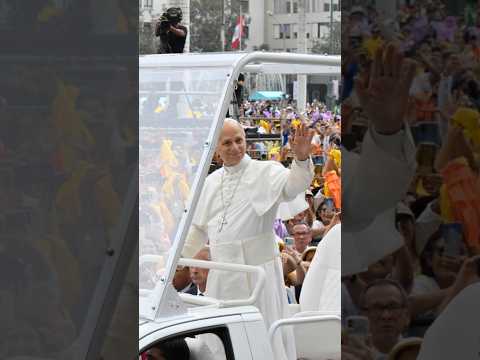
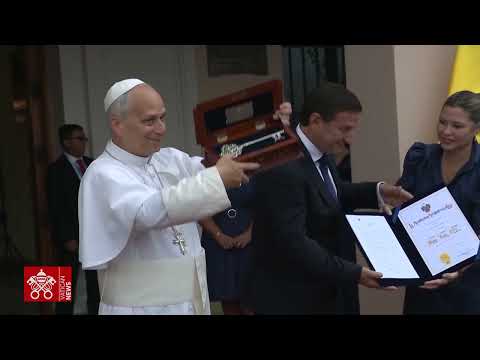
Before meeting the Bishops, the Pope stopped at the Shrine of Las Nazarenas, dedicated to the Señor de los Milagros, patron of Lima. He then got out of the popemobile in front of the Palacio Municipal, where he received the keys to the city. Crowds of faithful lined the streets of the centre along the route (source: Vatican News).
🎥 Videos
▶
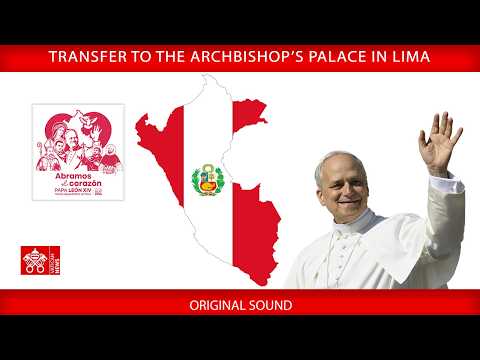
Lima, transfer to the Archbishop's Palace (Vatican News, original audio)
📷 Photos
The Pope pauses before the Señor de los Milagros (Vatican Media)
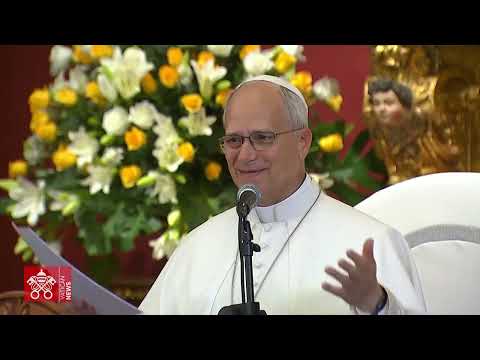
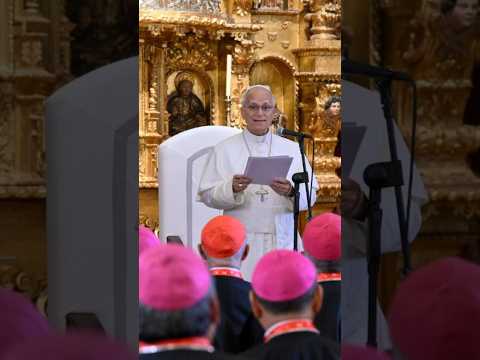
In the chapel of the Archbishop's Palace overlooking the Plaza Mayor, the Pope met the Bishops of Peru after a greeting from the President of the Bishops' Conference, Bishop Carlos Enrique García Camader of Lurín. In a long address built on the image of the Great Inca Road and the visit's motto "Let us open our hearts", he called the Bishops to conversion, communion and mission, recalling Saint Turibius of Mogrovejo, Saint Rose of Lima, Saint Francis Solano, Saint Martin de Porres and Saint Juan Macías. He recalled sitting among the Bishops in the same place in 2018, at the meeting with Pope Francis, and spoke about abuse: "We must respond as Jesus would, with truth, with justice, with forgiveness, with making amends." He closed with three invitations: never cease walking with the people, walk together in episcopal communion, open our hearts. According to the Press Office bulletin, the Pope left the Nunciature at 9:00 after a private Mass; the meeting ended with an exchange of gifts and a group photo, after which he walked to the Cathedral. In his opening greeting he joked about some "doubting Thomases" who said "He won't come, he won't make it", thanking the bishops for their prayers for his health.
🎥 Videos
▶
Meeting with the Bishops of Peru, full video (Vatican News, original audio)
▶
Highlights of the meeting with the Bishops of Peru (Vatican News)
▶
Meeting with the Bishops of Peru — full video (Vatican News - English)
▶
Highlights from the Pope's meeting with the Bishops of Peru (Vatican News - English)
▶
Pope: 'Be shepherds who combine doctrinal clarity with pastoral closeness' (Vatican News - English)
📷 Photos
Leo XIV with the Bishops of Peru in the chapel of the Archbishop's Palace in Lima (Vatican Media)
The Pope delivers his address to the Bishops (Vatican Media)
Meeting with the Bishops (Vatican Media)
The Bishops of Peru at the meeting with Pope Leo XIV (Vatican Media)
The President of the Peruvian Bishops' Conference greets the Pope at the start of the meeting (Vatican Media)
A moment of the meeting with the Bishops of Peru (Vatican Media)
Leo XIV with the Bishops of Peru in the chapel of the Archbishop's Palace in Lima (Vatican Media)
Leo XIV with the Bishops of Peru in the chapel of the Archbishop's Palace in Lima (Vatican Media)
Leo XIV with the Bishops of Peru in the chapel of the Archbishop's Palace in Lima (Vatican Media)
Your Eminences, Your Excellencies, Monsignors, Dear brothers!
I am grateful for the words addressed to me on your behalf by the Most Reverend Carlos Enrique García Camader, Bishop of Lurín and President of the Episcopal Conference, together with prayers for my recovery. Some of you know that there were those “Thomases” who said, “He will not…
Your Eminences, Your Excellencies, Monsignors, Dear brothers!
I am grateful for the words addressed to me on your behalf by the Most Reverend Carlos Enrique García Camader, Bishop of Lurín and President of the Episcopal Conference, together with prayers for my recovery. Some of you know that there were those “Thomases” who said, “He will not come;” “He won’t be able to.” But God is great, and his grace is greater than all of us. I am truly very happy to be here with you.
I thank God that on this occasion he is allowing us to continue this dialogue as brother bishops. Not many months ago, you were in Rome for the ad limina visit; now we are here together. I am also looking forward to the meetings I will have over the next few days in Peru. Thank you for all the work you have done to organize my visit.
Dear brother bishops, the roads that crisscross a country’s landscape also run through the soul of its people. We can observe this truth in Peru. Its mountains, valleys, coastline, Amazon region and ancient trails preserve the memory of peoples who learned to come together and share their gifts.
Among these paths there is one that is very familiar to you: the Great Inca Road, that vast network which united territories, communities and cultures throughout this land. Drawing on this image, I would like to invite you to reflect on our episcopal mission, for the Church is like a path leading us to a communion and hope that crosses the mountains of indifference, the deserts of individualism and the distances that separate people. Furthermore, the motto of this visit — “Let us open our hearts!” — invites us to conversion, to communion and to mission.
But what does “opening one’s heart” mean for a bishop? It means knowing the path to God so that he may walk alongside the faithful, as well as allowing God and the faithful to challenge his priorities. It is an eminently missionary journey, much like the Inca Trail, which was not built so that travelers might linger to admire its magnificent landscapes, but to reach the whole of Tawantinsuyu. Like the chasquis, who traveled the length and breadth of the empire carrying urgent messages and vital provisions, the bishop is the messenger who bears the Good News of the Gospel, safeguards the treasure of the word of God and administers the sacraments as those indispensable gifts which are necessary to sustain the Christian life.
We may also consider that, just as this Trail is the heir to the ancient paths used by pre-Incan cultures, the bishop is a servant in his Diocese of the history of salvation that began before him and will continue after him. For this reason, “opening one’s heart” for the bishop means recognizing the path that God is already traveling with his people, the journey that still lies ahead and the direction in which we must go to continue building a future of hope for all.
Dear brothers, for the bishop, opening one’s heart also means getting to know his Diocese by entering people’s homes, accompanying the sick, meeting young people and reaching out to communities which, due to their geographical remoteness or social vulnerability, are rarely able to make their voices heard. Indeed, the shepherd is called to go out and meet everyone.
In this regard, the figure of Saint Turibius of Mogrovejo stands out in a unique way. He understood that his mission required him to be with the communities in order to focus first and foremost on Christian formation and to ensure that the Gospel could also be proclaimed in the languages of the indigenous peoples. The Catechism that was developed in communion with the bishops gathered at the Third Provincial Council of Lima, written in Aymara, Quechua and Spanish, bears witness to his missionary zeal.
We know that the Inca Trail is no easy path, for its steep ascents and narrow passes test the traveler’s endurance, though their efforts find solace in contemplating the majesty of creation. Similarly, the episcopal mission does not always follow clear paths. We encounter pastoral difficulties, social divisions, misunderstandings and decisions that can prove to be painful. Here, Saint Turibius enlightens us once more, helping us to understand that pastoral charity does not consist in avoiding problems but in remaining faithful to Christ and seeking the greatest possible good for people. Just as the hardships of the journey wind through the mountains, so too does the Cross of Jesus weigh upon our ministry. Yet that very Cross reminds us that no toil offered out of love is in vain when it is united with the self-offering of Jesus Christ (cf. Mt 16:24-25).
It is important to remember that this trail is not to be walked alone. Being in the region that was home to Peru’s first seminary, I think of the bishop, who transforms the journey itself into a traveling Yachay wasi, a “house of knowledge.” As a traveling companion to his priests, he does not merely show them the way, but also shares in their struggles and aspirations, recognizes God’s footprint in their lives and ensures that no one is left behind. Yet beyond the realm of imagination, the truth is that walking together fosters communion, a gift for which we must always pray: communion with the Successor of Peter, with the other bishops, with men and women religious and with the whole People of God. This is essential for faithfully traveling the Way which is Christ.
In light of this, I am heartened by the synodal process that has been undertaken in the Peruvian Church. In partnership with the People of God, I ask you to continue working steadfastly, making it increasingly possible to build a Church in which we all recognize ourselves as co-responsible and missionary disciples of the Lord. A Church in which each person lives according to their own vocation, in mutual trust, so that authority is not exercised autocratically nor is obedience mere servility.
I would now like to speak of those who have walked these lands before us. In addition to Saint Turibius of Mogrovejo, let us think of Saint Rose of Lima. Her prayer and her dedication to those in need remind us that apostolic fruitfulness depends on our union with the Lord and, consequently, on the care we take of our own spiritual life in the episcopal ministry.
From Saint Francis Solano we learn to cross borders to proclaim the Gospel. His joyful missionary spirit reminds us that the Church exists to proclaim Jesus Christ, especially to those living on the human and geographical peripheries.
Through their humility, Saint Martin de Porres and Saint Juan Macías teach us to recognize Christ in the least among us. From these saints we also learn that charity begins with a simple gesture, a listening ear. They also remind us that no person can be judged by their rank, their origins or their social status. In this regard, allow me to mention a reality that has caused us so much pain: the abuses perpetrated by members of the clergy or within the context of the Church. We must respond as Jesus would, with truth, justice, forgiveness, making amends and an ever more resolute commitment to fostering a culture of prevention and protection for the weakest in light of such crimes.
The lives of the saints — each distinct yet united by a single faith: bishops, priests and laity; Spaniards, Creoles and Mulattos — represent the unity of the Church in Peru and form a school of holiness. They continue to walk with us, here and now, along the many paths of the one Way, teaching us to be in Illo uno unum.
Dear brother bishops, in 2018 I was seated there in the back among you in this very place, and we received from our beloved Pope Francis a passionate exhortation to work for unity. I recall that he told us: “Do not remain prisoners of divisions that create cliques and hamper our vocation to be a sacrament of communion… That was — and is and always will be — the best way to evangelize” (Meeting with the Peruvian Bishops, Lima, 21 January 2018). Indeed, communion among you, among us, is the foundation of the credibility of the Gospel you proclaim.
Our mission as bishops calls us to be bridge-builders, to foster dialogue, to educate others in having fruitful encounters and to help heal the wounds that divide Peruvian society. In order to be effective in this way, it is helpful to open our hearts to our brother bishops so as to cultivate trust, share our difficulties and strengthen episcopal fraternity. No bishop should feel alone on this journey. No particular Church should carry out its mission as if it were separate from that of the others. In and through communion, the bishop will be an instrument in preventing social or political polarization from weakening his prophetic and evangelizing mission.
Finally, dear brothers, the bishop must open his heart to the Peru of today. An ancient path retains its value when it continues to enable people to reach their destination. We must ask ourselves which paths truly lead to Christ, and we should denounce false paths. Today, Peru needs shepherds capable of listening to the questions of our time and illuminating them with the clarity of the Gospel. In this way, you will be able to accompany families, support young people, defend the life and dignity of every person, promote justice and commit to the care of creation, helping in a particular way those who suffer from poverty, exclusion, corruption, violence and a lack of opportunities.
This mission requires us to combine doctrinal fidelity with pastoral closeness; the celebration of the sacraments with a commitment to our neighbor; and the formation of consciences with a concrete witness of charity.
The Eucharist is the source and summit of our Christian life. Before the tabernacle, we regain the correct perspective on our ministry. The Church does not belong to us; it belongs to Christ. We are messengers who will one day complete our journey. Only God remains!
May we never lack the time to be with the Lord and to accompany those who need to experience the bishop’s spiritual fatherhood. For the bishop, united to Christ, even amidst his limitations, is an instrument of comfort, unity and hope.
I would like to conclude with three suggestions:
First: do not cease to walk with the people.
Second: let us never cease to walk together, in episcopal communion, as witnesses to the unity we proclaim.
Third: let us never tire of opening our hearts to God, so that he may renew our vocation; to our brothers and sisters, so that divisions may be healed; and to his people, so that they may find in you the “father bishop” who is close at hand, courageous and merciful.
May the Blessed Virgin Mary, Mother of the Church, grant us this, so that all the children of this beautiful land — in the Andean highlands, in the valleys, in the Amazon, on the coast and on the islands — may find in the Church a home where they are welcomed, listened to, loved and led to Jesus Christ. Thank you very much.
📍 Cathedral Basilica of Saint John the Apostle and Evangelist, Lima, Peru
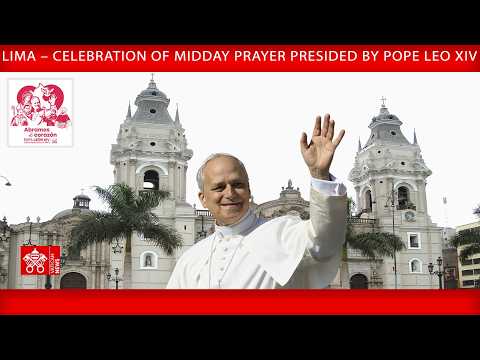
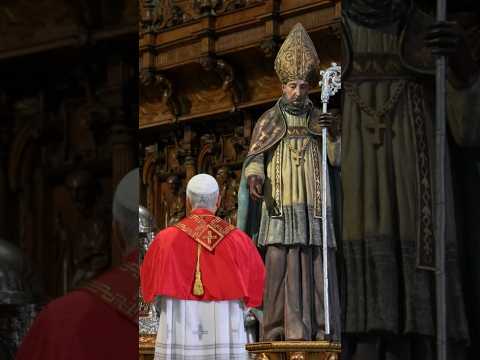
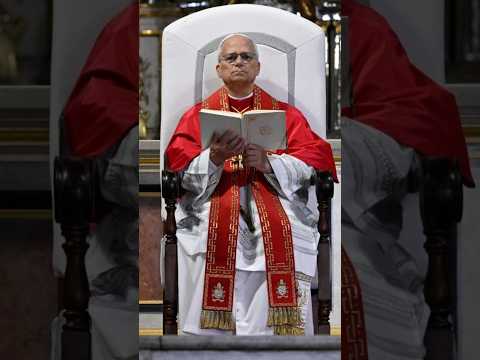
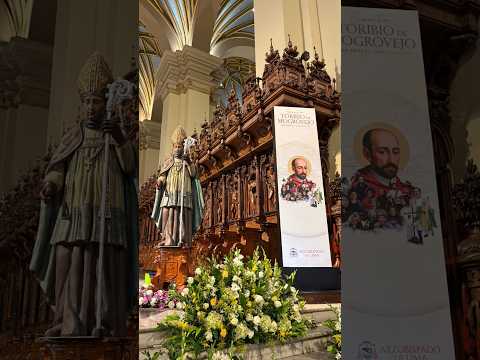
At 10:30, after walking over from the Archbishop's Palace, the Pope presided at Midday Prayer in the Cathedral Basilica with bishops, priests, men and women religious, seminarians, synodal teams and pastoral councils. He was welcomed by Cardinal Carlos Gustavo Castillo Mattasoglio, Archbishop of Lima, and venerated the relics of St Toribio de Mogrovejo. In his homily on the First Letter of John, he recalled first arriving in Peru as a missionary "many years ago" and set out attitudes for being Church: looking to Christ, reconciliation, peacemaking, communion and mission. Peru, he said, needs "a Church that sows love, capable of building bridges where others raise walls", ready also to "acknowledge its own infidelities and humbly ask for forgiveness". Afterwards he walked to Plaza de Armas.
🎥 Videos
▶
Celebration of Midday Prayer in Lima — full video (Vatican News - English)
▶
Highlights from the Pope's meeting with the local Church in Lima (Vatican News - English)
▶
Pope Leo encourages the Church in Peru to continue to spread the Gospel (Vatican News - English)
▶
Lima's Cathedral Basilica is getting ready to host Pope Leo (Vatican News)
📷 Photos
The Pope with the Archbishop of Lima, Cardinal Carlos Gustavo Castillo Mattasoglio (Vatican Media)
The Pope enters Lima Cathedral (Vatican Media)
The Pope venerates the relics of St Toribio de Mogrovejo (Vatican Media)
Leo XIV during the celebration of Midday Prayer (Vatican Media)
The Pope delivers his homily (Vatican Media)
The central nave of Lima Cathedral (Vatican Media)
The Pope greets some of those taking part in Midday Prayer (Vatican Media)
The Pope with the Archbishop of Lima, Cardinal Carlos Gustavo Castillo Mattasoglio (Vatican Media)
Homily at the celebration of Midday Prayer (Lima Cathedral)
Dear Bishops, priests, Consecrated men and women, seminarians, Members of the pastoral councils and synodal teams, Dear brothers and sisters in Jesus Christ,
It is a great joy for me to be once again on Peruvian soil, close to this Church which is so dear to me. I come as a father and brother in the faith, as a shepherd who loves his flock.
I…
Dear Bishops, priests, Consecrated men and women, seminarians, Members of the pastoral councils and synodal teams, Dear brothers and sisters in Jesus Christ,
It is a great joy for me to be once again on Peruvian soil, close to this Church which is so dear to me. I come as a father and brother in the faith, as a shepherd who loves his flock.
I first came to Peru many years ago, sent to serve the People of God and build up his Kingdom, and to promote peace through justice, with particular concern for the weakest. I return today to encourage you to continue the work of spreading the Gospel, attentive to people’s lives and needs. With this in mind, I would like us to reflect together on certain attitudes that are important for being the Church and for building a civilization of love truly grounded on the common good. The brief reading we have just heard, from the First Letter of Saint John, will guide our reflection (cf. 1 Jn 3:23-24).
The first idea it offers us is the invitation to believe “in the name of his Son Jesus Christ” (v. 23), that is, to look to him as the one foundation on which to build our temple of living stones (cf. Eph 2:19-22). Christ is the Light, the Word and the Bread, and the Church grows wherever people live united with one another through communion with him. This is confirmed by the constant search for God that has characterized the lives of countless saints, such as the bishop, Saint Turibius of Mogrovejo, a tireless, enterprising and creative apostle, a courageous defender of the poor and a generous shepherd, ready to pour himself out for his flock. If, however, we wish to reach the source of such energy and enthusiasm, we must look to his intimate relationship with the Lord. In following him even to the cross, Turibius found the meaning, the guiding principle and the strength of his entire mission. This is where we too must find inspiration for serving the community, learning to read our history in the light of the Paschal Mystery. By contemplating the crucified and risen One, the Lord of Miracles, we will find a sure guide for our journey in the “signs” of his goodness.
The second value I would like to recall is reconciliation. In his letter, John says that it is God’s will that “we love one another, just as he has commanded us” (1 Jn 3:23). Peru has great need of this. It needs a Church that sows love, capable of building bridges where others raise walls, capable of listening, healing and forgiving and, at the same time, ready to acknowledge its own infidelities and humbly ask forgiveness, accepting responsibility for the wounds it has caused both within the community and around it. Peru needs a Church that, clinging to the Cross, also knows how to face conflicts with charity and courage, confident that in Christ it is always possible to begin again and find unity. For, as Saint Paul says, all this is not our work alone, but “is from God, who reconciled us to himself through Christ, and has given us the ministry of reconciliation” (2 Cor 5:18).
Only in this way will we be, in an expression especially dear to Pope Francis, true peacemakers (cf. Fratelli Tutti, 225). And this is the third point on which I would like to reflect. You have often heard me speak of the need to promote throughout the world “a peace that is unarmed and disarming” (Message for the 59th World Day of Peace, 1 January 2026). This is a genuine and urgent need, to which we must respond by cultivating, in every circumstance and day after day, the values of dialogue and fraternity, while avoiding every form of polarization that causes division. Peace always begins “here and now” and depends on how we behave, how we look at one another, how we respect one another and how we listen to one another. If we wish to spread peace, we must first safeguard and nurture it before God, within ourselves and among those dear to us, and then spread it in our communities and in the various spheres of social and political life.
In this way, we will become authentic builders of that communion which the family of the baptized is called to embody, so as to become ever more, in Christ, “a sign and instrument… of communion with God and of the unity of the entire human race” (Lumen Gentium, 1). For Christians, unity is a dimension of existence that cannot be renounced, and that requires a continual conversion of heart, both personally and communally. Through grace, Baptism makes us members of the one Body of Christ (cf. 1 Cor 12:12-13), but it is up to us, in the dignity of our freedom, to accept or reject each day the gift we have been given. In this regard, at the Last Supper Jesus expressed the Father’s desire: “that they may all be one… so that the world may believe” (Jn 17:21).
The question, then, is how to act and make our being one visible, using every appropriate means and even turning our differences and wounds into opportunities to grow together in mutual esteem and forgiveness. Communion is neither complete homogeneity nor necessarily immediate consensus. Rather, it is a space in which different voices, with the help of the Spirit and under the guidance of the pastors, learn to blend without being drowned out, thereby creating harmony. This requires us to listen openly even to what does not accord with our own perception, to welcome another person’s pain without judging it and to allow ourselves to be touched by that person’s story. Only in this way can a co-responsibility take shape in our communities which makes each of us a prophet of the Good News.
And this brings us to the final aspect of our reflection: mission. “The Church… is by its very nature missionary” (Ad Gentes, 2); by its very constitution, the Church impels us to proclaim the love of God which she has received and in which she believes (cf. 1 Jn 4:16). Therefore, dear brothers and sisters, I urge all of you to keep the flame of this love alive, so as to bear credible and joyful witness, each according to your vocation: bishops, by recognizing as shepherds the voice of God speaking through the life of the flock, especially by listening to priests and remaining close to them; priests, by cultivating an intense love for Christ, fidelity and obedience to the Church, and accompaniment of the brothers and sisters entrusted to your care; consecrated men and women, by daily renewing the profession of your “yes” through a truly evangelical life and asking the Holy Spirit for the grace to be “born from above” (cf. Jn 3:3); seminarians, by cultivating the beauty and freshness of your calling, keeping your relationship with Jesus alive and caring for your interior life. And now, to you, lay members of the pastoral councils and synodal teams, I ask you to remain committed to the work you have begun. The Church needs you, your contribution and your faith.
Dear brothers and sisters, let us all unite, today and always, in the great symphony of communion whose conductor is Christ. Let us sing of the Father’s love as we advance together, with hearts united and open to grace, and faithful to the commandment we have received: “that we should believe in the name of his Son Jesus Christ and love one another” (1 Jn 3:23). May this indeed be so, through the grace of the Holy Spirit and the intercession of Mary, our Mother.
According to the Holy See Press Office bulletin, after the meeting in Plaza de Armas the Pope returned to the Apostolic Nunciature (departing at 12:23), where he met privately with members of the Order of Saint Augustine, his own religious order.
Just after 4:30 p.m. the Pope met at the Nunciature with six survivors of abuse by members of the clergy and ecclesiastical institutions in Peru; according to the Holy See Press Office, some of them had previously belonged to groups linked to the Sodalitium of Christian Life, the movement suppressed by the Holy See in 2024. After a brief greeting in the chapel, the Pope met with each of them individually, listening to their stories of suffering and pain, and reflected with them on listening to victims, seeking the truth, healing processes and the creation of safe environments. At the end he "thanked them for their valuable testimony, expressing his closeness to them and to all those victims of abuse whom he had been unable to meet", and imparted his blessing. The meeting lasted just over an hour.
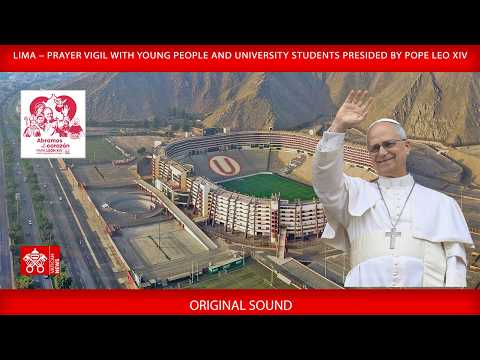
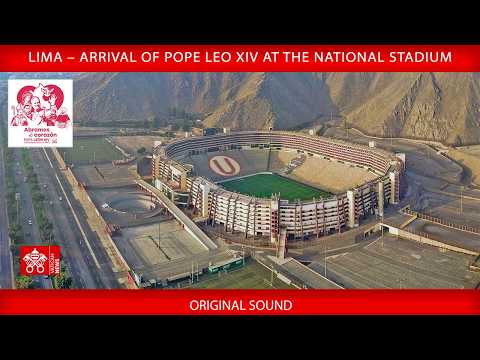
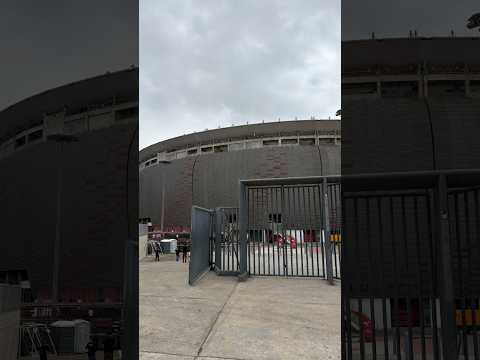
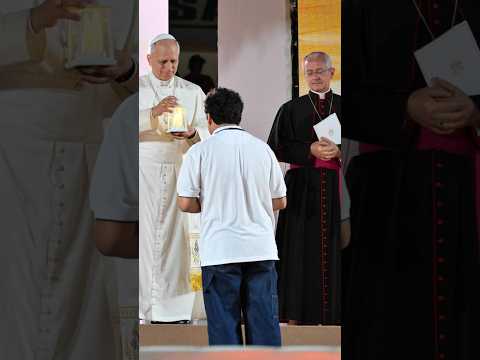
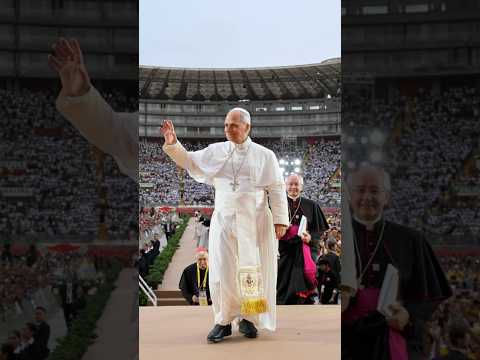
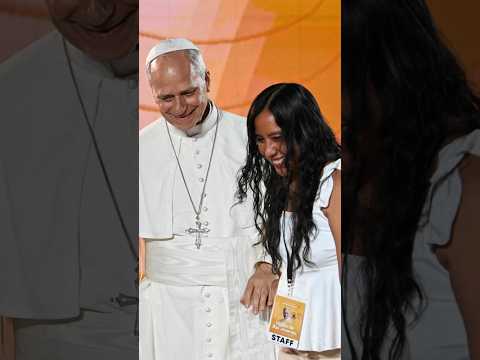
At 17:45 the Pope left the Nunciature and arrived at 17:55 at Lima's National Stadium (Estadio Nacional); the official programme of 21 September had listed the Estadio Monumental. According to the bulletin, some 60,000 young people were inside and, according to the authorities, another 300,000 in the surrounding areas. After an open-car tour among the faithful, he was welcomed by Cardinal Carlos Gustavo Castillo Mattasoglio, Archbishop of Lima. There followed the testimonies of Joao Meza, a medical student and dancer, and of Emily Milagros, youth ministry coordinator in Carabayllo, a staged performance and the testimony of Sister Luzbinda Ramos Zurita, an Ursuline. In his address the Pope gave the young people three words, passion, vocation and friendship, starting from Jesus' question "What are you looking for?". The vigil ended with the Prayer of Light, a commitment to peace, the Our Father and the blessing.
🎥 Videos
▶
Lima, Prayer Vigil with Young People and University Students: full video (Vatican News, original audio)
▶
Lima, Prayer Vigil with Young People: highlights (Vatican News)
▶
Lima, National Stadium: the Pope's arrival and popemobile tour (Vatican News, original audio)
▶
Peru's National Stadium will host thousands of young people with Pope Leo (Vatican News)
▶
Highlights from Pope Leo XIV's second day in Lima (Vatican News)
▶
Highlights of Pope Leo's Prayer Vigil with young people and university students in Lima, Peru (Vatican News - English)
▶
Pope: Jesus 'knows your story and continues to invite you to walk with Him' (Vatican News - English)
▶
Young people in Lima express their hopes for Pope Leo's visit to Peru (Vatican News - English)
📷 Photos
Some 60,000 young people inside Lima's National Stadium, with 300,000 more outside (Vatican Media)
Cardinal Castillo welcomes Pope Leo XIV on the stadium stage (Vatican Media)
Emily Milagros, youth ministry coordinator in the diocese of Carabayllo, reads her testimony to the Pope (Vatican Media)
Sister Luzbinda Ramos Zurita embraces Pope Leo XIV (Vatican Media)
The Pope delivers his address during the vigil (Vatican Media)
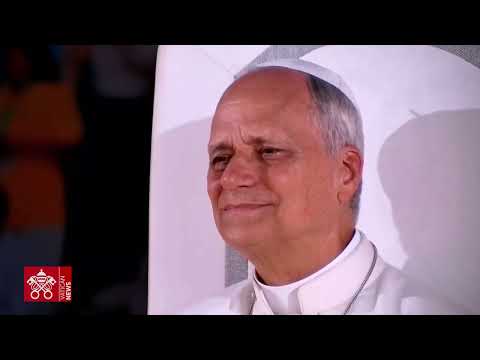
The Pope, visibly moved, before the crowd of young people (Vatican Media)
More than 60,000 people filled the Estadio Nacional for the prayer vigil (Vatican Media)
The Pope at the end of the vigil with young people (Vatican Media)
The Pope greets the faithful in Lima's National Stadium (Vatican Media)
Joao Meza hugs Pope Leo (Vatican Media)
Some 60,000 young people inside Lima's National Stadium, with 300,000 more outside (Vatican Media)
Some 60,000 young people inside Lima's National Stadium, with 300,000 more outside (Vatican Media)
Some 60,000 young people inside Lima's National Stadium, with 300,000 more outside (Vatican Media)
Some 60,000 young people inside Lima's National Stadium, with 300,000 more outside (Vatican Media)
Address at the Prayer Vigil with young people and university students
Good evening, Lima! Callao! Carabayllo! Those from Lurín and Chosica are here too! Good evening, everyone. Someone told me that Peru needs a sign of hope; well, here today at the National Stadium, you are that sign of hope.
It is a joy for me to be here with you. Thank you for such a warm welcome. I am grateful for the words of Cardinal Castillo a…
Good evening, Lima! Callao! Carabayllo! Those from Lurín and Chosica are here too! Good evening, everyone. Someone told me that Peru needs a sign of hope; well, here today at the National Stadium, you are that sign of hope.
It is a joy for me to be here with you. Thank you for such a warm welcome. I am grateful for the words of Cardinal Castillo and for the questions which the young people put to me, as well as for the sincerity with which Joao, Emily and Sister Luzbinda have opened their hearts to us. What they have shared gives me an opportunity to reflect with you on a scene from the Gospel of Saint John.
One day, John the Baptist was with two of his disciples when he saw Jesus passing by. Pointing him out, he said: “Behold the Lamb of God!” (Jn 1:36). When they heard this, the two began to follow him. The Lord, realizing that they were following him, looked at them and asked: “What are you looking for?” (v. 38). What a beautiful question! These are the first words spoken by Jesus in this Gospel. I would like each of you to hear that question as though Jesus were asking you today: What are you looking for? What do you hope to find? What do you hope for in life?
Do not be in a hurry to answer. Some questions accompany us for a long time. Think about what fills you with enthusiasm, about the people you love and the dreams you would be willing to fight to achieve. Think, also, about the concerns that sometimes keep you awake at night and the things you would like to change. Jesus is interested in all these matters because he is interested in you.
There is a word that can help us understand this search: passion. We use it to speak of what we love deeply, what awakens our enthusiasm and moves us to give the best of ourselves. But the word also reminds us of suffering, of experiences that seem to extinguish our desire to keep going. Some young people feel lonely, even when they are surrounded by others. Others carry the pain of a loss or uncertainty about their future. At times, we ask ourselves why God allows certain things to happen, or why he seems silent when we need him most.
Let us remember, then, how John the Baptist introduced Jesus: “Behold the Lamb of God!” At the time, those disciples could not yet understand what that name meant. Later, in the light of the Lord’s Passion, they would discover its meaning: he gave his life on the cross. Jesus, too, knew the anguish and darkness of suffering. From the cross he cried out: “My God, my God, why have you forsaken me?” (Mk 15:34). In the midst of that suffering, Christ continued to love. He did not desire the cross; he desired our salvation. Out of love for us, he accepted it and bore it to the end. Thus, through his self-giving, that instrument of death became the place where his passionate love was revealed, a love capable of conquering death.
Dear young people, when you suffer, turn to Jesus. Do not be afraid to speak to him honestly, even when you struggle to find words for prayer. He knows our tears and the questions to which we do not yet know the answers. Seek, too, the company of those who love you: some sorrows need time and a helping hand. Faith sustains us along this path and reminds us that suffering never has the final word. Be passionate about everything that is worthwhile, about what is true, good and beautiful! Develop your talents, discover the richness of your culture and dare to undertake magnanimous projects. Pope Francis used to remind us that this “restlessness” can spur us to take our lives into our own hands and assume responsibility for a mission (cf. Christus Vivit, 138). Do not settle for living according to what others expect of you. God has created you for the purpose of accomplishing something that no one else can do in quite the same way.
Let us return now to the two disciples. In response to Jesus’ question, they said: “Rabbi, where are you staying?” And he replied: “Come and see” (Jn 1:38-39). What a simple answer! Those men wanted to meet Jesus and share something of his life. The Lord did not explain in advance everything that lay ahead of them. To begin with, it was enough to accept his invitation. This is how a vocation begins, the second word I would like to share with you. We all ask ourselves what to do with our lives and to whom we should give the best of ourselves. There are answers we discover only when we dare to walk with Jesus. Saint Paul reminds us that God chose us in Christ before the foundation of the world (cf. Eph 1:4). Before we even existed, we were already loved by him!
At times, we wonder whether following God’s will means giving up our dreams. This fear can give rise to an even more dangerous suspicion: thinking that God is depriving us of something and that, in order to enjoy life fully, we also need to experience sin (cf. Gen 3:5). Dear friends, I would like you to engrave in your hearts the words of Pope Benedict XVI: “evil is always poisonous” (Homily, 8 December 2005). Do not be deceived. How could something that harms us make us happy? God knows our deepest desires, even better than we know them ourselves. He has placed within us the desire to love and to be happy, and he wants to bring that desire to fulfillment.
As happened with the first disciples, it all begins with a simple invitation: from a friend, an experience of service or an encounter with someone whose life makes us ask what truly matters. The stories we have heard this evening began with an invitation, too. Learning to recognize the Lord’s voice is essential. So, dear young people, set aside moments of silence before the Blessed Sacrament to encounter him. Speak to him about your plans and allow his word to question you. Do not be afraid to ask him what he expects of you. He will call some to the priesthood or the consecrated life, others to marriage and to forming a family. All are called to put their abilities at the service of others.
Perhaps some of you think that you have made too many mistakes or that it is too late to begin anew. I would like to say to you: Look to Jesus. He knows your story and continues to invite you to walk with him. You do not need to have your entire future worked out before you answer him. Take the step you can take today. Trust in his love and allow him to accompany you. Often, the Lord shows us the way as we travel along it.
The Gospel continues with a beautiful detail: those disciples “remained with him that day” (Jn 1:39). Saint John even remembers the time: it was about four o’clock in the afternoon. The passing years could not erase the mark left by that encounter. They stayed with Jesus. This was how a relationship began, one that would grow as they journeyed together. So now we come to the third word I would like to entrust to you: friendship. Our vocation, too, grows when we learn to remain close to the Lord, to listen to him and to share our joys and worries with him. In time, those disciples would discover the full extent of his love. During the Last Supper, Jesus would say to them: “I have called you friends” (Jn 15:15). That same night he would speak words that would be fulfilled on the afternoon of Good Friday: “No one has greater love than this, to lay down one’s life for one’s friends” (v. 13).
This is the Friend who calls you! Cultivate that friendship through prayer, the Eucharist and listening to his word. The more we learn to love Jesus, the more capable we become of loving as he does. Our friendship with Christ also gives rise to a more authentic friendship with others, one that sincerely seeks their good, knows how to forgive and remains faithful, especially in times of difficulty. How beautiful it is to find friends who help us grow and draw us closer to God.
The Church is born and lives from this friendship with Christ. In her we find brothers and sisters who help us keep going. We all need someone who will listen to us, encourage us when our strength fails or simply remain at our side. So do not think that you must always appear strong, especially if you lead groups or accompany others. Allow yourselves to be cared for. Remember that Jesus, too, in Gethsemane, wanted his friends close to him in the hour of anguish (cf. Mt 26:38). Do not be afraid to share your sorrows with your friends and seek the support you need.
There is one final detail from the Gospel that I would like to mention. After that encounter, Andrew went to find his brother Simon and told him: “We have found the Messiah” (Jn 1:41), and he brought him to meet Jesus. Do the same! Think especially of those who are going through difficult times. A gesture of friendship can change the course of a life. Do not be afraid to speak about Jesus and to show through your lives how good this friendship between you and him is for you.
Dear young people, listen to Jesus’ invitation and dare to follow him. Today I would like to repeat to you that the Lord “takes nothing away, and he gives you everything” (Benedict XVI, Homily, 24 April 2005). Trust in Christ! Trust him as you would a true friend, one who knows you, loves you and never abandons you. That trust will deepen your friendship with him each day. Therefore, let us ask the Lord, through the intercession of the Virgin Mary and the Saints of Peru, to increase our trust in him day by day, to help us live our vocation with passion and to remain always in his friendship. Let us say together a simple prayer that will help us trust Jesus more and more each day. I invite you to repeat after me:
Jesus, I trust in you. Jesus, I trust in you. Jesus, I trust in you. Come, Lord Jesus. Come into my heart, come into my family, come into my community. Come into my life soon. Come quickly, Lord!
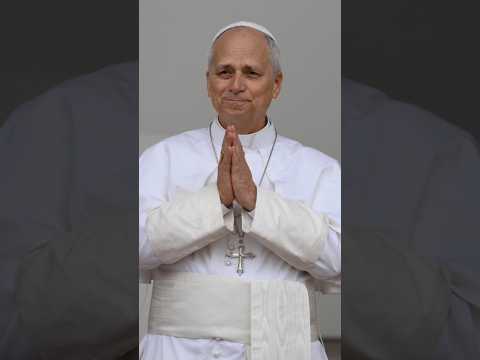
After dinner with the bishops, the Pope greeted the faithful gathered outside the Apostolic Nunciature, thanking them for their presence and enthusiasm: "Good evening. Thank you very much for this beautiful presence, for this enthusiasm, because we are all seeking to be always united in Jesus Christ." Before the blessing he invited them to open their hearts to listen to the Word of God and to be "united as brothers and sisters in Christ" (words reported by Vatican News, translated from Spanish).
📷 Photos
The Pope greets the faithful outside the Nunciature in Lima (Vatican Media)
Image from the Vatican News article on the greeting from the Nunciature (Reuters)
Words of the Holy Father from the balcony of the Apostolic Nunciature
Good evening. Thank you very much for this beautiful gathering, for this enthusiasm, because we are all seeking to be united always in Jesus Christ. Let us ask for God’s blessing upon all of you, that he may help us to always be faithful, that we may open our hearts, that we may know how to listen to his word, and above all, that we may be united a
Good evening. Thank you very much for this beautiful gathering, for this enthusiasm, because we are all seeking to be united always in Jesus Christ. Let us ask for God’s blessing upon all of you, that he may help us to always be faithful, that we may open our hearts, that we may know how to listen to his word, and above all, that we may be united as sisters and brothers in Christ.
May the Lord be with you. Blessed be the name of the Lord.
Our help is in the name of the Lord.
And may the blessing of almighty God, the Father, and the Son, and the Holy Spirit, come down upon you.