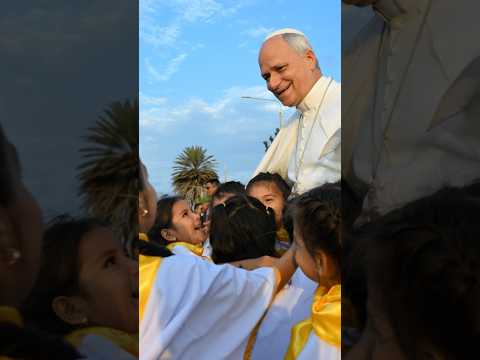
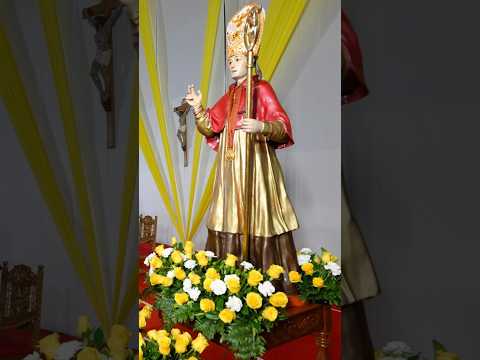
Saturday 14 November 2026 — Coronation of the Immaculate Virgin, Holy Mass at Santa Cruz de Succhabamba and closing of the Jubilee of Saint Toribio in Zaña
08:00
Cathedral of Saint Mary, Chiclayo, Peru
👑 Coronation
Coronation rite of the Immaculate Virgin
📍 Cathedral of Saint Mary, Chiclayo, Peru
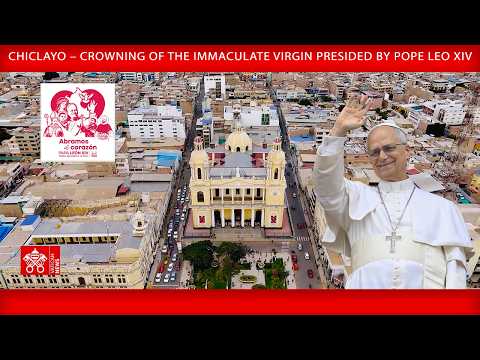
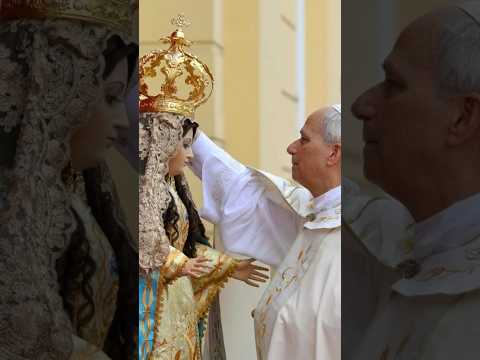
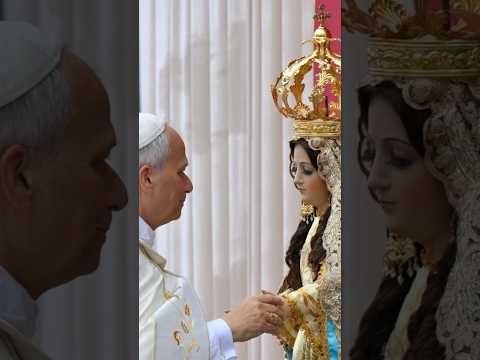
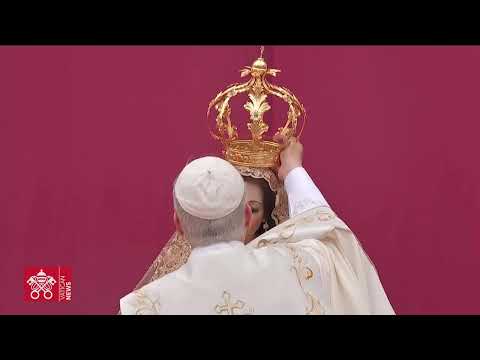
At 7:55 a.m. (1:55 p.m. Rome time) the Pope walks from the Bishop's House and enters the Cathedral of Saint Mary through a side door, pausing briefly at the presbytery, the altar and the Blessed Sacrament chapel. The rite takes place in the atrium before the main entrance of the cathedral where he served as bishop from 2015 to 2023: after the Liturgy of the Word, the Pope delivers his homily (in Spanish) and crowns the statue of the Immaculate Virgin. "Beside you I learned to be a shepherd of Chiclayo," he says to Mary; "to your Immaculate Heart I entrust today my life and my ministry as Successor of Peter." He closes with a prayer composed for the occasion, asking to be "builders of peace and reconciliation". According to Vatican News, many faithful had spent the night in the square.
Homily at the Rite of Coronation of the Immaculate Virgin
Dear brothers and sisters,
With a heart filled with joy, I give thanks to God for being here with you today to celebrate our faith as we have so often done, and in the same cathedral in which I began my episcopal ministry in the service of this Diocese of Chiclayo. With gratitude for the years the Lord granted us to walk together, I now prepare, a
Dear brothers and sisters,
With a heart filled with joy, I give thanks to God for being here with you today to celebrate our faith as we have so often done, and in the same cathedral in which I began my episcopal ministry in the service of this Diocese of Chiclayo. With gratitude for the years the Lord granted us to walk together, I now prepare, as the Successor of Peter, to crown this beautiful image of the Immaculate Virgin Mary. This gesture is particularly significant, for the crown I will place upon our Lady’s head is intended to symbolize the tribute of gratitude and filial love offered to her by the Pope, together with you and the whole Church, as we acknowledge her as the loving Mother and Patroness of Chiclayo, exalted by God as Queen of heaven and earth.
As we heard in the reading from Isaiah, darkness continues to lie in wait even today and seems to envelop us completely. We feel threatened by the uncertainty of widespread violence and by the unspeakable suffering that continues to afflict so many of our brothers and sisters. Yet, despite this darkness, which so often dims our hope and weakens our trust, God’s gift continues to shine before our eyes: “For a child has been born for us, a son given to us” (Is 9:6). This Child is Jesus Christ, the Son of God and the Son of Mary. Yes, a defenseless child is God’s answer to a humanity plunged into darkness, yet longing for unity and reconciliation. He alone is the light that illumines the most hidden corners of human existence, the only light capable of rescuing us from sin and undoing its disastrous consequences in our personal and communal lives. He reveals who we truly are: sons and daughters of God, invited to share in the joy of his salvation and in the gladness of knowing that we are brothers and sisters.
With good reason we invoke the Immaculate Virgin as “Cause of our joy,” for through the “yes” with which she responded to the annunciation of the Angel (cf. Lk 1:38), God made man, entered the history of our world. By her obedience to the Father, he makes all things new (cf. Rev 21:5), rescues us from the tragedy of sin and reveals to us the eternal destiny to which every man and woman is called.
My dear sons and daughters of this beloved land of Chiclayo: devotion to the Immaculate Virgin is part of the Christian roots that shape your identity and strengthen your faith. With loving care, the Mother of God has accompanied this people for generations and continues to accompany you today. Trusting in her intercession and protection, I invite you to keep walking forward together, as one family of God. A family that longs for a world marked by love and compassion, forgiveness and the pursuit of justice. A family confident that Mary Most Holy always shows us the sure path that leads to Jesus, who is the source of abundant life and truth, and who continually offers us new opportunities.
To you, our Immaculate Mother, I lift my gaze and my heart today with filial affection. At your side I learned to be the shepherd of Chiclayo. You accompanied me through its towns and cities. You taught me to meet its people and to be attentive to their needs, as you did at the Wedding Feast of Cana. To your Immaculate Heart I entrust today my life and my ministry as Successor of Peter. I also ask you to watch over and protect the People of God making their pilgrim way in these lands and to guide them always to your Son, Jesus Christ.
Dear brothers and sisters, before I conclude, until we meet again, I would like us to join together in reciting this prayer to our heavenly Mother:
Holy Mary, filled with the presence of God, who throughout your earthly life humbly obeyed the will of the Father and gave us an example of simplicity, we beg you to continue walking with us,and to obtain for us from your Son, Jesus Chris t, through your maternal heart, the gift of listening attentively to the Holy Spirit, so that, with the help of his grace, we may be ready to follow him faithfully, to be builders of peace and reconciliation, and servants of the Kingdom of God and of our brothers and sisters. Amen.
After the rite the Pope leaves the Cathedral and is driven to the Teniente Coronel Pedro Ruiz Gallo Air Base (Grupo Aéreo Nº 6), from where at 9:20 a.m. local time he departs by helicopter for Santa Cruz de Succhabamba. According to Vatican News, the 47-minute flight ends at the Santa Cruz heliport, amid the Andean hills. According to the bulletin, the Pope leaves the Cathedral at 9:00 and the helicopter lands in Santa Cruz at 10:07.
🎥 Videos
▶
Chiclayo, Departure by Helicopter (Vatican News)
▶
Santa Cruz de Succhabamba, Arrival by Helicopter (Vatican News)
📷 Photos
Pope Leo XIV flying to Santa Cruz de Succhabamba (Vatican Media)
📍 Parish of the Immaculate Conception, Santa Cruz de Succhabamba, Peru
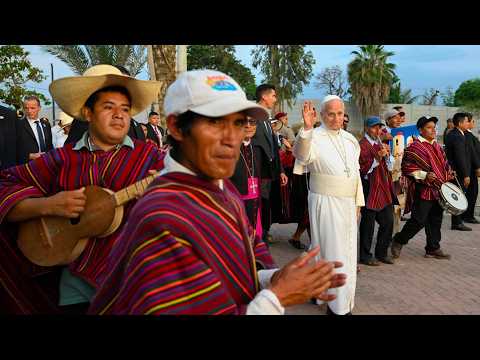
Welcomed by the hand-rung parish bells, the Pope arrives by car in the parish square. He prays in the Blessed Sacrament chapel and before the Señor del Costado, patron of the town, where he lays a bouquet of flowers and lights a candle. He then delivers off-the-cuff remarks to the faithful, especially the sick ("You, too, are part of the Church, and we want to be close to you"), asks them to pray for one another and gives his blessing. Before leaving the parish he exchanges a few words with some of the sick and people with disabilities.
📷 Photos
The welcome for Pope Leo XIV in Santa Cruz de Succhabamba (Vatican Media)
Pope Leo kneels in prayer before the Blessed Sacrament in Santa Cruz (Vatican Media)
The Pope prays before the Señor del Costado (Vatican Media)
The Pope prays with some people with disabilities (Vatican Media)
Pope Leo greets the faithful at the parish in Santa Cruz (Vatican Media)
The welcome for Pope Leo XIV in Santa Cruz de Succhabamba (Vatican Media)
Spontaneous greeting to the faithful gathered at the Parish of the Immaculate Conception in Santa Cruz de Succhabamba
Sisters and brothers,
With such joy, once again, I find myself with you here in Santa Cruz. It is like a great dream that the Lord has made possible: that I, a humble servant, have come this far, also as part of this pastoral visit to the Diocese of Chiclayo and to all of Peru. I am very happy to be able to meet all of you — the people of Santa Cr
Sisters and brothers,
With such joy, once again, I find myself with you here in Santa Cruz. It is like a great dream that the Lord has made possible: that I, a humble servant, have come this far, also as part of this pastoral visit to the Diocese of Chiclayo and to all of Peru. I am very happy to be able to meet all of you — the people of Santa Cruz and those who have come from farther away.
Through Baptism, the Lord calls us all to be his missionary disciples — from the youngest to the oldest. Those who suffer from illness or for other reasons also give us a beautiful witness to their faith through their faithfulness and their prayer. You, too, are part of the Church; we want to be close to you. We invite you to pray for one another, for me, and for all those who need God’s help. And may we thus always be united. May we all walk together as the People of God, children of God, children of the same Father. Congratulations to all; I impart my blessing to you, and I will greet just a few of you because, as you know, we will celebrate Holy Mass afterward.
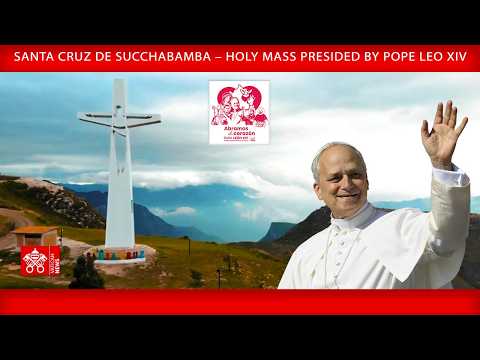
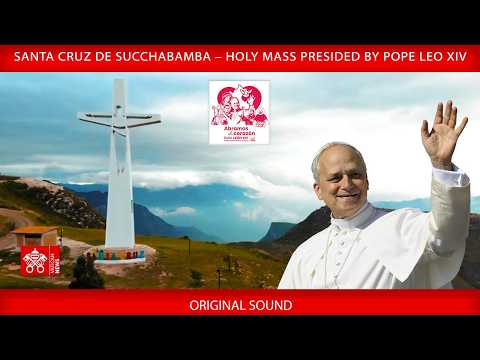
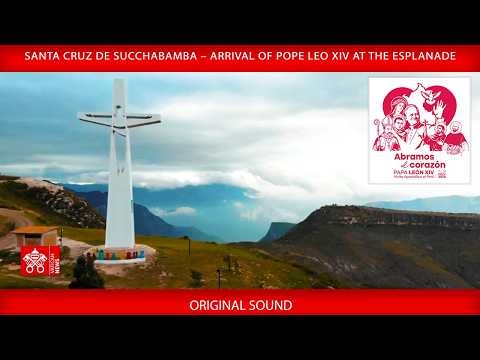
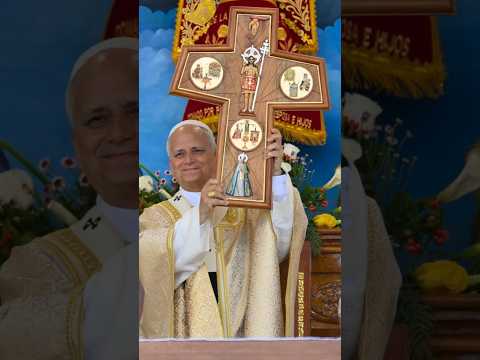
After a popemobile tour among the faithful, the Pope presides on the esplanade over the votive Mass of God's Mercy, attended by about 20,000 people according to Vatican News, many of whom came on foot from farming communities in the Cajamarca region. In his homily on the parable of the widow and the unjust judge (Lk 18:1-8), he remembers the missionaries and catechists of the Andes, calls the simple faith of the Andes "a healthy antidote to superficiality and consumerism", speaks of migration to the coastal cities, the falling birth rate and the fair sharing of the soil's resources, and urges people not to give in to discouragement, resentment or violence. At the end he adds off the cuff: "if Jesus decides to come to Santa Cruz, he will find faith". The Bishop of Chiclayo, Edinson Edgardo Farfán Córdova, thanks the Pope and presents him with a cross depicting the main devotions of the ecclesiastical province of Piura. According to the bulletin, the Pope reaches the esplanade at 10:45 and Mass begins at 11:06, with more than 20,000 faithful present.
🎥 Videos
▶
Santa Cruz de Succhabamba, Holy Mass (Vatican News - English)
▶
Santa Cruz de Succhabamba, Holy Mass, original audio (Vatican News)
▶
Santa Cruz de Succhabamba, Arrival at the Esplanade (Vatican News)
▶
Pope in Santa Cruz: Jesus calls Church to heed unanswered cries for justice (Vatican News - English)
📷 Photos
The Holy Father during the homily (Vatican Media)
The faithful on the esplanade of Santa Cruz de Succhabamba (Vatican Media)
The altar of the Mass (Vatican Media)
Pilgrims gathered for the Mass (Vatican Media)
The cross presented to the Pope (Vatican Media)
Mass on the esplanade of Santa Cruz de Succhabamba (Vatican Media)
The road to Santa Cruz de Succhabamba
A mural dedicated to Pope Leo XIV in Santa Cruz
Faithful at the Pope's Mass in Santa Cruz de Succhabamba (Vatican Media)
Mass on the esplanade of Santa Cruz de Succhabamba (Vatican Media)
Dear brothers and sisters: welcome to this celebration, and thank you to Santa Cruz for this warm reception! “This is the day that the Lord has made; let us rejoice and be glad in it” (Ps 118:24). In this Eucharist, as I have done so many times, I come to share with you the joy of being a disciple and missionary of Christ. We are here in Santa Cruz
Dear brothers and sisters: welcome to this celebration, and thank you to Santa Cruz for this warm reception!
“This is the day that the Lord has made; let us rejoice and be glad in it” (Ps 118:24). In this Eucharist, as I have done so many times, I come to share with you the joy of being a disciple and missionary of Christ. We are here in Santa Cruz, we are in the Department of Cajamarca; we are in the mountain range of the Peruvian Andes, amid these beautiful hills, with ravines and fertile valleys, in a land with Andean roots, where the Inca Empire flourished and which is the cradle of a profound Christian faith. Many of you have traveled long distances to be here. Some have come from rural communities, leaving behind your families, farms and daily occupations. The journey you made is not only a passage along difficult roads, but also a pilgrimage of faith. Indeed, every step and effort express one desire. Their only desire is this: to encounter Jesus, who is venerated here, at Santa Cruz, with the image of el Señor del Costado, they have come to encounter Christ, listening to his word, to receive his Body and Blood and, nourished by this food, to be strengthened in hope.
The first reading, taken from the Third Letter of Saint John (cf. 3 Jn 5-8), compiles some of the instructions given to a Christian named Gaius. After commending his well-known generosity, Saint John asks him to care of itinerant missionaries and provide for their needs, recalling that, for the sake of Christ, “they began their journey, accepting no support from non-believers” (cf. v. 7). The same marvelous work took place five centuries ago in these mountains — silent witnesses to the birth of the first Christian communities — thanks to the work of missionaries. Time and again, they came without provisions or letters of recommendation, to proclaim the name of Jesus and the love of the Lord of Miracles of Andabamba and of his Immaculate Mother.
Since the arrival of the first missionaries, from Turibius of Mogrovejo to the Martyrs of Chimbote, the seed of the Gospel has never ceased to take root and bear fruit in these lands, quietly, far from applause or great recognition. In this way, here in the Andes, faith has grown simply and genuinely, founded on the daily living of Gospel values and expressed in traditions and festivals that bring peoples and generations together. Faith has become a distinguishing mark and a way of life in which no one ever feels alone, not even in the face of adversity. We can say that the warmth and joy that characterize so many Andean regions are rooted in respect for and love of the Lord’s commandments (cf. Ps 112:1), and reflect “a thirst for God which only the simple and poor can know” (Evangelii Nuntiandi, 48). For this reason, in Evangelii Gaudium, Pope Francis spoke of popular piety as a powerful force for evangelization, in which “the faith, once received, becomes embodied in a culture and is constantly passed on” (no. 123). Popular piety holds essentials such as the land, honest work and the family in high regard, and offers a healthy antidote to the superficiality and consumerism that are so widespread today.
I therefore wish to honor with gratitude the memory of the many missionary priests and men and women religious who, over the centuries, have worked generously and devotedly to spread the Kingdom of God on these hills. Our prayer of thanksgiving also rises for the catechists who, often in the absence of priests and not without sacrifice, provide pastoral care for the communities, guiding their brothers and sisters in the celebration of the Liturgy of the word, preparing them for the Sacraments, visiting the sick and responding to their needs. Let us pray in a special way for those whom the Lord has already called to himself, whose memory remains alive in the communities. Without them, evangelization in these remote regions would have proven very difficult. Let us give thanks to the Lord for the countless laypeople who are committed in different ways to proclaiming the Gospel, both here and throughout the world.
In the Gospel (cf. Lk 18:1-8), Jesus spoke of a widow — a symbol of social disadvantage and dependence in the cultural context of that time. Defenseless and oppressed, the poor woman persistently sought justice from a judge who neither feared God nor respected anyone, and remained indifferent to her pleas. Only through her perseverance did she finally obtain justice.
As Jesus tells us, the parable reminds us above all how important it is to pray without ever losing heart. But it is also an invitation to open our eyes to the many painful situations around us. The widow’s plea to the judge — “Grant me justice against my opponent” (v. 3) — is sadly still heard today, unanswered, on the lips of so many men and women. This is a matter of great concern for both the Church and society. Let us think, for example, of the suffering of those who are forced to leave their homeland in search of a better future for themselves and their families in the great coastal cities; of the difficulties surrounding generational succession due to the declining birth rates that are emptying villages; and of the challenge of equitably distributing the land’s resources.
In the face of so many difficulties, we may be tempted to give in to discouragement, resentment or even violence. Yet this will never lead to progress and peace. The widow in the parable shows us that selfishness, injustice and evil are not overcome by brutality, but by prayer, patience and perseverance in denouncing what is wrong, by making our pleas with determination and working diligently to bring about the necessary changes, while never losing trust in God. Then, as happens at the summit of Cerro Cotorumi, through the cross we see the sky.
What sustains the woman in the Gospel in her tenacity is faith, as the question with which Jesus concludes the account makes clear: “And yet, when the Son of Man comes, will he find faith on earth?” (v. 8). There is a close relationship between faith, prayer and action. Where there is faith, there is prayer; and where there is prayer, there is the capacity to commit oneself to others. You who inhabit these lands know this well. Despite many difficulties, you never lost your trust in God nor, with his help, in yourselves. It is faith that makes you great in your aspirations and projects. In this regard, I wish to commend those who, with ingenuity and an entrepreneurial spirit, strive to provide people with dignified jobs: farmers, shopkeepers, small business owners and so many others who, here day after day, put their God-given talents at the service of their communities, helping to promote authentic models of integral human development through employment (cf. Magnifica Humanitas, 181).
Dear brothers and sisters, the Lord knows the paths you travel, your hardships, your worries and the challenges you face. He understands the hopes of the young, inspires the wisdom of the elderly and does not abandon you. When the soul wanders aimlessly, he is the way. When strength is lacking, he is your nourishment. When discouragement arises, it is he who rekindles hope. Let us ask our Lady of the Immaculate Conception never to cease protecting us beneath her mantle, and may the Eucharist we celebrate renew the faith in all of us, strengthening our commitment and dedication. And may el Señor del Costado, venerated with such devotion here in Santa Cruz, bless you, protect you and always inspire thoughts and gestures of unity, charity and peace.
Impromptu Remarks of His Holiness Pope Leo XIV at the Conclusion of Holy Mass
Dear brothers and sisters, Before giving the final blessing, I just want to share one more brief reflection. We have heard the words of the Gospel in which Jesus asks, “when the Son of Man comes, will he find faith on earth?” I know that if Jesus decides to come to Santa Cruz, he will find faith. Thank you for your witness. Thank you for your faith
Dear brothers and sisters,
Before giving the final blessing, I just want to share one more brief reflection. We have heard the words of the Gospel in which Jesus asks, “when the Son of Man comes, will he find faith on earth?” I know that if Jesus decides to come to Santa Cruz, he will find faith. Thank you for your witness. Thank you for your faithfulness to the Church. Thank you for joining us on this beautiful journey.
📍 Shrine of Saint Toribio de Mogrovejo, Zaña (Chiclayo), Peru
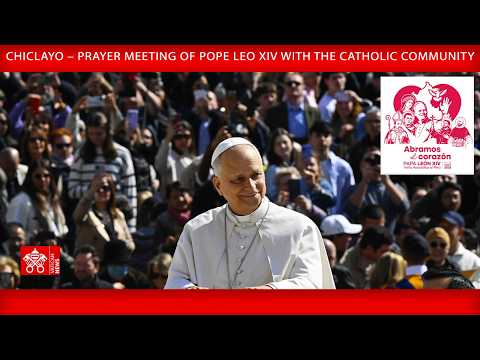
Arriving from Chiclayo past more than 300,000 people along the route, the Pope receives the key to the city under the authorities' arch and walks to the chapel where Saint Toribio died in 1606: he prays before the altar and the statue of the saint and lays a floral tribute. On the stage, before some 10,000 faithful, after the greeting of the Bishop of Chiclayo, Edinson Farfán Córdova, and three testimonies (a priest, a woman missionary and a representative of the Afro-descendant community), he closes the Jubilee Year for the third centenary of the canonization. In his address he recalls the night before he began his ministry as Bishop of Chiclayo, spent in prayer through the intercession of Saint Toribio: "That night I asked the Lord to teach me to be a shepherd. Today I understand that you have been part of God's answer to that plea." He also recalls the suffering of the Africans enslaved in Zaña and the families hit by crime and extortion. On his way back to the chapel he pauses in prayer and receives the crown of the Virgin of the Assumption of Cutervo; after a traditional dance he returns to the Bishop's House in Chiclayo.
🎥 Videos
▶
Chiclayo, Prayer Meeting with Catholic Community, November 14, 2026 (Vatican News - English)
▶
Highlights: prayer meeting with the Catholic community in Zaña, 14 November 2026 (Vatican News)
▶
Chiclayo, Prayer Meeting with Catholic Community, November 14, 2026 – full video (Vatican News)
▶
Highlights from Pope Leo's Prayer Meeting with the Catholic Community in Zaña (Vatican News - English)
▶
Pope Leo closed the Jubilee marking the 300th anniversary of Turibius de Mogrovejo's canonisation (Vatican News - English)
📷 Photos
Pope Leo's address in Zaña (Vatican Media)
The prayer for the Year of Saint Toribio (Vatican Media)
Leo XIV at the prayer meeting at the Shrine of Saint Toribio (Vatican Media)
The greeting of the Bishop of Chiclayo, Bishop Farfán Córdova (Vatican Media)
Leo XIV arrives at the Shrine of Saint Toribio de Mogrovejo (AFP)
The Pope arrives at the Shrine in Zaña (Reuters)
A moment of the meeting, attended by more than 10,000 faithful (Vatican Media)
The indigenous communities of Incahuasi and Cañaris at the meeting (Vatican Media)
Faithful from the Afro-Peruvian communities of the Diocese of Chiclayo (Vatican Media)
Saint Toribio de Mogrovejo in a painting (Vatican News)
The Pope welcomed by a group in traditional dress (Vatican Media)
Signs in tribute to the Pope (Vatican Media)
The prayer meeting at the Shrine of Saint Turibius (Vatican Media)
Pope Leo XIV in Zaña (Vatican Media)
The closing of the Jubilee Year for the 300th anniversary of the canonization of Saint Turibius (Vatican Media)
Children greet the Pope at the Shrine (Vatican Media)
The visit concludes with a traditional dance (Vatican Media)
The Pope during the testimonies (Vatican Media)
The priest who gave his testimony greets the Pope (Vatican Media)
A missionary sister from Kañaris after her testimony (Vatican Media)
The representative of the Afro-descendant community greets the Pope (Vatican Media)
Address at the prayer meeting with the Catholic community at the Shrine of Saint Turibius of Mogrovejo (Zaña)
Dear brothers and sisters,
I am very glad to be here with you. How I have longed for this moment! As I made my way here, so many memories returned to me from the years when the Lord entrusted me with the care of this beloved diocese. One which remains especially dear to me is the night before I began my ministry as Bishop of Chiclayo.
I remember
Dear brothers and sisters,
I am very glad to be here with you. How I have longed for this moment! As I made my way here, so many memories returned to me from the years when the Lord entrusted me with the care of this beloved diocese. One which remains especially dear to me is the night before I began my ministry as Bishop of Chiclayo.
I remember spending that night in prayer, asking the Lord, through the intercession of Saint Turibius, to grant me the grace to be a shepherd after his own heart. At the time, I did not know all that lay ahead of me or how much I would receive from you. Thank you for welcoming me with the joy and hospitality that are so characteristic of you, for your many gestures of affection and also for the delicious food you have prepared so lovingly. Even those familiar flavors have brought back memories of the happy times I spent here. Thank you for making me feel, once again, that I am home.
I am grateful to Bishop Edinson Farfán for his warm words of welcome and to those who have shared their testimonies with us. I listened to them with emotion and gratitude, recognizing in your words the faith of this people whom I always carry in my heart.
Today we bring to a close the Jubilee Year marking the third centenary of the canonization of Saint Turibius of Mogrovejo, and we do so here, at the shrine dedicated to him. Zaña offers us a summary of his life, for it was here that he surrendered his spirit to the Father while carrying out the pastoral visitation entrusted to him as Bishop of this region. His life reminds us that a shepherd’s love is measured also by the physical and existential distances he is willing to travel in order to proclaim Jesus Christ.
Here in Zaña there is an empty tomb where I recently stopped to pray. The remains of Saint Turibius rested there for a short time before being transferred to Lima. As I contemplate it, I think of what remains of his passage through this land: the faith of so many communities and the dedication of those who have followed in his footsteps, bringing the Gospel to the most remote places. During my years in Chiclayo, I had the grace of encountering many of them. I especially remember my visits to Incahuasi and Kañaris, the warm welcome extended by their families and the dedication of the priests and — in a special way — the religious sisters who accompany them. I often arrived to proclaim the Gospel and returned having understood it a little better, thanks to your faith.
Zaña also preserves the memory of generations of Africans who were torn from their homes and subjected to slavery. Many endured great suffering and humiliation. Dear brothers and sisters of African descent, today I want to express my affection and closeness to you. I have had the joy of coming to know your faith, your traditions and the love with which you preserve the memory of your ancestors. Thank you for all that you contribute to the life of this Church. May the example of Saint Martin de Porres, on whom Saint Turibius himself conferred the Sacrament of Confirmation, remind you how deeply God loves you and encourage you to persevere on the path to holiness.
Dear brothers and sisters, the life of Saint Turibius also invites us to look at the needs of our own time. I know that many families in this region suffer because of crime, extortion and insecurity. I am pained at the thought of those who live in fear, of people whose honest labor is under threat and of those who continue to experience discrimination. I hold you in my prayers and ask the Lord to grant you the peace you so deeply need. I urge you to remain united, to care for one another and never to grow accustomed to the suffering of others. There is always someone we can help, someone we can listen to, a family we can accompany.
In the letter I recently addressed to the Bishops of Latin America and the Caribbean, I recalled that Saint Turibius was a shepherd who “had first allowed the Gospel to shape his very existence” (Letter to the Bishops of Latin America and the Caribbean on the occasion of the Third Centenary of the Canonization of Saint Turibius of Mogrovejo, 8 September 2026). How wonderful it would be if the same could be said of each one of us! Dear priests, nourish your friendship with Jesus Christ each day, celebrate the sacraments with love and reverence, and always remain close to the people entrusted to your care. Dear parents and grandparents, continue to pass on the faith to your children and grandchildren. And you, young people, open your hearts to the Lord, who knows you and has a beautiful vocation for each of you. Let us allow his word to transform our lives and teach us to love as he loves us.
Before I conclude, I would like to return to that night of prayer with which I began this reflection. Many years have passed, and I carry so many of your faces in my memory. I remember with special affection those who have already gone to the Father’s house and whom I hope to meet again one day. All of you remain firmly in my prayers.
That night I asked the Lord to teach me how to be a shepherd. Looking back on the years that have passed, I now understand that you have been part of God’s answer to that prayer. For this, I want to thank you from the bottom of my heart. Thank you for your faith, your affection and all that you taught me during those years. Now that the Lord has entrusted me with the care of the universal Church, I ask him once again for the same grace, conscious of how much I still have to learn. I ask you to continue praying for me, as I know you have been doing.
May the Most Holy Virgin Mary and Saint Turibius of Mogrovejo intercede for you, so that you may continue faithfully along the paths of the Gospel. May God bless all of you. Thank you.
⛪ Cusco and Pucallpa: Angelus and meeting with the Amazonian peoples
Meeting with the faithful at Saqsaywaman and Angelus in Cusco, then a flight to Pucallpa for the meeting with missionaries and the Amazonian peoples and Mass at Villa Deportiva.