Sunday 15 November 2026 — Cusco: Angelus in front of the Cathedral; Pucallpa: Amazonian peoples and Holy Mass
11:45
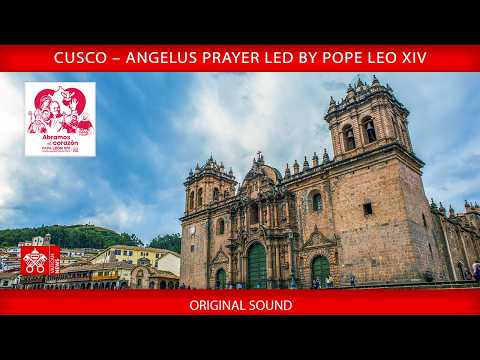
Square in front of the Cathedral Basilica of the Assumption, Cusco, Peru
🙏 Angelus
Angelus in front of the Cathedral Basilica of Cusco
📍 Square in front of the Cathedral Basilica of the Assumption, Cusco, Peru
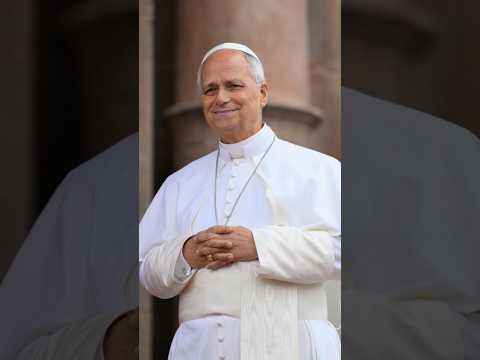
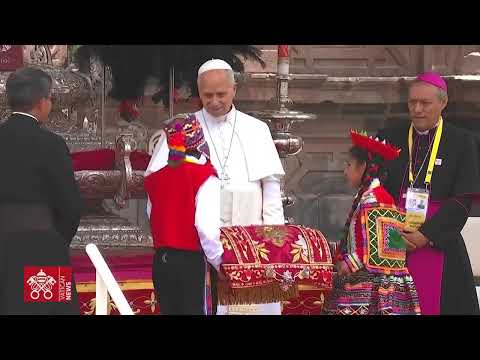
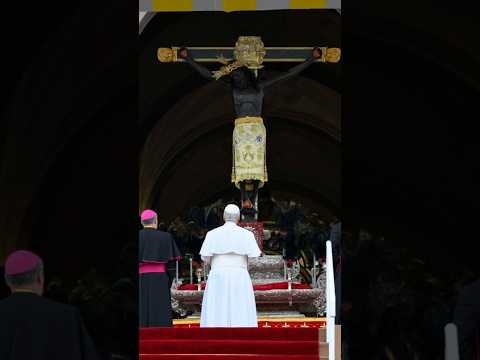
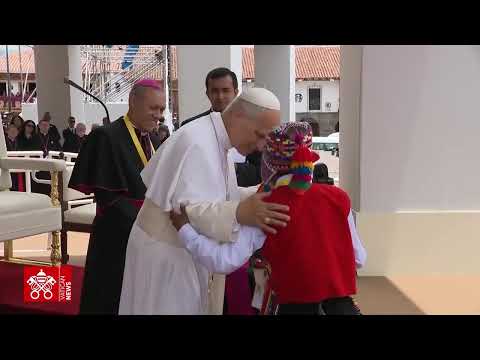
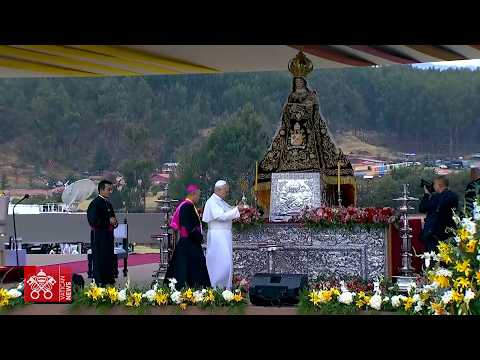
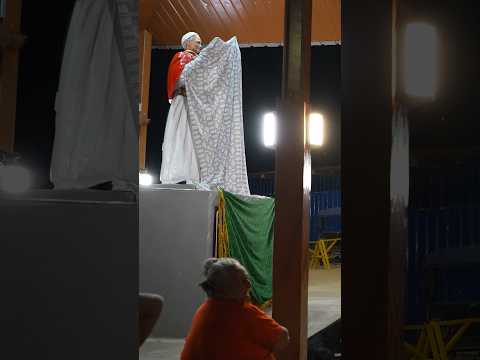
At 11:40 local time (17:40 Rome time) the Pope went to the Cathedral Basilica of the Assumption. According to the bulletin, he entered the Cathedral with Archbishop Lizardo Estrada Herrera to pay homage at the tomb of Archbishop Richard Daniel Alarcón Urrutia, who recently died. After the Archbishop’s greeting he introduced and recited the Angelus, commenting on the parable of the talents: he told the sick that illness lived in faith does not extinguish a person’s value (“What a great lie!”), and asked priests and consecrated persons not to be afraid to spend themselves for Christ. He then presented a Shroud to the Lord of the Earthquakes (Señor de los Temblores), the crucifix that is patron of Cusco, gave the blessing and presented a gift. Afterwards he greeted a group of people with disabilities in the Plaza de Armas and went by open car to Alejandro Velasco Astete airport.
Angelus in the square in front of the Cathedral Basilica of Cusco
Dear brothers and sisters, happy Sunday!
It is a great joy for me to be here today, surrounded by your affection and lively faith that beats within this beautiful community, alongside our sick and elderly brothers and sisters, and the priests and consecrated men and women. I also remember with special affection and gratitude Archbishop Richard Ala
Dear brothers and sisters, happy Sunday!
It is a great joy for me to be here today, surrounded by your affection and lively faith that beats within this beautiful community, alongside our sick and elderly brothers and sisters, and the priests and consecrated men and women. I also remember with special affection and gratitude Archbishop Richard Alarcón, whom we entrust to Mary’s loving intercession. At the same time, I am delighted to welcome the new Archbishop of Cusco, effective from 30 October this year, Monsignor Lizardo Estrada.
This morning, here we contemplate this beautiful image of the Lord of the Earthquakes, the Taytacha, Patron of the city of Cusco.
Today’s liturgy offers us a beautiful and at the same time very demanding passage from the Gospel of Saint Matthew: the parable of the talents (cf. Mt 25:14-30). Those ancient coins represent everything the Lord has given us freely, including our life, faith and vocation. Yet if we want to summarize this in a single word, they symbolize his love, which he gives us so that we may make it grow in our lives and share it with others.
My thoughts are with you, dear brothers and sisters who are suffering in body and soul because of illness. In the eyes of the world — shaped by a throwaway culture and material productivity — illness is seen as a misfortune that diminishes a person’s worth. What a great lie! In the light of the Gospel, when lived with faith and united to the mystery of Christ’s Passion, illness is a path to growing in his love and sharing it. You are at the heart of the Church, for your suffering, when offered with love for the salvation of souls, for vocations and for peace, becomes a source of spiritual strength. Your weakness is transformed into divine strength that multiplies the gifts of love and redemption. You have been witnesses to the self-offering made by Archbishop Richard, who united his life to the Lord’s Cross.
I now address you, beloved sons and daughters consecrated to the Lord, priests, men and women religious, who have left everything behind to follow in the footsteps of the Master. We have been entrusted with the “talents” of the word of God, the sacraments, the pastoral care of the people of God and the beauty of the evangelical counsels of poverty, chastity and obedience. What an immense responsibility we carry in our hands of clay! Let us not be afraid to give our lives, to wear ourselves out for Christ. In this way, we will become visible signs of God’s mercy. This is the best way to foster vocations.
Dear brothers and sisters, our eyes now turn to the blessed image of the Lord of the Earthquakes. In the year 1650, when the earth shook, sowing destruction and panic among your ancestors, it was enough for the sacred image to be carried out into the streets for the aftershocks to cease and peace to reign once more. Since then, the people of Cusco and all of Peru have known that in the Taytacha they have a safe haven from any storm, an unshakable anchor amid the tremors of history.
As a visible sign of my communion with your community, I would like to offer a special act of devotion today. With filial love, I am going to offer a Shroud to be placed over this image of the Lord Jesus. It is meant to be the Pope’s caress for a people who know how to suffer with dignity and with Christian hope. As you behold the Lord of the Earthquakes clothed in this Shroud, remember that the universal Church is with you.
Now we turn with filial trust to the Virgin Mary. From her we learn not to be afraid, not to bury the grace we have received. With hearts full of gratitude, we recite the Angelus, entrusting to her in a special way the health of the sick and the holiness of priests and consecrated persons. May God bless you, and may the Lord of the Earthquakes always keep your lives in peace!
At 7:30 local time (13:30 Rome time), according to the Holy See Press Office bulletin, the Pope takes leave of the Bishop’s House in Chiclayo and gives a brief off-the-cuff greeting to those gathered outside, wishing that Chiclayo remain the “capital of friendship” and be “a land of faith, of devotion and of fidelity”, and imparts his blessing.
Off-the-cuff greeting on leaving the Bishop’s House in Chiclayo
Good morning. A very good morning!
Thank you all very much for your warm welcome. We want to give thanks to God for these days. I will now impart the Lord’s blessing, so that the he may strengthen you all in your faith and help you to walk together always. May Chiclayo always be the “capital of friendship.” And may it also be a city, a provin
Good morning. A very good morning!
Thank you all very much for your warm welcome. We want to give thanks to God for these days. I will now impart the Lord’s blessing, so that the he may strengthen you all in your faith and help you to walk together always. May Chiclayo always be the “capital of friendship.” And may it also be a city, a province, and a land of faith, devotion and fidelity.
After the greeting at the Bishop’s House, the Pope travels by car to Capitán FAP José Abelardo Quiñones Gonzáles International Airport in Chiclayo, where he takes leave of some local authorities. According to the bulletin he departed at 8:00 local time on a LATAM Airlines A320; landing at Alejandro Velasco Astete Airport in Cusco is scheduled for 10:00, followed by the transfer in an open car to Saqsaywaman.
🎥 Videos
▶
Chiclayo, Farewell from Local Authorities, November 15, 2026 (Vatican News)
▶
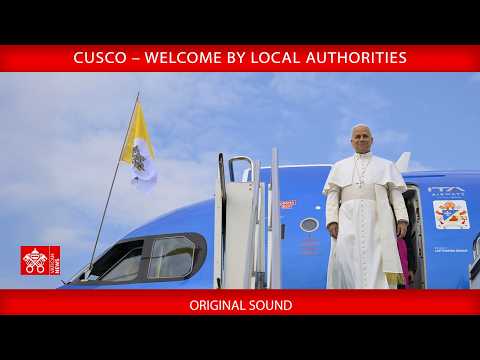
Cusco, Welcome by Local Authorities, November 15, 2026 (Vatican News)
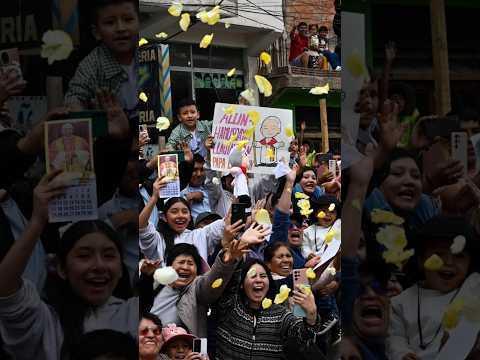
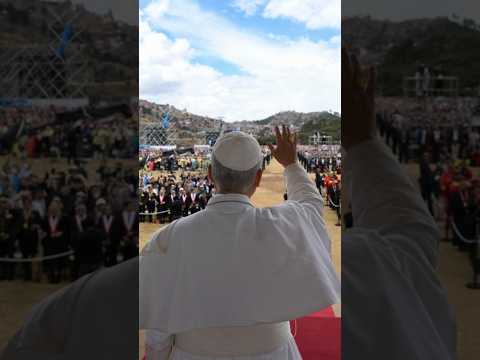
At 10:47 local time (16:47 Rome time), according to the Holy See Press Office bulletin, the Pope arrived by open car at the Saqsaywaman National Archaeological Park, where some 100,000 people were present; another 500,000 waited for him along the streets of Cusco. Welcomed by the Archbishop of Cusco, Archbishop Lizardo Estrada Herrera, after the Archbishop’s greeting, a prayer and the Gospel reading he delivered the homily. He began by remembering Archbishop Richard Daniel Alarcón Urrutia, who recently died, and called popular traditions “an inestimable treasure of good teachings”, asking that young people be involved. This was followed by the presentation of the Golden Rose, the Salve Regina and the prayer to the Virgin of Belén; after the Our Father and the blessing, the Pope went to the Cathedral for the Angelus.
🎥 Videos
▶
A look ahead to Pope Leo's visit to Peruvian city of Cusco (Vatican News - English)
▶
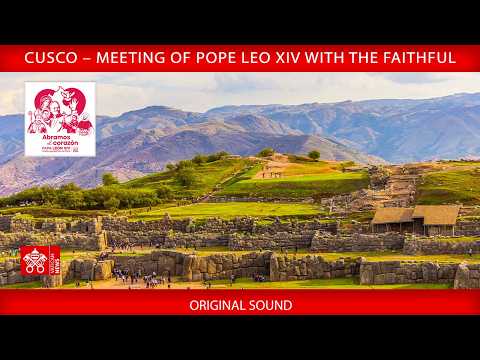
Cusco, Meeting with the Faithful, November 15, 2026 – full video (Vatican News)
▶
Highlights – Cusco, Meeting with the Faithful (Vatican News)
▶
Highlights of Pope Leo’s popular piety meeting in Cusco (Vatican News - English)
📷 Photos
Pope Leo XIV speaking at the Saqsaywaman National Archaeological Park (Vatican Media)
The Pope before the image of Our Lady during the meeting (Vatican Media)
Faithful at the Saqsaywaman meeting (Vatican Media)
The faithful greet Pope Leo XIV (Vatican Media)
The faithful at the meeting with representatives of popular devotion (Vatican Media)
A moment from the second part of the Saqsaywaman meeting (Vatican Media)
A moment from the second part of the Saqsaywaman meeting (Vatican Media)
Homily at the Meeting with the Faithful and Representatives of Popular Devotion – Saqsaywaman, Cusco
Dear brothers and sisters,
At the beginning of this gathering, I would first of all like to express my gratitude to God for the life and ministry of the Most Reverend Richard Daniel Alarcón Urrutia, Archbishop of Cusco, who worked so hard to make this journey possible and whom I had hoped to meet upon my arrival here. Together with all my brother
Dear brothers and sisters,
At the beginning of this gathering, I would first of all like to express my gratitude to God for the life and ministry of the Most Reverend Richard Daniel Alarcón Urrutia, Archbishop of Cusco, who worked so hard to make this journey possible and whom I had hoped to meet upon my arrival here. Together with all my brother bishops, I assure you of my prayers for his eternal rest, asking our Lord Jesus Christ to grant him the reward of the righteous, and to all those who mourn his death, the consolation that comes from our faith in the risen Lord.
The beauty of this place that welcomes us this morning is undeniable. Saqsaywaman rises toward the Andean sky like a stone altar, where the ancients climbed in search of the divine. However, our Christian faith has allowed us to understand that in reality, it is God who descends in search of his sons and daughters. God enters a willing heart, asking for a courageous and simple “yes,” like that of the Virgin Mary, who changed the course of history forever.
Indeed, we began our liturgy with the antiphon: “Hail, Holy Mother, who gave birth to the King who rules heaven and earth for ever” (Roman Missal, Common of the Blessed Virgin Mary, I, In Ordinary Time 1, Entrance Antiphon). The Gospel we have just heard reminds us of Mary’s joy in saying “yes” to the angel to become the Mother of God and to bring Jesus into the world.
Both texts invite us to consider the Virgin Mary as the one who leads us to an encounter with Christ. She awaited him as the Messiah within the setting of a devout family where her parents taught her to pray, to meditate on the word of God and to live according to the law of the Most High. Thus, being attentive to God, she was prepared for the encounter with the Lord, and was able to recognize his voice in the message of the angel, his envoy, and to accept the challenge of a unique mission for the salvation of humanity.
The Lord came to speak to her in her home in Nazareth, in an everyday setting and alongside her loved ones, in an atmosphere full of symbols she knew well, in her own language and through the signs of her culture. This is how God acts. He seeks out the most appropriate ways and moments to draw near to us, so that we may all encounter him, understand his words, be converted, and be saved. Over the course of the millennia, this mystery has been renewed in the most diverse contexts, yet always with the Almighty’s same willingness to make himself small for us, to speak to us and embrace us. One of the most beautiful ways this has happened is through popular piety.
In it, the memory of ancestors, the faith of families, love for Jesus Christ, trust in his Blessed Mother and veneration of the saints are expressed through music, dance, images and many other expressions typical of the history and identity of peoples. A religious festival, a pilgrimage or a procession, therefore, are not merely cultural expressions. Behind every image, song, promise and sign there is a community of hearts seeking God and a friendly voice that responds from heaven and draws near.
It is, therefore, a matter of living out the traditional practices as opportunities for encounter and for proclaiming the Lord, first and foremost in parishes, confraternities and movements. As those who have been evangelized, we are to reach out to the world and are sent to proclaim the risen Christ, ready to bear witness to the joy of knowing the Gospel and living it out in love for God and neighbor. For this reason, Pope Francis defined popular piety as “a true expression of the spontaneous missionary activity of the people of God” (Apostolic Exhortation Evangelii Gaudium, 122), and “the manifestation of a theological life nourished by the working of the Holy Spirit who has been poured into our hearts (cf. Rom 5:5)” (ibid., 125).
However, I would like to focus on another aspect of the Gospel account we have just heard, and that is the communal context in which the mystery of the Annunciation takes place. As we have mentioned, Mary matures in faith by living in a community, and after the Annunciation, she continues to share daily life with her brothers and sisters. Her encounter with God does not isolate her or distance her from others. On the contrary, it makes her the guardian of a gift that grows within her for the good of all, including her fellow citizens and all of humanity. Faith does not separate; rather, it unites us to God and to one another.
This is an important point, especially in an age like ours, which is marked by divisions, wounds, mistrust and situations that make it difficult for men and women to recognize one another as members of the same family, sons and daughters of the same Father.
In this context, religious traditions can be of great help, serving as places where people can come together in the light of faith and love. A procession can make people with different views walk together. A pilgrimage can reunite entire families. A celebration can bring a community together. A patron saint’s festival can become an opportunity to reconcile, ask for forgiveness and start anew. This is a sign that can extend far beyond the boundaries of a small town or region, helping to spread a culture of coexistence, mutual care and peace throughout the world.
That is why I invite you to make these festivals a school of fraternity and charity, where you work, pray, and have fun together — and also care for those in need — so that everyone can be joyful and united before God.
Popular traditions, with their symbols and dynamics, imbued with values of Christian communion and solidarity, are an invaluable treasure trove of good teachings, especially for the younger generations. In this regard, it is important for young people to participate in these activities and for their contributions to be welcomed and valued through listening, cooperation, and, when necessary, adaptation to the times. The future of these traditions lies not only in preserving what has been handed down, but also in passing it on in a living way. Each generation receives a legacy and has the responsibility to pass it on enriched and renewed, without fear of opening new paths and using new tools. Rather, it is important to preserve the essence of formation, for example, by introducing young people to and deepening their understanding of the history of salvation and the lives of the saints, explaining to them the Christian meaning of festive occasions, sharing the word of God with them and teaching them to celebrate the faith in the Church (cf. Francis, Homily at Holy Mass on the Day of the Confraternities and of Popular Piety, 5 May 2013). The goal is to transmit, through traditions, a living experience of the Christian life, which constantly grows and is renewed around the altar, where the Eucharist is the center and source of existence (cf. Lumen Gentium, 11).
On this journey, Mary holds a special place. Popular devotion in Peru is also profoundly Marian. Indeed, this is evident in the Vatican Gardens, where last year I blessed the mosaic depicting the various titles under which Mary accompanies this people, shares in their joys and sorrows and teaches them to hope.
Likewise, this is beautifully expressed in the hymn Hanacpachap, by the missionary Pérez Bocanegra, which praises and invokes the Virgin through poetic metaphors that are both theologically profound and concrete, closely tied to Andean culture and life. This hymn, together with the masterpiece at the Church of Saint Peter the Apostle of Andahuaylillas, and other examples of creative and thoughtful evangelization, shows us how every devotion finds its meaning when it brings everyone together around Jesus and, following in his footsteps, leads them to heaven. That is why I would like to entrust a path of renewal for popular devotion to the Virgin Mary, Queen of Bethlehem, Mother and Protector of Cusco.
In a few moments, united in spirit, we will entrust this path to Our Lady and present the Golden Rose, asking her to keep us in her heart, to grant peace to this land, to give strength to those who suffer and to bestow upon all of us the grace to walk together in the love of her Son. Amen.
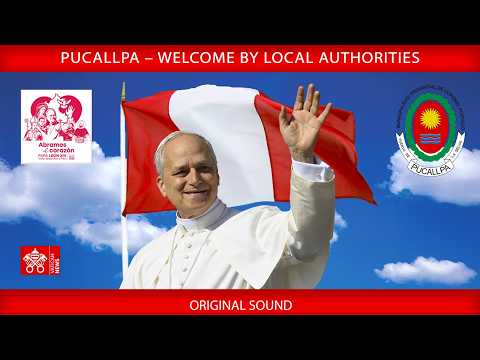
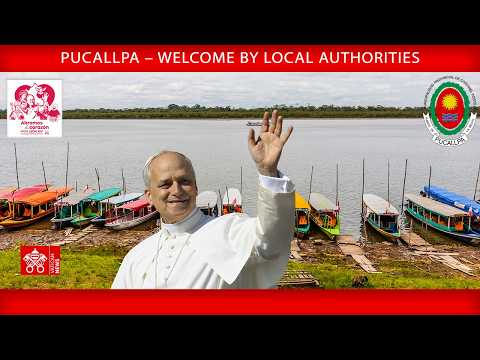
At 12:48 local time (18:48 Rome time), according to the Press Office bulletin, the Pope arrived at Alejandro Velasco Astete International Airport in Cusco, where he took leave of some local authorities. He departed at 13:19 on a LATAM Airlines A320 and landed at 14:22 at Capitán FAP David Abensur Rengifo International Airport in Pucallpa, a city on the Río Ucayali and gateway to the Peruvian Amazon. Welcomed by local authorities and by the Apostolic Vicar of Pucallpa, Bishop Augusto Martín Quijano Rodríguez, he travelled by car to the Malecón Puerto Callao.
🎥 Videos
▶
Cusco, Farewell from Local Authorities, November 15, 2026 (Vatican News)
▶
Pucallpa, Welcome by Local Authorities, November 15, 2026 (Vatican News)
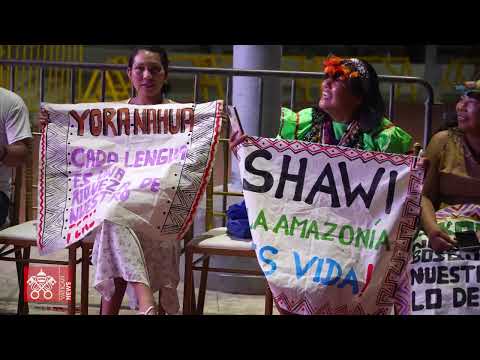
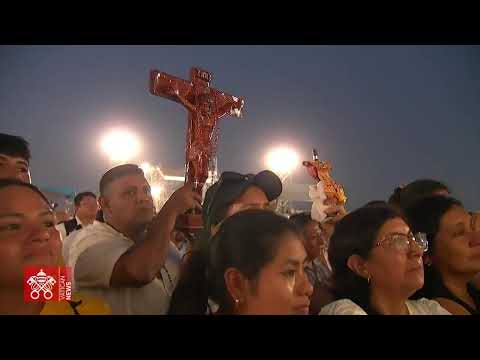
At 15:00 local time (21:00 Rome time), according to the bulletin, the Pope arrived at the Malecón Puerto Callao, welcomed by representatives of the Amazonian peoples; about 20,000 people lined the streets and around 5,000 attended the meeting, according to local authorities. After the greeting of the Apostolic Vicar, a theatrical performance and the testimonies of Susy Díaz Gonzáles, representative of the Indigenous peoples, and Cecilio Soria Gonzáles, interspersed with traditional dances, he delivered his address in Spanish: he denounced the killing of Indigenous leaders, the denial of access to health care and education, the abuse of women and minors, deforestation, irregular mining, oil spills and drug trafficking, calling for integral ecology and a “Church with an Amazonian face”. After the blessing and the presentation of gifts, he went on to the Villa Deportiva by way of Pucallpa Cathedral, where he paused in prayer, greeted those present and planted a tree.
🎥 Videos
▶
Pucallpa Awaits Pope Leo XIV | A Journey into the Heart of the Peruvian Amazon (Vatican News)
▶
Pucallpa prepares to welcome Pope Leo to Peruvian Amazon (Vatican News - English)
▶
Pucallpa, Meeting with Men and Women Missionaries, November 15, 2026 (Vatican News)
▶
Highlights – Pucallpa, Meeting with Men and Women Missionaries (Vatican News)
▶
Pucallpa, Meeting with Missionaries and Amazonian peoples, November 15, 2026 (Vatican News - English)
▶
Pope Leo in the Peruvian Amazon decries human rights abuses and exploitation (Vatican News - English)
▶
Pucallpa, Meeting with Men and Women Missionaries, November 15, 2026 (Vatican News - English)
📷 Photos
Leo XIV at the Malecón Puerto Callao in Pucallpa (Vatican Media)
Pope Leo meets missionaries and representatives of the Amazonian peoples in Pucallpa (Vatican Media)
Traditional dances performed for the Pope (Vatican Media)
The Pope watches an Indigenous dance (Vatican Media)
The testimony of Susy Díaz Gonzáles to the Pope (Vatican Media)
The testimony of Cecilio Soria Gonzáles to the Pope (Vatican Media)
Faithful from the native communities of the Peruvian Amazon (Vatican Media)
Leo XIV at the Malecón Puerto Callao in Pucallpa (Vatican Media)
Leo XIV at the Malecón Puerto Callao in Pucallpa (Vatican Media)
Leo XIV at the Malecón Puerto Callao in Pucallpa (Vatican Media)
Leo XIV at the Malecón Puerto Callao in Pucallpa (Vatican Media)
Address at the meeting with missionaries and representatives of the Amazonian peoples – Malecón Puerto Callao, Pucallpa
Dear brothers and sisters!
I am grateful to be here with you today in Pucallpa, the “red land” in the heart of the Peruvian Amazon. I thank God and all of you, for I can feel the embrace of your diverse community. The richness of your traits and backgrounds makes this a cheerful gathering, alive with vivid colors. I also thank you for your words a
Dear brothers and sisters!
I am grateful to be here with you today in Pucallpa, the “red land” in the heart of the Peruvian Amazon. I thank God and all of you, for I can feel the embrace of your diverse community. The richness of your traits and backgrounds makes this a cheerful gathering, alive with vivid colors. I also thank you for your words and songs, and for sharing today the sorrows and hopes you carry in your hearts. Following in the footsteps of Pope Francis, during his memorable visit to Puerto Maldonado, I come as a shepherd to listen to your stories and to walk alongside you. I wish to strengthen you in faith and hope, supporting you in your search for the justice and peace that this land so greatly needs. The inequalities that wound humanity and disfigure creation have a serious impact on your communities. The years I spent as a missionary and as a bishop in this beloved land of Peru taught me what it means for the Church to walk alongside humanity in order to serve the Lord faithfully. This is essential if we are to become like Jesus Christ and follow him here and now, as we await his return.
As I look upon this beautiful gathering, the words of the Apostolic Exhortation Querida Amazonia come to mind with renewed urgency: “I dream of an Amazon region that fights for the rights of the poor, the original peoples and the least of our brothers and sisters, where their voices can be heard and their dignity advanced” (no. 7). Sadly, the voice that rises today from these places speaks to us of wounds that remain unhealed and have, in some cases, grown worse. The cry of the earth and the cry of the poor are inseparable, exposing patterns of exploitation and economic activity that threaten the balance of creation. Protecting the Amazon rainforest cannot be separated from concern for the people who live there: indeed, integral ecology, social justice and the spiritual life go hand in hand (cf. Laudato Si’, 10).
The first testimony today reminds us that defending one’s home can come at the cost of one’s life. In recent years, many Indigenous leaders have been murdered for defending their territories. The blood of these brothers cries out to God and demands justice. The second testimony highlighted another grave problem: it is unacceptable that in many communities the right to healthcare and education is denied due to geographical isolation or institutional neglect. We are deeply concerned for the vulnerability of so many women, girls and adolescents, and by the suffering of those who experience violence and sexual abuse. Such abuse leaves deep wounds, often compounded by complicity and impunity. Corruption and arbitrary practices undermine the trust in the basic goodness of others. In this situation, the Gospel calls us all the more urgently to personal and communal conversion, offering renewed hope for healing, consolation and reparation.
Dear friends, Pucallpa is a young city, full of energy and hope, yet in urgent need of moral and educational renewal. We must work tirelessly to ensure quality education that includes your languages and that values your ancestral knowledge, while also preparing the younger generations to face the major challenges of our time.
Faced with the tendency to regard this vast region as a source of resources to be exploited, we are called to develop a different model, one inspired by Jesus Christ and his Gospel. In his Encyclical Laudato Si’, Pope Francis warned of the harmful consequences of the dominant technocratic paradigm, which tends to exploit nature and cultures for the sake of immediate economic gain for the benefit of a few (cf. nos. 106-114). We must oppose this model with perseverance and broad vision, looking instead to integral ecology as an expression of the civilization of love: an alternative vision, rooted in the Gospel and respectful of the wisdom of peoples, who recognize, in different languages, that everything in the world is deeply interconnected. You know well the damage caused by indiscriminate deforestation and the pollution of rivers and other waters through illegal mining and oil spills. These are not isolated accidents, but the consequences of the irresponsible exploitation of natural resources, which undermines the very existence of communities. Added to this is the scourge of drug trafficking, which preys on the poverty of young people, luring them with false promises of profit and uprooting them from their own culture.
The Social Doctrine of the Church is constantly developing and helps us read the signs of the times under the guidance of the Holy Spirit. Within it, your ancestral knowledge can encounter the rich heritage of the Church’s wisdom, in order to ensure that your rights, acquired over generations, may be protected.
The Church admires the resilience and capacity for new beginnings of the Amazonian peoples. You are witnesses of our Lord Jesus Christ, who rather than coming down from the cross, gives his life for his people. Christ never abandons us. Christ is with you. The Church is with you, and you are her members. We are the body of Christ. The efforts of the Ecclesial Conference of the Amazon and the Pan-Amazonian Ecclesial Network seek increasingly to shape a Church with Amazonian traits. It is true that the laborers seem few: your Vicariate, as large as entire countries, has only twenty-five priests. I express my heartfelt gratitude to the men and women religious and the pastoral leaders of the communities, men and women laity, who with heroic fidelity safeguard the faith in the most remote places. We must support and recognize their ministerial service.
Dear brothers and sisters, you are not alone on your journey. May Mary Most Holy, Mother of the Amazon, always watch over you, your families and your communities, and bless your dreams.
Keep moving forward with courage and hope! May God bless the Amazon.
📍 Villa Deportiva Regional Ucayali, Pucallpa, Peru
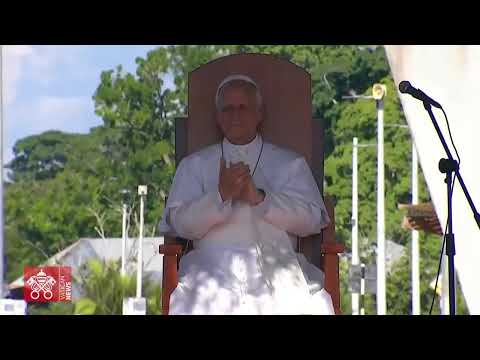
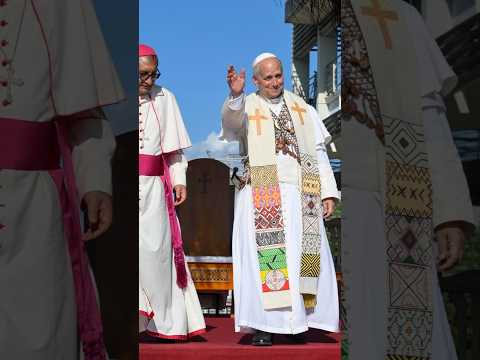
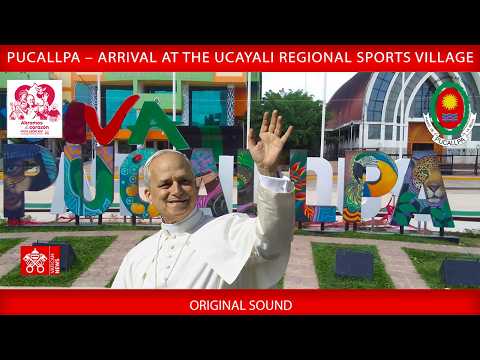
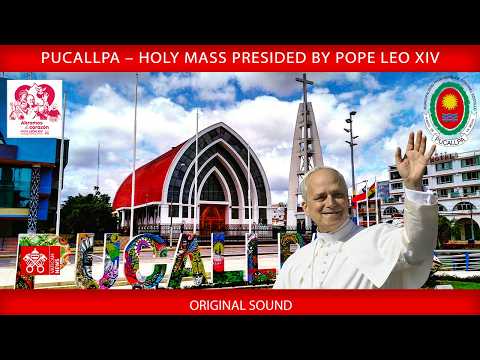
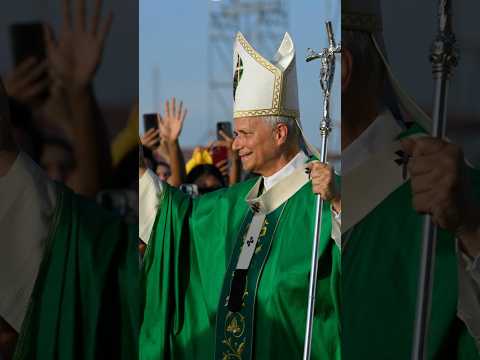
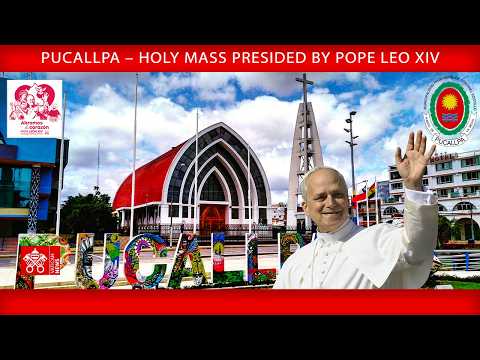
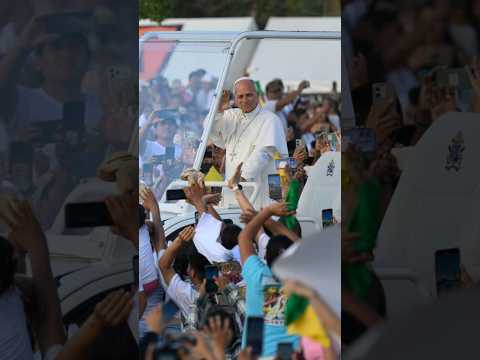
At around 16:30 local time (22:30 Rome time), according to the Press Office bulletin, the Pope arrived by car at the Villa Deportiva Regional Ucayali and toured among the faithful in an open car; at 17:06 he presided over Holy Mass, attended by about 100,000 people according to local authorities, in the stadium and surrounding areas. In his homily, delivered in Spanish on the parable of the talents, he said that “the health of our life and that of the earth we inhabit go hand in hand” and that “violence against the people is violence against the earth”; joining his voice to those of Benedict XVI and Francis, he denounced the link between the environmental devastation of the Amazon and threats to the dignity of its peoples, noting that “very little has been done, and very slowly”. He urged the faithful to cultivate faith, “our magnificent humanity” – combating violence with charity and corruption with honesty – and joy. At the end, the Apostolic Vicar, Bishop Augusto Martín Quijano Rodríguez, thanked the Pope, who after the presentation of a gift left for the airport.
🎥 Videos
▶
Pucallpa, Arrival at the Ucayali Regional Sports Village, November 15, 2026 (Vatican News)
▶
Pucallpa, Holy Mass, November 15, 2026 (Vatican News)
▶
Highlights – Pucallpa, Holy Mass (Vatican News)
▶
Pope: Anything that harms the dignity of life destroys the beauty of earth (Vatican News - English)
▶
Pucallpa, Holy Mass, November 15, 2026 – full video (Vatican News - English)
▶
Highlights from Holy Mass presided over by Pope Leo XIV at the Ucayali Regional Sports Village (Vatican News - English)
📷 Photos
The Pope among the faithful before Mass at the Villa Deportiva (Vatican Media)
The Pope blesses a child as he tours among the faithful (Vatican Media)
The Pope presides over Mass in the Villa Deportiva Regional Ucayali stadium in Pucallpa, Peru (Vatican Media)
The Pope during the Liturgy of the Word (Vatican Media)
“Doing good requires combating violence with charity and responding to corruption with honesty,” he emphasized (Vatican Media)
A moment of the offertory (Vatican Media)
The Pope among the faithful (Vatican Media)
Mass at the Villa Deportiva Regional Ucayali in Pucallpa (Vatican Media)
The Pope among the faithful before Mass at the Villa Deportiva (Vatican Media)
The Pope among the faithful before Mass at the Villa Deportiva (Vatican Media)
Homily at Holy Mass at the Villa Deportiva Regional Ucayali, Pucallpa
Dear brothers and sisters,
It is with great joy that I celebrate the Eucharist with you today. When we gather with faith around the Lord’s altar, his word enters our lives and fills them with meaning. For all of us, it is a proclamation of salvation, which is exactly what is happening today, in this very city. The Gospel we have heard presents
Dear brothers and sisters,
It is with great joy that I celebrate the Eucharist with you today. When we gather with faith around the Lord’s altar, his word enters our lives and fills them with meaning. For all of us, it is a proclamation of salvation, which is exactly what is happening today, in this very city. The Gospel we have heard presents a parable that invites us to reflect on our relationship with God.
As Jesus recounts the experience of a master with his servants, he also invites us to pay special attention, so that we may discover the true meaning of his words. What does God mean by being a master? What does it mean for a person to be a servant? These terms, which the world considers in terms of power and domination, take on a new and surprising meaning when Christ pronounces them. He speaks them deliberately to change the way we think and act. Jesus proclaims freedom to those in the world who are servants, and seeks to convert those who feel that they are masters. The one true Master invites us to change our lives, calling us all to fraternity and to transform the relationships and the society in which we live.
Let us listen, then, to what Christ tells us in the parable: “Well done, good and faithful servant,” says the master, “enter into the joy of your master” (Mt 25:21, 23). First and foremost, this praise reveals to us that being good and faithful means responding to God’s goodness and to the trust he places in us. The work he asks of us is not a sign of oppression or of distancing himself; rather, it is a guarantee of sharing and happiness. The Lord is the first to be good to us and to entrust his goods to us. The signs of this goodness are the precious talents mentioned in the parable, which in our hands become a task and a responsibility, so that we may bear fruit through good works. These talents make life — God’s first gift — good; by using them, we practice justice, seek the truth and care for our neighbor and society. This is how we multiply the gifts we have received, using wisely what the Lord has entrusted to us.
On the other hand, however, the parable refers to a “wicked and slothful servant” (Mt 25:26), to whom his master says: “You knew that I reap where I have not sowed and gathered where I have not winnowed?” (ibid.). Jesus’ words put us to the test. Is the master — that is, God — not good and generous toward his servants, that is, toward us? Of course he is! Yet there are those who do not trust him, viewing him as a harsh man (cf. v. 24), ruthless and exploitative. God, on the other hand, tells us: I trust in your abilities; I do not place limits on your life — rather, I love it. I share my goods with you and entrust them to you so that they may bear fruit for the joy I wish to share with everyone. The servant in the parable, then, is wicked because he considers God to be like the masters of this world, who often consider themselves to be like God. Jesus rebukes not only the servant’s laziness, but above all his wicked conscience, which leads him to say to his master: “I knew you to be a hard man, reaping where you did not sow, and gathering where you did not winnow” (v. 24). Thus, the parable calls us to move from fear to trust in the Lord; from feeling like his servants, as those who are far from God do, to sharing in the joy that comes from him. In other words, to become aware that we are his beloved children.
The parable told by Jesus is very relevant today, because it challenges us to consider what we are doing with the gifts God has given us — first and foremost, the gifts of life and the earth. The two are closely linked; one cannot exist without the other. The health of our lives and that of the earth we inhabit go hand in hand. Therefore, anything that harms the dignity of life destroys the beauty of the earth. Human endeavor and care for creation go hand in hand, therefore all labor exploitation is a plundering of the environment. Social peace and ecological equilibrium go hand in hand, so violence against people is violence against the earth, and violence against the earth is violence against human beings.
Dear friends, the word of Christ enters here into the drama of our history. I join my voice to that of my predecessors, Pope Benedict XVI and Pope Francis, to emphasize the painful link that exists between “the devastation of the environment and the Amazon basin, and the threats against the human dignity of the peoples living in that region” (Benedict XVI, Address to Young People, Meeting with Youth, São Paulo, 10 May 2007, 2; cf. Francis, Apostolic Exhortation Querida Amazonia, 12). Very little has been done — and very slowly at that — while the means to exploit and pollute creation have accelerated. In the face of these evils, let us not bury the Lord’s gifts, for he gives us the strength to repair and heal the suffering caused by an insatiable thirst for domination. In this context, the Gospel we have heard becomes a message of salvation and hope for all people. Each and every one of us must respond to the Lord by saying, “Thank you for the talents you have given me! I want to use them for the good of all.” It is likewise also up to each of us to say to our neighbor, “You are a brother or sister to me. Let us cultivate together the talents that bear fruits of a good life for this city, our country and the future of justice and peace we wish to build.”
This commitment is summed up in a gesture we make during Holy Mass, when we bring to the altar the fruits of the earth and of human labor. The table that the Lord prepares draws us into an exchange of gifts that we present to God so that we may then share them with the world. In the light of the Gospel, I invite you, then, to multiply the talents the Lord has entrusted to you by cultivating three specific things.
Above all, cultivate your faith together. Be a people who celebrate God’s salvation and heal the wounds of humanity. Indeed, the Church uses human words to speak God’s truth; and she preaches the word of God to proclaim the truth about the human person. Following the example of Christ, the Word made flesh, we can observe everyday reality with the wisdom that comes from the Gospel, opening up a future of righteousness for all. This mission begins in prayer and is nourished by the sacraments. The work of the whole Church is carried out in families and parishes, in the streets and schools, in hospitals and prisons. Seek to multiply the Lord’s gifts everywhere, promoting communion with all men and women of good will.
Second, I encourage you to cultivate the grandeur of our humanity. This commitment applies above all to young people, who are the hope of the Peruvian people. It likewise applies to caring for children and protecting the elderly, as well as to solidarity with the poor and the oppressed. Doing good requires combating violence with charity and responding to corruption with honesty. Where people are healed, the earth flourishes, and the culture of charity alleviates moral pollution — which is the cause of every wound inflicted on creation, our common home.
Finally, in the face of every trial, always cultivate joy. Christians know that this joy does not come from wealth or power, which degrade us like a drug, deceiving the heart and leaving it in anguish. True joy comes from faith, because it is founded on God’s grace, which bears fruit in our fraternal self-giving. As we go through tribulations and challenges, let us build together a happy, peaceful and free society, gazing upon the Lord Jesus, who bestows peace from his Cross, taking upon himself each of our difficulties. Let us ask him, the Redeemer, to accompany us on our journey, giving us the light of hope. May his Mother Mary, the Immaculate Virgin, always comfort and protect us.
After taking leave of some local authorities at Capitán FAP David Abensur Rengifo International Airport in Pucallpa, according to the bulletin the Pope departs at 19:05 local time (01:05 Rome time on 16 November) on a LATAM Airlines A320 bound for Lima.
🎥 Videos
▶
Pucallpa, Farewell from Local Authorities, November 15, 2026 (Vatican News)
At 8:31 pm local time (2:31 am Rome time on 16 November) the plane carrying the Pope from Pucallpa landed at the Callao Air Base in Lima (Grupo Aéreo N° 8 de la Fuerza Aérea del Perú). Welcomed by some local authorities, the Pope was then driven to the Apostolic Nunciature, ahead of the last day of the apostolic journey.
🎥 Videos
▶
Lima, Welcome by Local Authorities on arrival, evening of November 15, 2026 (Vatican News)
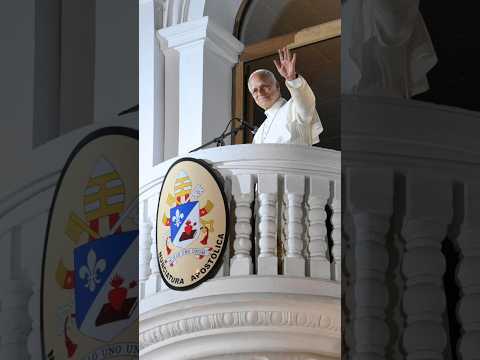
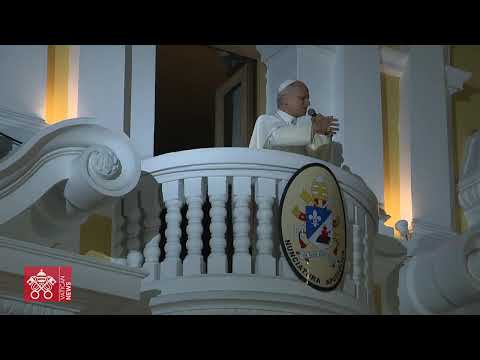
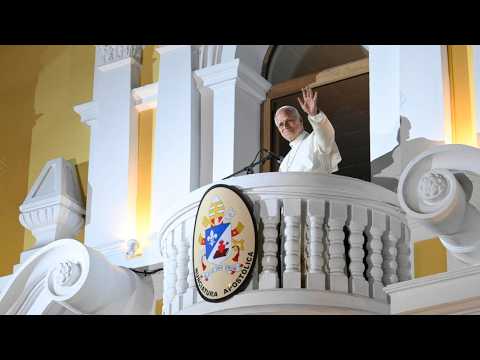
After arriving in Lima, the Pope was driven to the Apostolic Nunciature and from the balcony gave a spontaneous greeting to the faithful gathered outside. He blessed the crosses, rosaries and devotional objects they had brought, with a special blessing for the sick and the elderly, and addressed young people: “You are a sign of hope. Do not lose hope! Believe in yourselves! Believe in Peru!”. The official text is published on vatican.va in Spanish.
🎥 Videos
▶
Pope Leo in Lima: 'How beautiful it is to be missionary disciples!'
▶
El Papa en la Nunciatura: «Que hermoso es ser discípulo misionero» (Vatican News, in Spanish)
▶
Pope Leo greets crowds at Apostolic Nunciature in Lima: 'Do not lose hope. Believe in yourselves'
📷 Photos
The Pope greets the faithful from the balcony of the Nunciature in Lima
The Pope greets the faithful from the balcony of the Nunciature in Lima
Impromptu remarks from the balcony of the Apostolic Nunciature in Lima
Good evening!
I am so glad to see all of you here. Thank you very much once again for this warm welcome.
How beautiful it is to be a missionary disciple, to give one’s life to Jesus Christ, to proclaim the Good News of the Gospel. By your presence, you are also saying that you want to be united in the Church, united with Christ.
Let us ask for t
Good evening!
I am so glad to see all of you here. Thank you very much once again for this warm welcome.
How beautiful it is to be a missionary disciple, to give one’s life to Jesus Christ, to proclaim the Good News of the Gospel. By your presence, you are also saying that you want to be united in the Church, united with Christ.
Let us ask for the Lord’s blessing upon each one of you. If you have brought crosses, rosaries, or other devotional items, I will bless them. I bless all of you as well; a special blessing for the sick, for the elderly, and a special prayer for the young people.
Young people, you are a sign of hope. Do not lose hope! Believe in yourselves! Believe in Peru! Always believe in Jesus Christ!
Sisters and brothers: may the Lord be with you… (Apostolic Blessing)
Long live Christ!
Long live the Virgin Mary!
Long live the Catholic Church!
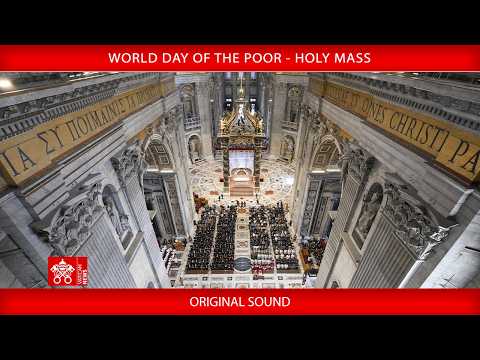
While the Pope is in Peru, the Mass for the 10th World Day of the Poor in St Peter's Basilica is presided over, as delegate of Leo XIV, by Mons. Luis Marín de San Martín, described in the Vatican News video description as Prefect of the Dicastery for the Service of Charity. The Pope is not present.
🎥 Videos
▶
World day of the Poor - Holy Mass, November 15, 2026 (Vatican News)