Yesterday — General Audience on peace and COP31 appeal · International Theological Commission · Motu Proprio on prison pastoral care · Message to ODUCAL
10:00
St. Peter's Square, Vatican City
🙏 General Audience
General Audience: the promotion of peace in “Gaudium et spes”
📍 St. Peter's Square, Vatican City
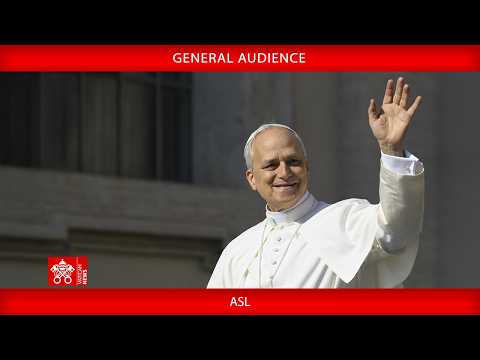
At 10:00 a.m., in St. Peter's Square, Pope Leo XIV holds the Wednesday General Audience and continues his catecheses on the Council's Pastoral Constitution “Gaudium et spes” (the ninth on this document, on Chapter V, GS 77-93), dwelling on the promotion of peace. Peace, he says, is “both a gift of grace, to be received, and a commitment to freedom”: for this reason “there is no room for resignation, as if violence were inevitable”. Conflicts today “appear increasingly inhuman and devastating”, also because the digital revolution adds hybrid forms to visible war, such as cyberattacks, the manipulation of information and the automation of strategic decisions. The Pope calls for breaking the ideological and economic chains that enslave people to war, and repeats the Council's warning that “the arms race is an utterly treacherous trap for humanity, and one which ensnares the poor to an intolerable degree”: it is the cry that rises to the world's powerful “from the suffering of peoples, of children killed and maimed, and of destroyed families”. Governments are not denied the right to legitimate defence, but there is a need “for international bodies capable of intervening effectively to restore justice that has been violated, acting in defence of the oppressed”. Christians, he urges, “must not be afraid of working on the front line to build peace and defend human dignity”. At the end he makes an appeal on COP31, which concluded in Antalya: “it is a cause for concern” that it ended without “clear commitments” on the climate crisis, whose “human face” must never be forgotten. He calls on the international community and on everyone for “a renewed commitment to promoting a culture of care for Creation”. Some 15,000 people were in the Square, according to Vatican News. At the end, the Pope greeted among others a delegation of Romanian champions — Nadia Comăneci, Ilie Năstase, Gheorghe Hagi and Mihai Covaliu, President of the Romanian Olympic Committee — accompanied by Ambassador George Bologan: their gifts were the national team jacket with an “LA 2028” cap, a wooden racket and a 1994 World Cup shirt. Two inmates of the prison in Verbania, with three Benedictine nuns from the island of San Giulio, gave him a chasuble and biscuits from the “Banda biscotti”; some twenty Ukrainian women asked for a blessing for the viburnum to be planted in the Vatican Gardens on 26 November (Vatican News).
General Audience - Gaudium et spes. The promotion of peace
Dear brothers and sisters, good morning and welcome!
Today we continue our reflection on Chapter V of Gaudium et Spes (GS), dedicated to the promotion of peace. The Council Fathers first of all admire God’s plan for humanity, namely, that “in Christ Jesus this family is called to the family of the sons of God” (GS, 92). As such, in the name of the…
Dear brothers and sisters, good morning and welcome!
Today we continue our reflection on Chapter V of Gaudium et Spes (GS), dedicated to the promotion of peace. The Council Fathers first of all admire God’s plan for humanity, namely, that “in Christ Jesus this family is called to the family of the sons of God” (GS, 92). As such, in the name of the Lord, we are called to be brothers and sisters, and to build a world of peace. This perspective, full of hope, is intended to embrace not only humanity, but also the whole of creation, as suggested in Saint Paul’s Letter to the Colossians.
Through Christ and for Him, in fact God was pleased “to reconcile to Himself all things, whether on earth or in heaven, making peace by the blood of His cross” (Col 1:20). The peace that springs from the cross of Christ is offered as the fruit of redemption to all peoples and to the whole of creation. This peace is both a gift of grace, to be received, and a commitment to freedom, to be lived out in accordance with the beatitude proclaimed by Jesus: “Blessed are the peacemakers, for they shall be called sons of God” (Mt 5:9).
The teaching of Gaudium et Spes is not at all naïve; aware of human sin, we know that “peace is never attained once and for all, but must be built up ceaselessly” (GS 78). Therefore, there is no room for resignation, as if violence were inevitable. On the contrary, the nature of modern wars leads the Council Fathers to update the Church’s teaching on the matter: such atrocities, they say, “compel us to undertake an evaluation of war with an entirely new attitude” (GS 80).
This is indeed an “obligation”, sustained by the Holy Spirit, so that Christ’s disciples may observe history today in the light of the Gospel. As we, too, renew this focus, we see that “the digital revolution is changing the nature of conflict. Alongside conventional warfare, there are hybrid forms such as cyberattacks, information manipulation, campaigns of influence and the automation of strategic decisions. … What is created for defence can be rapidly repurposed for offence, and the fine line between protection and aggression becomes blurred” (Magnifica Humanitas, 183). Conflicts, which today appear increasingly inhuman and devastating, fuel hatred and injustice amongst peoples, whilst also disfiguring creation and its beauty.
No one can ignore the suffering afflicting men and women of all ages. The Council’s solemn appeal to convert minds and hearts to Christ, the King of Peace, calls upon all people to break the ideological and economic chains that enslave them to war. In this regard, it must be strongly reiterated that “the arms race is an utterly treacherous trap for humanity, and one which ensnares the poor to an intolerable degree. It is much to be feared that if this race persists, it will eventually spawn all the lethal ruin whose path it is now making ready” (GS 81). These prophetic words of the Council resound today as an even more urgent warning: indeed, they are the very cry that rises to the world’s powerful from the suffering of peoples, of children killed and maimed, and of destroyed families.
The Second Vatican Council calls upon all men and women of good will to prepare for a time when it will be possible “to eliminate the danger of war” (GS 82). That said, “governments cannot be denied the right to legitimate defence” (GS 79), but this highlights the need for international bodies capable of intervening effectively to restore justice that has been violated, acting in defence of the oppressed. The Council therefore calls for a willingness to promote institutions dedicated to the service of peace, working together to build a global political and economic order founded on cooperation, dialogue and the sharing of nations’ cultural and material resources, at the service of integral human development.
Faced with these tasks, Christians are called to be the salt of the earth and the light of the world. Trusting always in the grace of God, we must not be afraid of working on the front line to build peace and defend human dignity, both through constant prayer, and with consistent social and political choices. We are all invited to participate in these processes, with a common voice. The proclamation of the Gospel is achieved through the formation of consciences, the conversion of hearts and the sacramental life, always taking Christ, who is our peace, as our guiding principle.
Dear brothers and sisters, let us ask God confidently for the strength to enlighten our life and the world with the witness of the Gospel, which is the word of reconciliation and salvation for all peoples. May the Spirit of Christ always inspire experiences of fraternity and peace, nurturing sincere dialogue between individuals and between peoples. Especially in times of suffering, let us never tire of seeking and sharing that true peace, which is at once a gift from God and the fruit of tireless human endeavour.
May the Virgin Mary, Queen of Peace, support every effort for good with her powerful intercession, now and always.
********
APPEAL
COP31, the 31st Session of the Conference of the Parties to the United Nations Framework Convention on Climate Change, concluded in Antalya in recent days. Given the increasing frequency of extreme weather events linked to the climate crisis, it is a cause for concern that COP31 ended without the adoption by the international community of clear commitments to tackle the crisis seriously and responsibly. Let us never forget the human face of the climate crisis, which affects the lives of millions of people, impacts entire communities and jeopardizes the prospects of future generations. This situation calls for a renewed sense of shared responsibility, new forms of solidarity among nations and fundamental changes in behaviour, socio-economic systems and the governance of our societies. I appeal to the international community and to each and every one of you for a renewed commitment to promoting a culture of care for Creation that places at its centre the dignity bestowed by God upon every human being, the common good and solidarity with the poorest and with future generations.
____
Special Greetings:
I extend a warm welcome to all the English-speaking pilgrims and visitors taking part in today’s Audience, especially those from England, Australia, Indonesia, Malaysia, New Zealand, the Philippines, South Korea and the United States of America. As we prepare to embark upon our Advent journey, may the light of Christ illumine our paths and dispel all darkness from our hearts. Upon each of you and your families, I invoke the joy and peace of our Lord Jesus Christ. God bless you all!
____
Summary of the Holy Father's words:
Dear brothers and sisters, in our continuing catechesis on the Pastoral Constitution Gaudium et Spes, today we focus on Chapter 5, which is dedicated to the promotion of peace. This project, filled with hope, embraces all of humanity and creation. In the name of the Lord, we are called to work for peace throughout the world. Indeed, true peace comes from the cross of Christ, and is offered to everyone as the fruit of our redemption, which is a gift of grace to which we must respond. The Council Fathers combine their firm condemnation of war with a solemn appeal to convert minds and hearts to the King of Peace, encouraging us to break the ideological chains and economic interests that fuel conflicts. Moreover, the right to legitimate self-defense is always linked to the promotion of international institutions that promote peace between peoples and integral human development.
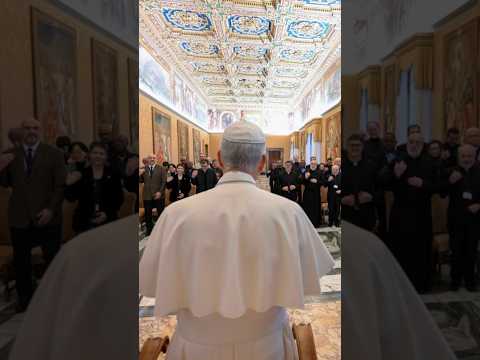
This morning, before the General Audience, Pope Leo XIV received in the Consistory Hall the members of the International Theological Commission, whose membership was renewed in October and which is meeting in Rome from 23 to 27 November for the first Plenary Assembly of its eleventh five-year term. In his address he pointed to the two themes of study. On Apostolic Tradition: “Since the holy Tradition is always living, our knowledge of this reality is subject to a coherent and constant deepening”, which “does not imply a break in the teaching of the Magisterium, but rather a development of the principles that animate it: one might think, in particular, of issues such as war, slavery and the death penalty”. On the cultural forms of transmitting the faith, he said that “the present historical phase, in fact, calls for a new era of inculturation of the faith”, also appreciating popular piety.
🎥 Videos
▶
Pope Leo XIV: The Church’s understanding of Apostolic Tradition deepens coherently (Vatican News – English)
📷 Photos
The audience with the members of the International Theological Commission (Vatican Media)
The Pope during the audience in the Consistory Hall (Vatican Media)
The Pope greets Cardinal Víctor Manuel Fernández (Vatican Media)
The Pope greets members of the Commission (Vatican Media)
Pope Leo XIV greets the International Theological Commission (Vatican Media)
The audience with the members of the International Theological Commission (Vatican Media)
The audience with the members of the International Theological Commission (Vatican Media)
The audience with the members of the International Theological Commission (Vatican Media)
The group photo at the end of the audience (Vatican Media)
Address to the members of the International Theological Commission
In the name of the Father, of the Son, and of the Holy Spirit. Peace be with you.
Your Eminence, Your Excellencies, brothers and sisters,
It is a joy for me to meet the International Theological Commission, whose membership has recently been renewed, on the occasion of the first plenary assembly of this eleventh five-year period since its foundat…
In the name of the Father, of the Son, and of the Holy Spirit. Peace be with you.
Your Eminence, Your Excellencies, brothers and sisters,
It is a joy for me to meet the International Theological Commission, whose membership has recently been renewed, on the occasion of the first plenary assembly of this eleventh five-year period since its foundation.
I am grateful for the significant contribution it offers to the mission of the Church, continuing to exercise the intellect of the faith along the path charted by the teaching of the Second Vatican Ecumenical Council, and discerning, in the light of the Gospel, the unprecedented challenges and opportunities that arise from diverse cultural contexts. I thank you for the readiness and generosity you have shown in accepting the task entrusted to you, and for the work you have undertaken in recent days and which you will carry out in the coming years.
Faced with the events of our time and the problems we are called to address, “we do not consider the present as a predetermined fate, but an opportunity for personal and collective conversion. Moreover, we believe in the power of the Kingdom, which grows from the tiny size of a mustard seed, which, once sown, sprouts and grows (cf. Mk 4:26–32)” (Encyclical Letter Magnifica Humanitas, 210). The Church’s mission, in all its forms and in every circumstance, is in fact placed at the service of the Kingdom of God, of which it constitutes the seed and the beginning on earth (cf. Second Vatican Ecumenical Council, Dogmatic Constitution Lumen Gentium, 5). It is from this perspective that the in-depth examination of the two themes which are the subject of your reflection takes on crucial significance: Apostolic Tradition and the cultural forms of the transmission of the faith.
The first theme is that of the Apostolic Tradition. It is a reality that indicates the very heart of the Church’s identity and mission. The Second Vatican Council teaches, in fact, that “the Church, in her teaching, life and worship, perpetuates and hands on to all generations all that she herself is, all that she believes” (Dogmatic Constitution Dei Verbum, 8). Drawing inspiration from these words, Pope Benedict XVI incisively affirmed that “Tradition is the permanent presence of the Saviour who comes to meet us, to redeem us and to sanctify us in the Spirit, through the ministry of His Church, to the glory of the Father” (Catechesis, 26 April 2006). Yes, proclaiming and bearing witness to the living presence of the Lord Jesus at all times and in all places, passing it on with fidelity and integrity from generation to generation: this is the indispensable good for the Church.
Since the holy Tradition is always living, our knowledge of this reality is subject to a coherent and constant deepening. Whilst, on the one hand, a kind of “emancipation must therefore be rejected – one which authorizes a detachment, almost a pseudo-liberation, from what […] the Church has authoritatively taught and professed”, [1], on the other hand, it must be recognized that there is a growth in “understanding of the realities and the words which have been handed down” (Dogmatic Constitution Dei Verbum, 8). This does not imply a break in the teaching of the Magisterium, but rather a development of the principles that animate it: one might think, in particular, of issues such as war, slavery and the death penalty (cf. Encyclical Letter Magnifica Humanitas, 175).
This dynamism commits the Church to recognizing and living out her mission as the transmission of the gift of grace that she has received from the Father, and from which she is continually reborn and takes shape, following the mandate of His Son Jesus. It is indeed the Risen Lord who assures the Church of the gift “without measure” of the Holy Spirit (c. Jn 3:34; 20:21-22).
The Tradition that flows from the Holy Trinity is addressed to all humanity, constantly committing us to fidelity to the “once for all” (Heb 9:12) of the event of Jesus, the Saviour Christ (cf. Mk 1:1). At the same time, this grace urges us to listen attentively to what, in history, “the Spirit says to the Churches” (Rev 2:7), guiding the People of God in the understanding and practice with which they receive not merely a human word, but what is truly the Word of God (cf. 1 Thess 2:13). As Saint John Paul II taught, when we face the new challenges of history, we find that “the Spirit of God, who ‘blows where He wills’ (Jn 3:8), not infrequently reveals signs of His presence which help Christ’s followers to understand more deeply the message which they bear”. It is in this way that “the Church acknowledges that she has not only given, but has also received from the history and from the development of the human race” (Apostolic Letter Novo millennio ineunte, 56).
From this derive the significance, importance and relevance of the second theme which will be the subject of your study: the cultural forms of transmitting the faith. The inculturation of the faith constitutes, in fact, an indispensable dimension of its coherent witness, from generation to generation. Saint Paul VI emphasized this: “What matters is to evangelize man’s culture and cultures (not in a purely decorative way, as it were, by applying a thin veneer, but in a vital way, in depth and right to their very roots” (Apostolic Exhortation Evangelii Nuntiandi, 20); and Saint John Paul II reiterated this: ‘A faith that does not become culture is a faith that has not been fully accepted, not entirely thought out, not faithfully lived’ (Address to the M.E.I.C., 16 January 1982).
This indispensable quality of the transmission of the faith entails discerning the specific conditions and diverse contexts in which it takes place, inviting us to take into account the distinctive features of different peoples, the manifold cultural spheres and the social situations that characterize our world. The present historical phase, in fact, calls for a new era of inculturation of the faith. It is therefore more valuable than ever to reflect on the fundamental theological principles and practical guidelines needed to interpret, evaluate and, above all, promote the forms of proclamation, catechesis, preaching, teaching and celebration of the faith. This also involves recognizing that “popular piety enables us to see how the faith, once received, becomes embodied in a culture and is constantly passed on” (Francis, Apostolic Exhortation Evangelii Gaudium, 123). It is indeed popular piety that demonstrates how the inculturation of the Gospel “means that culture itself becomes, in turn, a means of transmitting the faith”. [2]
Dear brothers and sisters, the Apostolic Tradition and inculturation are two questions of great importance for the work of pastors, which require fidelity and competence, wisdom and creativity, love for the People of God and trust in the action of the Holy Spirit. The themes you are called upon to face as the Theological Commission call on each of you to be theologians capable of reflecting on the living and life-giving Truth, which has the face of Jesus Christ: it is precisely for this reason that it can continue to be transmitted throughout history and embodied in the cultures that succeed one another.
May the Lord accompany you in this task, enlightening the valuable service you render for the good of the whole Church. I wholeheartedly bless you all and your work. Thank you.
____________________________________________
[1] Saint Paul VI, Homily on the Solemnity of the Immaculate Conception of the Blessed Virgin Mary – First Anniversary of the conclusion of the Second Vatican Ecumenical Council, 8 December 1966.
[2] Dicastery for the Doctrine of the Faith, Venite ad me. Considerations on the Transmission of the Faith in an Epochal Change (22 October 2026), 104.
The Apostolic Letter issued Motu Proprio “In carcere eram, et venistis ad me” (“I was in prison and you came to me”, Mt 25:36), signed by Pope Leo XIV on 22 November, the Solemnity of Christ the King, is published. The Pope suppresses the International Commission of Catholic Prison Pastoral Care (ICCPPC) and establishes the Service for the animation of prison pastoral care, a network of collaboration among particular Churches, Episcopal Conferences, their Unions and Eastern hierarchical Structures, which depends on the Dicastery for Promoting Integral Human Development. No one is excluded from God's love, he writes: each person remains precious in the eyes of the Lord. The Service is coordinated by a bishop appointed by the Pope for five years, with at least three counsellors: the first coordinator is the Archbishop of Buenos Aires, Jorge Ignacio García Cuerva. In the same Bulletin: Bishop Alain de Raemy is appointed Bishop of Sion and Father Mauro-Giuseppe Lepori, Abbot General of the Cistercians, Bishop of Lugano (Switzerland); Monsignor Gabriel Marcelo Viola Casalongüe is Head of Protocol of the Secretariat of State. (The text has been published in Italian only; the content is translated.)
Motu Proprio “In carcere eram, et venistis ad me” on prison pastoral care (tradotto)
“In carcere eram, et venistis ad me” (Mt 25:36), Jesus says to his disciples, recalling that whatever we have done to the least of his brothers and sisters, we have done to him (cf. Mt 25:40). Knowing how to recognise the face of the Lord in the most forgotten peripheries of the world is a constant challenge, to which the People of God is called to…
“In carcere eram, et venistis ad me” (Mt 25:36), Jesus says to his disciples, recalling that whatever we have done to the least of his brothers and sisters, we have done to him (cf. Mt 25:40). Knowing how to recognise the face of the Lord in the most forgotten peripheries of the world is a constant challenge, to which the People of God is called to give ever new and up-to-date responses.
In this context, prison pastoral care too is called today to a revision that is not limited to organisational aspects, but takes the form of a true process of spiritual and theological maturation. This pastoral field, geographically and culturally very varied, needs a new theological reflection, capable of animating local pastoral work in a shared spirituality lived as a living encounter with Christ, so that this time of solitude and isolation may not be in vain, but may be transformed into a moment of grace and salvation.
What unites and runs through the different experiences, beyond the specific features of the contexts and of the activities carried out, must be precisely this common spirituality and theological vision, called to permeate the whole of prison pastoral care at the universal level, like the fragrance of the perfume that filled the whole house (cf. Jn 12:3). In this perspective, the words of Jesus, who identifies himself with the prisoner visited by the disciple (cf. Mt 25:36), stand as the cornerstone and ultimate criterion of every pastoral action. Indeed, prison pastoral care is not separate from the Church's evangelising action as a whole. In a world marked by iniquity, the root of social ills, the problem of prisons is a problem of society as such. Consequently, prison pastoral care also concerns the whole People of God. The disciples of Jesus are called to bear witness everywhere that no one is excluded from God's love. Each person, with his or her own history, errors and sufferings, continues to be precious in the eyes of the Lord.
Therefore, making the most of what has been reported and recommended by the Dicastery for Promoting Integral Human Development and by the Pontifical Delegate for prison pastoral care, and wishing also to give this pastoral field a new configuration, agile and flexible, oriented to service and imbued with the spirit of dialogue and sharing, I establish the following:
1. The International Commission of Catholic Prison Pastoral Care (ICCPPC), as a public canonical juridic person, is suppressed in accordance with can. 120 § 1 CIC. The Dicastery for Promoting Integral Human Development will see to bringing the civil status of the body into line with the canonical one, through the Episcopal Conference of reference.
2. The Service for the animation of prison pastoral care is established at the level of the universal Church, as a network of pastoral collaboration among the particular Churches, the Episcopal Conferences, their regional and continental Unions and the Eastern hierarchical Structures. The Service does not constitute a canonical entity with its own juridic personality.
3. The Service is coordinated by a Bishop, appointed ad quinquennium by the Roman Pontiff, on the proposal of the Dicastery for Promoting Integral Human Development. The Coordinator is assisted by at least three Counsellors, active in prison pastoral care, appointed by the Dicastery ad quinquennium. The appointment may be renewed only once, regardless of whether the terms are consecutive.
4. The network of collaboration is brought about through the free adherence of the subjects indicated in No. 2, which designate their own Representative – chosen from among experienced pastoral workers, theologians and persons with experience in the prison world – communicating the name to the Coordinator. The appointment is for five years and may be renewed only once, regardless of whether the terms are consecutive.
5. The Service for the animation of prison pastoral care:
a) promotes prison pastoral care at the universal level;
b) accompanies the particular Churches in the development of prison pastoral care;
c) fosters a shared theological, spiritual and pastoral reflection;
d) provides for the formation of pastoral workers, also by means of digital tools;
e) facilitates dialogue with civil institutions;
f) promotes the dignity of the human person in the context of detention, offering contributions towards a greater humanisation of penitentiary policies.
6. In order to achieve these objectives, the Coordinator facilitates dialogue with the Representatives mentioned in No. 4, setting up working groups among them and proposing, with the help of the Counsellors and with the nulla osta of the Dicastery, projects for implementing the objectives, such as platforms for exchanging information, good practices and resources, formation and refresher sessions, as well as collaborations, also at the academic level, in the fields of theology and law. Collaboration using telematic tools is encouraged.
7. The Service does not have stable patrimony. The Coordinator sets up a separate fund for the duration of his mandate to cover the operating expenses of the Service. The expenses of individual projects are borne by the adhering subjects, setting aside a fair share for the expenses of the Service.
8. The Service for the animation of prison pastoral care depends canonically on the Dicastery for Promoting Integral Human Development, to which the Coordinator submits each year a report on the activities carried out. The Dicastery provides the Service with pastoral orientations and guidelines.
9. The execution of the dispositive parts of this Apostolic Letter is entrusted to the Dicastery for Promoting Integral Human Development, to whose Prefect I give the mandate to see to the conclusion of the office of the Pontifical Delegate, to approve any implementing Regulations, and to issue the singular administrative acts necessary for completing the decisions of this Motu Proprio.
What has been decided by this Apostolic Letter, I order to have firm and stable force, anything to the contrary notwithstanding, even if worthy of special mention, and to be promulgated by publication in L'Osservatore Romano, entering into force immediately, and then published in the official commentary Acta Apostolicae Sedis.
Given in Rome, at Saint Peter's, on 22 November of the year 2026, Solemnity of Our Lord Jesus Christ, King of the Universe, the second of my Pontificate.
Pope Leo XIV sends a message to the participants in the 21st Intermediate General Assembly of the Organization of Catholic Universities of Latin America and the Caribbean (ODUCAL), from 25 to 27 November at the Pontifical Catholic University of Rio de Janeiro. The text, conveyed by the Secretary of State, Cardinal Pietro Parolin, and published in Portuguese by Vatican News (our translation), expresses the wish that “Christ-Wisdom be the compass that guides the mission” of the universities and encourages them “to persevere in their efforts” so as to “respond to today’s challenges on the basis of a culture inspired by the Gospel, offering a visible and committed response to the human person and to society today”. As of 25 November the message does not appear in the Holy See Press Office Bulletin.