Tuesday 1 September 2026 — Mass for the Care of Creation at Castel Gandolfo, opening of the Season of Creation · Sister Alessandra Smerilli takes office as Prefect of the Dicastery for Promoting Integral Human Development
18:30
Garden of the Madonnina del Borgo Laudato si', Pontifical Gardens of Castel Gandolfo
🌱 Holy Mass
Mass for the Care of Creation, opening of the Season of Creation
📍 Garden of the Madonnina del Borgo Laudato si', Pontifical Gardens of Castel Gandolfo
Pope Leo XIV presides over the Holy Mass for the Care of Creation in the Garden of the Madonnina del Borgo Laudato si', in the Pontifical Gardens of Castel Gandolfo, on the occasion of the World Day of Prayer for the Care of Creation, which marks the opening of the Season of Creation: an ecumenical period of prayer and commitment running until October 4, the feast of St. Francis of Assisi, this year marked by the 800th anniversary of his passing. The celebration, jointly promoted by the Dicastery for Promoting Integral Human Development and the Laudato si' Higher Education Centre, uses the formulary of the "Mass for the Care of Creation," drafted by four dicasteries of the Roman Curia. As Cardinal Michael Czerny, Prefect of the Dicastery, recalled, celebrating the Eucharist around an altar immersed in a garden helps us remember that all creation is a gift, and every gift generates responsibility.
Event detail →🎥 Videos
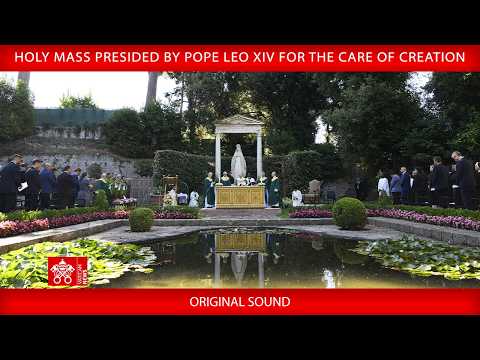
Holy Mass for the Care of Creation, September 1, 2026 — full live coverage (Vatican News)
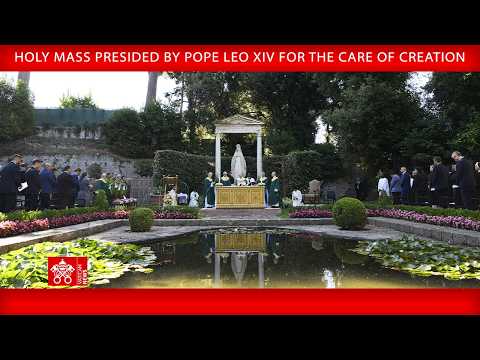
Pope Leo XIV celebrates Mass for the Care of Creation (Vatican Media)
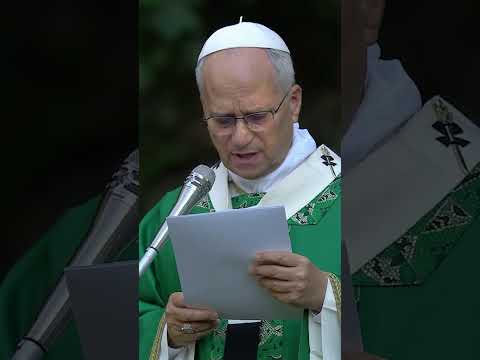
Highlights of the September 1, 2026 celebration
Highlights of the Holy Mass for the Care of Creation (Vatican Media)
📷 Photos
The Holy Mass for the Care of Creation at the Borgo Laudato si' of Castel Gandolfo (Vatican Media)
📰 Articles
Vatican NewsOfficial
The Pope will celebrate the Mass for the Care of Creation on September 1
At 6:30 p.m. in the Garden of the Madonnina del Borgo Laudato si', in the Pontifical Gardens of Castel Gandolfo, Leo XIV presides over the Mass for the Care of Creation on the World Day of Prayer for the Care of Creation, opening the Season of Creation.
L'Osservatore RomanoOfficial
Leo XIV presides over the Mass for the Care of Creation. September 1 at the Borgo Laudato si'
The presentation of the celebration in the garden of the Pontifical Gardens, promoted by the Dicastery for Promoting Integral Human Development and the Laudato si' Higher Education Centre.
AgenSIRArticle
Leo XIV to preside over the Mass for the Care of Creation at Castel Gandolfo on September 1
The announcement of the Mass for the Care of Creation presided over by the Pope in the Garden of the Madonnina del Borgo Laudato si'.
vatican.vaOfficial
Message of the Holy Father for the XI World Day of Prayer for the Care of Creation [1 September 2026]
The full text of the Message, dated 15 August 2026, on the theme “They shall beat their swords into plowshares, and their spears into pruning hooks” (Is 2:4): the link between war and environmental degradation and the call to conversion of heart.
Vatican NewsOfficial
Day of Creation, the Pope: direct toward life what is used to destroy
The report on the evening Mass at Castel Gandolfo: the Pope invites us to put "in silent mode" the noise of human works to listen to the voice of creation and to take a first step toward an authentic ecological conversion.
AgenSIRArticle
Leo XIV: Mass for the care of creation, "let us put all the noise in silent mode"
Excerpts from the homily: the contemplative pause from daily frenzy, the silence to listen to "the melodious voice of creation," and the reference to Saint Francis and universal fraternity.
L'Osservatore RomanoOfficial
This afternoon at Castel Gandolfo, Mass of Pope Leo XIV on the World Day of Prayer for the Care of Creation
The Vatican newspaper's report on the 6:30 p.m. celebration at the Garden of the Madonnina del Borgo Laudato si'.
vatican.vaOfficial
Homily at the Mass for the Care of Creation (1 September 2026)
The text of the homily delivered by the Pope in the Garden of the Madonnina del Borgo Laudato si', published on the Holy See website.
📜 Speech text
Homily at the Mass for the Care of Creation — excerpts (translated)
"On this Day, and in the days to come, let us take a few minutes' pause from the frenzy of daily activities to savor the great harmony of which we are part." "Let us put in silent mode all the noise of human works to listen to the melodious voice of creation, in which God, the Author of all things, speaks to us."
Message for the XI World Day of Prayer for the Care of Creation — “They shall beat their swords into plowshares” (Is 2:4)
Dear Brothers and Sisters, our Lord Jesus Christ came so that we might have life and have it in abundance (cf. Jn 10:10). This gift of life lies at the very heart of our mission as disciples and of our shared calling to build a civilization of love. As we observe this World Day of Prayer for the Care of Creation, we are once again invited to contem…
📋 Daily schedule
1
Sep
📌 Roman Curia
Sister Alessandra Smerilli takes office as head of the Dicastery for Promoting Integral Human Development
📍 Vatican City
Effective September 1, 2026, Sister Alessandra Smerilli, F.M.A., takes office as Prefect of the Dicastery for Promoting Integral Human Development, having been appointed by Pope Leo XIV on June 30, 2026. An economist and Salesian religious, she had served as Secretary of the same Dicastery since 2021. She succeeds Cardinal Michael Czerny, S.J., who led the body from 2022. Taking office at the same time are Cardinal Fabio Baggio, appointed Pro-Prefect with a special mandate for the Laudato si' Higher Education Centre — which runs the Borgo Laudato si' at Castel Gandolfo, where on the same day the Pope celebrates the Mass for the Care of Creation — and Msgr. Jozef Barlaš, the new Secretary of the Dicastery.
📰 Articles
Dicastery for Integral Human DevelopmentOfficial
Sister Alessandra Smerilli is the new Prefect of the Dicastery for Promoting Integral Human Development
The Dicastery's statement on the appointment, effective September 1, 2026, of Sister Smerilli as Prefect, Cardinal Fabio Baggio as Pro-Prefect and Msgr. Jozef Barlaš as Secretary.
Vatican NewsOfficial
Sister Smerilli new prefect of the Dicastery for Integral Human Development
News of the appointment announced on June 30, 2026: Sister Alessandra Smerilli succeeds Cardinal Michael Czerny as head of the Dicastery.
1
Sep
The Holy See Press Office Bulletin publishes the resignation from the office of Auxiliary Bishop of the Archdiocese of Toluca (Mexico), presented by Bishop Maximino Martínez Miranda, Titular Bishop of Lugura.
1
Sep
🎥 The Pope Video
Video message "Pray with the Pope": September prayer intention for the care of water
📍 Vatican City
The Pope's Worldwide Prayer Network releases the monthly video message "The Pope Video" with Pope Leo XIV's prayer intention for September 2026, dedicated to the care of water: the Pontiff calls for just and sustainable management of this vital resource, so that everyone may access it equitably, asking that it be safeguarded "with gratitude, justice and responsibility" and not turned into a commodity, forgetting that it is a universal gift.
🎥 Videos
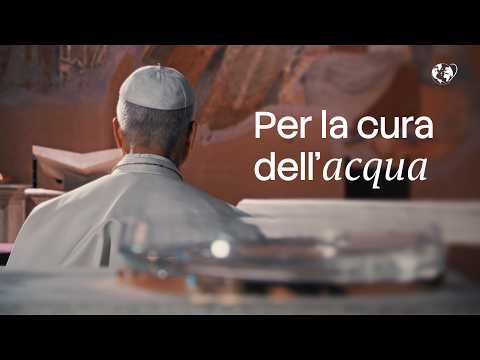
Pray with the Pope: For the care of water | September 2026
1
Sep
📋 Resignations and appointments
Milan Archbishop Mario Delpini's mandate extended by one year
📍 Milan / Vatican City
The Archdiocese of Milan announces that Pope Leo XIV has accepted – “with the nunc pro tunc formula” – the resignation submitted by Archbishop Mario Delpini, who turned 75 on 29 July 2026 as required by can. 401 §1, extending his mandate as Archbishop of Milan by one year. The decision was communicated in a letter from the Apostolic Nuncio to Italy, Archbishop Edgar Peña Parra: after July 2027 the Nunciature will begin the customary process to provide for the Ambrosian see, while Delpini will remain in office until his successor is announced.
📰 Articles
Chiesa di MilanoOfficial
Delpini's mandate extended by one year
The Archdiocese of Milan's statement on the one-year extension decided by the Pope with the nunc pro tunc formula.
ANSAArticle
The Pope extends Delpini's mandate as Archbishop of Milan by one year
News of the papal decision communicated by the Ambrosian diocese.
🗓️ Upcoming events
2026-09-02
🤝 The Wednesday General Audience resumes
First General Audience after the August summer break: the Pope begins the new catechesis cycle on the Pastoral Constitution "Gaudium et spes" of the Second Vatican Council. On the same day the International Theological Commission's document on the care of the Common Home is published.
Go to page →2026-09-05
🌿 First anniversary of the Borgo Laudato Si'
The first anniversary of the inauguration of the center for the care of creation at Castel Gandolfo, opened by Pope Leo XIV on September 5, 2025.
Go to page →2026-09-07
🕯️ Mass at Genazzano for the eve of the Nativity of Mary
The Pope celebrates Holy Mass at the Shrine of Our Lady of Good Counsel, on the eve of the Nativity of the Blessed Virgin Mary.
Go to page →2026-09-14
📚 Opening of the "AQVA" exhibition in the Vatican Library
The Pope visits the Vatican Apostolic Library and opens "AQVA", the first chapter of the exhibition cycle "Catastrophe and wonder".
Go to page →2026-09-25
✈️ Departure for the apostolic journey to France
From September 25 to 28 the Pope visits Paris (Élysée, UNESCO, Notre-Dame), Lourdes and Metz.
Go to page →2026-10-07
📖 Meeting on the tenth anniversary of Amoris Laetitia
A meeting in the Vatican (October 7-14) convened by the Pope with heads of the Eastern Churches, presidents of Episcopal Conferences and some families.
Go to page →2026-10-27
🕊️ To Assisi for the 40th anniversary of the Spirit of Assisi
Interreligious gathering promoted by the Community of Sant'Egidio for the fortieth anniversary of the World Day of Prayer for Peace desired by John Paul II in 1986.
Go to page →2026-11-06
✈️ Departure for the apostolic journey to Uruguay, Argentina and Peru
From November 6 to 17 the Pope visits Montevideo, Buenos Aires and Lima, with a special stop in Chiclayo, his former diocese.
Go to page →🔗 Official sources