Wednesday 23 September 2026 — General Audience · Thanksgiving pilgrimage of the Diocese of Rimini
10:00
St Peter's Square, Vatican City
🎙️ General Audience
Wednesday General Audience
📍 St Peter's Square, Vatican City
At 10:00, in St Peter's Square, Pope Leo XIV holds the Wednesday General Audience, continuing the cycle of catechesis on the documents of the Second Vatican Council with a reflection on the third chapter of the first part of the pastoral constitution «Gaudium et spes», dedicated to human activity in the universe. The Pope recalls that «for believers one thing is certain: individual and collective human activity corresponds to God's intentions» (GS 34) and that technical-scientific progress, to become authentic human progress, must be «animated and guided by charity». Among the groups present is a delegation of around 400 pilgrims from the Diocese of Rimini, led by Bishop Nicolò Anselmi, who came to Rome to thank the Pontiff for his pastoral visit to the city on 22 August 2026 and for the opening of the new diocesan pastoral year. The group, which travelled in five coaches and numerous private cars, displays a banner in the square reading «Thank you, Pope Leo!» and presents the Pope with several symbolic gifts from the area, including a book on the Malatesta Temple, a ceramic work by the local Confartigianato association, a lifeguard's uniform, the mitre made for the August visit, and a red-and-white Rimini Calcio football jersey. All participants wear a light-blue cap to be recognisable as a group. At midday the pilgrims from Rimini take part in a Holy Mass in St Peter's Basilica presided over by their Bishop, who stressed his wish that the August visit «continue to generate life, prayer, communion and attention to people». The visit forms part of the diocese's preparations for the pastoral assembly scheduled for 4 October and the start of the new pastoral year. At the end of the catechesis, in his greetings in Italian, the Pope recalls that the following day, in Saint Louis, United States, Bishop Fulton Sheen is beatified, pointing to his example as an evangelizer through the media of his time. He then makes an urgent appeal for the 112th World Day of Migrants and Refugees (27 September), dedicated this year to migrant children: «I appeal to everyone's sense of responsibility: let each of us feel involved in the lives of these children, who must always be protected and assisted», denouncing the «violence, torture, exploitation, traumatic conditions» that many of them face along migration routes, where «not infrequently they lose their lives», and the dignity «too often trampled» even in the places where they arrive. There follow the apostolic blessing for the faithful and pilgrims present in the square, among them the Minister-President of the German federal state of Saxony.
Event detail →🎥 Videos
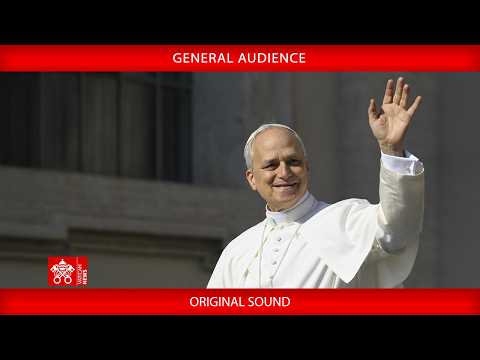
General Audience of 23 September 2026, full video (Vatican News)
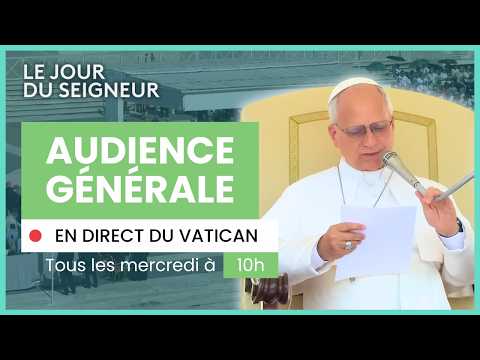
Live broadcast of the General Audience of 23 September 2026 (Le Jour du Seigneur)
📷 Photos

Pope Leo XIV in the popemobile in St Peter's Square during the General Audience of 23 September 2026 (Vatican Media)

The Pope greets and blesses the faithful in St Peter's Square, 23 September 2026 (Vatican Media)

A moment from the Wednesday General Audience, 23 September 2026 (Vatican Media)
📰 Articles
Vatican NewsOfficial
Progress is truly human only if it makes the world better for everyone
The report on the catechesis on human activity in the universe according to Gaudium et spes, with the photo gallery of the audience.
Vatican NewsOfficial
Pope: protect migrant children, victims of unspeakable violence. Everyone must be involved
The Pope's appeal for the 112th World Day of Migrants and Refugees, dedicated to migrant children.
Chiamami Cittànews
Da Rimini a Roma, il grazie della Diocesi a Papa Leone XIV
Coverage of the preparations for the Rimini diocesan pilgrimage to the General Audience of 23 September.
RiminiTodaynews
Leone XIV, Rimini prepara il secondo abbraccio: Messa di ringraziamento e poi tutti dal Papa a Roma
The programme of the Rimini pilgrimage to Rome, including the General Audience and the afternoon Mass.
Vatican.vaOfficial
General Audiences of the Holy Father Leo XIV — 2026
The official archive of Pope Leo XIV's General Audiences in 2026.
📜 Speech text
General Audience - Gaudium et spes: human activity in the universe
Brothers and sisters, good morning and welcome!
As we continue our journey through the Pastoral Constitution Gaudium et Spes of the Second Vatican Ecumenical Council, we come to the third chapter of the first part, which bears the intriguing title: “Man’s Activity Throughout the World”. The fundamental question is this: what is the value of human…
📋 Daily schedule
23
Sep
🤝 Audience
Audience with Michael Kretschmer, Minister-President of the State of Saxony
📍 Apostolic Palace, Vatican City
The Bulletin of the Holy See Press Office announces that Pope Leo XIV received in audience H.E. Michael Kretschmer, Minister-President of the German federal state of Saxony, with his entourage. The meeting takes place in the context of relations between the Holy See and the German Länder and comes a few weeks after the Pope, on 9 September, reaffirmed during a General Audience that human dignity «does not depend on the abilities» of the person, a passage read by several observers also in light of the recent political debate in Saxony.
23
Sep
The Bulletin of the Holy See Press Office announces that Pope Leo XIV has appointed Rev. Sílvio Pereira de Castro, of the clergy of the Diocese of São Miguel Paulista, Brazil, as Auxiliary Bishop of the same diocese, assigning him the titular see of Mauriana. Born on 4 February 1968 in Cianorte (Paraná) and ordained a priest on 18 February 2006, the newly appointed bishop studied philosophy at the São José diocesan seminary and theology at the Nossa Senhora da Penha seminary, graduating from the Pontifical Faculty of Theology Nossa Senhora da Assunção. Before his episcopal appointment he served as rector of the diocesan seminary of philosophy and theology.
📰 Articles
Bollettino Sala StampaOfficial
Resignations and Appointments
The official announcement of the appointment of Bishop Sílvio Pereira de Castro as Auxiliary Bishop of São Miguel Paulista.
CNBBnews
Padre Silvio Pereira é nomeado como bispo auxiliar da diocese de São Miguel Paulista (SP)
The biographical profile of the new Auxiliary Bishop, released by the Brazilian Bishops' Conference (CNBB).
11:30
23
Sep
🗒️ Press conference notice
Press conference announced on the meeting for the tenth anniversary of Amoris laetitia
📍 Holy See Press Office
The Holy See Press Office issues a notice convoking journalists for the press conference presenting the meeting «Ten years after Amoris laetitia: proclaiming the Gospel with families today», scheduled for Friday 2 October at 11:30. The meeting, promoted by the Pope with the Heads of the Eastern Churches and the Presidents of the Episcopal Conferences, will take place in the Paul VI Audience Hall from 7 to 14 October, with the participation of some families, and will close on 14 October with the Holy Mass presided over by Pope Leo XIV in St Peter's Square. The press conference may be followed in person or remotely, with online accreditation, and will be streamed on YouTube with simultaneous translation into Italian, English and Spanish.
🗓️ Upcoming events
2026-09-25
✈️ Departure for the apostolic journey to France
From 25 to 28 September the Pope visits Paris (Élysée Palace, UNESCO, Vespers at Notre-Dame), the prayer vigil with young people at Saint-Denis, Lourdes and Metz (interreligious meeting and reflection on Europe's roots). Motto of the journey: 'That the world may have life'.
Go to page →2026-10-01
📿 Rosary with children for peace
At 17:00, at the Grotto of Lourdes in the Vatican Gardens, the Pope recites the Rosary with hundreds of children from Rome's schools and parishes, for the opening of the worldwide 'One Million Children Praying the Rosary' initiative, promoted by Aid to the Church in Need.
Go to page →2026-10-07
📖 Meeting on the tenth anniversary of Amoris Laetitia
A meeting in the Vatican (7-14 October) convened by the Pope with heads of the Eastern Churches, presidents of Episcopal Conferences and several families.
Go to page →2026-10-08
🎓 Mass for the inauguration of the academic year of the Pontifical Universities
At 17:30, in St Peter's Basilica, the Pope presides over the Holy Mass for the opening of the academic year of Rome's Pontifical Universities and Institutions.
Go to page →2026-10-13
🌱 Presentation of the 'Pope Leo XIV Sustainability Medal' to Card. Czerny
At the Borgo Laudato si' in Castel Gandolfo, the Pope presents Cardinal Michael Czerny with the first sustainability medal named after him, established by Villanova University.
Go to page →2026-10-14
📖 Concluding Mass of the meeting on the tenth anniversary of Amoris Laetitia
The Pope presides over the Holy Mass closing the meeting held on the occasion of the tenth anniversary of the Apostolic Exhortation Amoris Laetitia.
Go to page →2026-10-27
🕊️ To Assisi for the 40th anniversary of the Spirit of Assisi
Interreligious meeting promoted by the Community of Sant'Egidio for the fortieth anniversary of the World Day of Prayer for Peace wanted by John Paul II in 1986.
Go to page →2026-11-06
✈️ Departure for the apostolic journey to Uruguay, Argentina and Peru
From 6 to 17 November the Pope visits Montevideo, Buenos Aires and Lima, with a special stop in Chiclayo, his former diocese.
Go to page →🔗 Official sources