All events of the day›2026-11-21›Audience with members of the Vienna Philharmonic («Wiener Philharmoniker»)
21
Nov
🤝 Audience
Audience with members of the Vienna Philharmonic («Wiener Philharmoniker»)
📍 Apostolic Palace, Clementine Hall
Pope Leo XIV received in the Clementine Hall the members of the Vienna Philharmonic, in Rome for the 25th International Festival of Sacred Music and Art (until 25 November), with Maestro Riccardo Muti also present. Greeting them with «Herzlich willkommen!», the Pope recalled that the orchestra keeps alive the legacy of Haydn, Mozart, Beethoven, Schubert, Brahms and Bruckner, and quoted Benedict XVI, who thanked the orchestra at St Paul Outside the Walls in 2008. «In a time marked by wars and conflicts», music «teaches us to listen to one another» and to seek together a harmonious order: «Like peace, true art is essentially a gift to be shared in order to transform hearts».
🎥 Videos
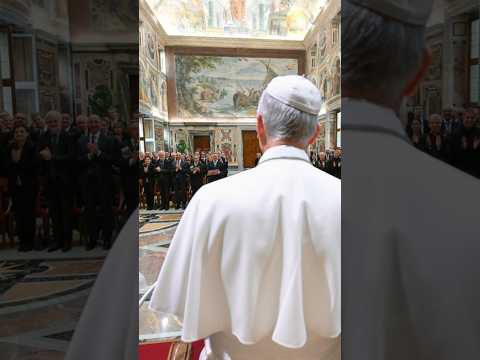
Pope: In an age of conflicts music teaches us to not be in opposition to one another (Vatican News)
📷 Photos

The Pope meets members of the Vienna Philharmonic (Vatican Media)

Pope Leo XIV and Maestro Riccardo Muti (Vatican Media)

Group photo with the Pope (Vatican Media)

Pope Leo XIV meets with members of the Vienna Philharmonic Orchestra (Vatican Media)

Pope Leo XIV during the audience (Vatican Media)

Pope Leo XIV meets with the Vienna Philharmonic Orchestra (Vatican Media)
📰 Articles
Vatican NewsOfficial
Il Papa: la musica, come la pace, unisce persone di diverse nazioni e religioni (Italian)
(in Italian) The address in the Clementine Hall: music teaches us to listen to one another and seek together a harmonious order; the memory of Benedict XVI and the 2008 concert at St Paul Outside the Walls.
Vatican NewsOfficial
Pope: In an age of conflicts music teaches us to not be in opposition to one another
In a meeting at the Vatican with the members of the Vienna Philharmonic Orchestra, Pope Leo XIV highlights how music brings people together and can teach us not to be in opposition to one another.
Vatican NewsOfficial
El Papa: La música, como la paz, es un don para compartir y transformar los corazones (Spanish)
(in Spanish) Like peace, true art is a gift to be shared in order to transform hearts.
📜 Speech text
Address to members of the Vienna Philharmonic
In the name of the Father and of the Son and of the Holy Spirit. Amen.
Peace be with you.
Your Eminence, brothers and sisters, dear friends,
Welcome! We are happy to welcome all of you to the Vatican this morning. Herzlich willkommen! You have traveled here for the 25th International Festival of Music and Sacred Art from Vienna, a city that like